_edited.png)

Non-Surgical Cheek Slimming vs. Buccal Fat Removal: How Each Works and Which Suits You
Key takeaways
A V-shaped face with defined cheekbones and jawline has been considered attractive throughout history and reflects the proportions of the golden ratio.
Buccal fat removal (bichectomy) surgically reduces the deep cheek fat pads through the mouth; it is effective but has limits and surgical risks, such as injury to the facial nerve branches in the cheek.
Non-surgical cheek slimming, the method known in Turkey as Agassi, heats the cheek fat from inside the mouth with an energy probe to about 50–55°C, melting fat that the body then clears.
It is painless, needs no anaesthesia, takes about 15 minutes per side, and usually requires 2–3 sessions 2–3 weeks apart (4–5 in very full cheeks); final results appear at about 2 months, with a mild tightening effect.
Treated fat cells are reduced permanently, but significant weight gain will still affect the cheeks.
Why slimmer cheeks?
A round, full face can make a person look heavier than they are. Celebrities made "cheek slimming" a trend, but the aesthetic principle is old: geometric, well-contoured faces with a subtle shadow between the cheekbone and the jaw have always been considered attractive. As Prof. Dr. Suleyman Tas explained in an interview on CNN Türk's İşimiz Estetik programme, creating that shadow is the goal of both surgical and non-surgical cheek slimming.
Buccal fat removal (bichectomy)
For years, the solution was surgery. Through a small incision inside the mouth, part of the buccal (Bichat's) fat pad is removed, creating a slimmer lower face. It remains a useful operation, but it has limitations:
The nerve branches and muscles in the cheek must be protected, so surgeons typically remove the upper portion of the fat pad and cannot safely reach all areas.
Some patients also want the lower part of the cheek slimmer, which surgery cannot always achieve.
Removing fat carries a risk of sagging or hollowing later if too much is taken.
It is still surgery, with swelling for 2–3 weeks and a soft diet for a few days.
See case study 14.
How non-surgical cheek slimming works
With advancing technology, Prof. Dr. Tas has increasingly used a non-surgical method instead of bichectomy for suitable patients:
A probe is placed inside the mouth, against the inner cheek, not on the facial skin.
It delivers energy that raises the temperature of the fat tissue to about 50–55°C. Sensors in the tip measure temperature continuously and switch off automatically above the target, making the treatment safe.
The operator moves the probe in gentle, rhythmic, symmetrical movements, similar to brushing the teeth, heating the whole area.
The melted fat is cleared by the body over the following weeks, and the heat also stimulates collagen, giving a slight lifting and tightening effect.
Because the energy targets the tissue beneath the surface selectively, there are no burns, marks or visible effects on the skin, and the nerves are not harmed. The entire cheek fat can be treated, including areas surgery cannot reach.
What to expect
Anaesthesia: none needed; the treatment is painless. (Prof. Dr. Tas tried it on himself first.)
Duration: about 15 minutes per side, around 30 minutes in total.
Sessions: at least 2–3 sessions, 2–3 weeks apart, as studies suggest; very full cheeks may need 4–5 sessions from the start. It is not a single-session treatment.
Downtime: none; return to daily life immediately with no special restrictions.
Results: changes begin within a week, with the final result at about 2 months, once the fat has been cleared and collagen has remodelled.
Is the result similar to surgery?
It depends on anatomy, fat volume, skin collagen and skin's ability to tighten, so results vary between individuals. For patients whose goal is overall slimming including the lower cheek, the non-surgical method can give results close to surgery, without nerve risk or sagging. For very large buccal fat pads, surgery may still be the better option. As Prof. Dr. Tas puts it, both have advantages and disadvantages: more options mean a better chance of finding the treatment that makes each patient happy.
Will it last?
Melting fat reduces the number of fat cells in the treated area, so the effect is lasting. However, weight gain enlarges the remaining fat cells, and changes in body mass index will affect the cheeks, so a stable weight protects the result.
Frequently asked questions
Does non-surgical cheek slimming hurt?
No. It is painless and needs no local anaesthetic.
Can it damage nerves or skin?
The probe works selectively from inside the mouth with temperature control, so it does not harm nerves or the skin surface.
Who should choose surgery instead?
Patients with very large buccal fat pads who want an immediate, significant reduction.
Does it also tighten the face?
Yes, heat-stimulated collagen gives a mild lifting and tightening effect.
Next step
See the jawline page or contact Prof. Dr. Suleyman Tas Clinic for a facial contour assessment with Prof. Dr. Suleyman Tas.
About the author
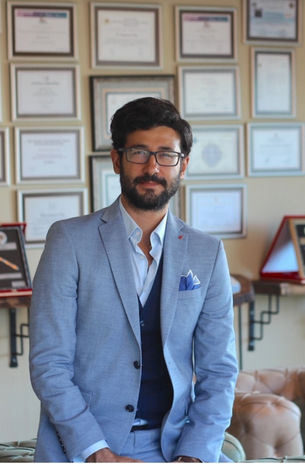
Prof. Dr. Suleyman Tas is a European Board-certified plastic, reconstructive and aesthetic surgeon based in Istanbul with over 20 years of experience, author of Rhinoplasty in Practice (CRC Press) and founder of the Closed Atraumatic Rhinoplasty Course. Read verified patient reviews or book a consultation.
This article is for general information and does not replace an individual medical consultation.


Comments