_edited.png)


Video 2.5: Collecting Bone Dust from Osteoplasty as a Graft Material
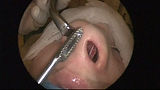
What this video shows
When osteoplasty is performed with a manual rasp, the bone dust that is created is a very suitable graft material. Video 2.5 shows how this dust is collected and prepared. The book describes bone dust as a 'special weapon' that allows the surgeon to handle secondary cases with an insufficient primary graft source without harvesting more distant grafts such as rib or ear cartilage.
This material is the basis of the author's bone dust technique for the open roof deformity, which is explained in detail in Chapter 3 and in Video 3.10, and which was published in Plastic and Reconstructive Surgery.
Key points
Bone dust from manual rasping is collected as an autologous graft.
Useful in revision cases where septal cartilage is insufficient.
Avoids rib or ear cartilage harvesting for small defects.
In the book: Chapter 2 – Closed Atraumatic Rhinoplasty, section 2.2.5 Reshaping, p. 15 of Rhinoplasty in Practice: An Algorithmic Approach to Modern Surgical Techniques (CRC Press, 2021). About the book and all companion videos.
Related publication record: The Use of Bone Dust to Correct the Open Roof Deformity in Rhinoplasty.
Surgeon: Prof. Dr. Suleyman Tas, plastic, reconstructive and aesthetic surgeon, Istanbul. This video is part of the surgeon-training material of the book; patients considering rhinoplasty in Istanbul can use it to understand the techniques used at Prof. Dr. Suleyman Tas Clinic.