_edited.png)

Otoplasty (Ear Pinning) in Istanbul, Turkey
Otoplasty in Istanbul, Turkey: Ear Pinning and Prominent Ear Correction with Prof. Dr. Suleyman Tas
Otoplasty, also called ear pinning or ear surgery, is a cosmetic and reconstructive procedure that reshapes the ears and brings them closer to the head. It is most often performed for prominent ears, sometimes called bat ears, but it can also correct ears that are asymmetric, oversized or shaped differently from the usual contour.
Prof. Dr. Suleyman Tas, a plastic, reconstructive and aesthetic surgeon in Istanbul, performs otoplasty for children, teenagers and adults. His approach focuses on a natural-looking ear contour, symmetry between both ears and scars that are hidden behind the ear. Before and after photographs of his otoplasty patients are shown in the gallery at the bottom of this page.
What Is Otoplasty?
Otoplasty is a surgical procedure that changes the size, position or shape of the ears. In most patients, prominent ears result from an underdeveloped fold in the upper part of the ear (the antihelix), an oversized conchal bowl (the hollow part of the ear), or a combination of both. Because these features are present from birth, prominent ears usually do not correct themselves with age.
Otoplasty can help with:
-
Ears that stick out too far from the side of the head
-
A weak or missing fold in the upper part of the ear
-
A large or deep conchal bowl
-
Ears that differ in size or position from one another
-
Cup ear, lop ear and other shape differences
-
Stretched or torn earlobes
The goal of otoplasty is to bring the ears into a proportionate position and shape, so that they look natural from the front, the side and the back.
Who Is a Good Candidate for Otoplasty?
Otoplasty may be suitable for children, teenagers and adults who are in good general health and bothered by the shape or position of their ears. Typical candidates:
-
Have ears that protrude noticeably from the head
-
Feel self-conscious about their ears, or, in the case of children, are teased about them
-
Have reached the age at which the ear is close to its adult size, usually around 5 to 6 years
-
Are in good general health and do not smoke
-
Have realistic expectations about the result
Adults of any age can have otoplasty. Every candidate is assessed individually, and the technique is chosen according to the exact anatomy of the ears.
How Otoplasty Is Performed by Prof. Dr. Suleyman Tas
Before surgery, Prof. Dr. Suleyman Tas examines both ears carefully, compares their shape and position, and explains what can realistically be achieved. Photographs are taken so that the plan can be reviewed together.
In most cases the incision is placed in the crease behind the ear, so the scar is hidden once the ear has healed. Through this incision the cartilage is reshaped. Depending on the anatomy, this may involve creating or strengthening the fold of the upper ear with sutures, reducing an oversized conchal bowl or adjusting the earlobe.
Otoplasty usually takes about one to two hours for both ears. It can be performed under local anesthesia with sedation or under general anesthesia. General anesthesia is usually chosen for children. The anesthetic plan is discussed in advance.
Otoplasty Techniques
There is no single technique that suits every ear. The technique is chosen for each ear individually, and the two ears are sometimes treated differently. The main steps that may be combined are:
-
Antihelical fold creation: the cartilage is folded and held in place with sutures to recreate the fold of the upper ear
-
Conchal reduction: excess cartilage is reduced or repositioned so that a deep conchal bowl sits closer to the head
-
Earlobe correction: the lobe is reshaped or repositioned when it protrudes or is stretched
-
Symmetry adjustments: small changes are made so that both ears match as closely as possible
Otoplasty for Children and Teenagers
Prominent ears are a common reason for teasing at school. The ears reach close to their adult size by about 5 to 6 years of age, so otoplasty can be considered from this age when the shape of the ears affects a child’s confidence. For children the procedure is usually performed under general anesthesia, and parents receive clear instructions about the headband and the recovery period.
Recovery After Otoplasty
After surgery a soft dressing is placed around the ears. It is later replaced by a headband that holds the ears in their new position. Recovery is usually manageable, and most people describe soreness or tightness rather than strong pain. A typical timeline is:
-
First days: mild swelling, bruising and tenderness; rest with the head slightly raised
-
About one week: the dressing is removed, and most adults and children can return to work or school
-
Two to four weeks: the headband is worn as instructed, often at night after the first weeks
-
Four to six weeks: contact sports and activities that could pull or bend the ears are avoided
Swelling settles gradually, and the final shape becomes clearer over the following weeks to months. Every patient receives detailed written aftercare instructions.
Risks and Safety of Otoplasty
Like any surgery, otoplasty carries risks. These can include bleeding or a collection of blood under the skin (hematoma), infection, changes in skin sensation, visible or thickened scars, asymmetry, suture-related problems and, in some cases, a partial return of ear prominence over time. Choosing an experienced plastic surgeon, following the aftercare plan and attending the follow-up visits reduce these risks. All risks are discussed in detail before surgery.
Why Choose Istanbul for Otoplasty?
Istanbul is a major center for aesthetic surgery, and many international patients travel to the city for facial procedures such as otoplasty, rhinoplasty and facelift. Prof. Dr. Suleyman Tas welcomes patients from abroad and can review photographs before the trip, so that the treatment plan and the length of stay can be discussed in advance.
Otoplasty can also be planned together with other facial procedures when patients want a coordinated result. Learn more about rhinoplasty in Istanbul and facelift in Istanbul with Prof. Dr. Suleyman Tas. His published research on prominent ear correction is available in his research library.
Frequently Asked Questions About Otoplasty
At what age can otoplasty be performed?
Otoplasty can be considered from about 5 to 6 years of age, when the ears are close to their adult size and the shape of the ears affects the child. Adults of any age can also have the procedure.
Is otoplasty painful?
Most patients describe soreness, tightness and pressure rather than strong pain. Discomfort is managed with medication, and it usually settles within the first days.
Will otoplasty leave visible scars?
In most cases the incision is placed in the crease behind the ear, so the scar is hidden. Scars are usually not visible from the front or the side once healing is complete.
How long does otoplasty take?
Otoplasty usually takes about one to two hours for both ears, depending on the technique that is needed.
What type of anesthesia is used for otoplasty?
Adults may have local anesthesia with sedation or general anesthesia. Children usually have general anesthesia. The choice is made together with the patient after the consultation.
How long is the recovery after otoplasty?
Most patients return to work or school in about a week. A headband is worn as instructed, and contact sports are avoided for about four to six weeks.
Are the results of otoplasty permanent?
The reshaped cartilage is designed to hold the new ear position over the long term. In a small number of patients the ears may partly move back over time, which is discussed before surgery.
Can otoplasty be combined with other procedures?
Yes. Otoplasty can be planned together with other facial procedures, such as rhinoplasty, when this is suitable for the patient. This is decided after a full assessment.
Can international patients have otoplasty in Istanbul?
Yes. International patients can send photographs of their ears for a first review. The treatment plan and the recommended length of stay in Istanbul are then confirmed at the consultation.
Otoplasty Consultation in Istanbul
A consultation with Prof. Dr. Suleyman Tas is the first step for anyone considering otoplasty. During the consultation the shape and position of both ears are assessed, the technique and anesthesia are discussed, and questions about recovery and risks are answered. To arrange a consultation, use the contact page. This page gives general information and does not replace a medical consultation.
Otoplasty Guides and Related Reading
These articles by Prof. Dr. Suleyman Tas explain prominent ear surgery in more detail, for children and for adults.
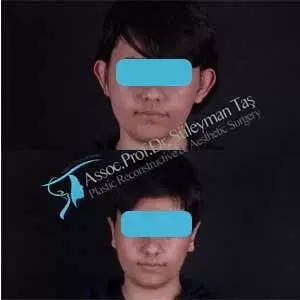
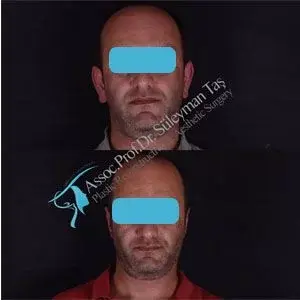
Otoplasty Before and After Photos
The gallery below shows before and after photographs of otoplasty patients treated by Prof. Dr. Suleyman Tas, shared with the patients’ consent. Every ear is different, and individual results vary.