_edited.png)

Enlarged Pores: Why They Open Up and the Most Effective Pore Tightening Treatments
Key takeaways
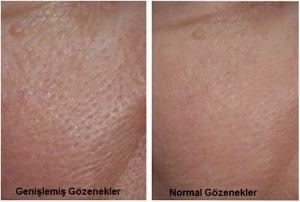
Pores are the openings of hair follicles and oil glands; they become visibly enlarged when filled with oil and debris and when the surrounding skin loses firmness.
Causes include genetics, oily skin, poor cleansing, heavy make-up, ageing, smoking, sun damage and unsuitable products.
Pores cannot be "closed", but they can look significantly smaller.
Effective options: consistent cleansing, retinoids and niacinamide at home; professionally, gold needle radiofrequency microneedling, fractional lasers, chemical peels and medical facials.
What are pores?
Pores are small openings in the skin through which oil (sebum) reaches the surface and which are present all over the body. When oil, dead cells and dirt collect inside, the pore stretches; when collagen around it weakens, it stays open and becomes visible, giving the skin an uneven texture. Enlarged pores can make people feel self-conscious and are often accompanied by blackheads, acne and early signs of ageing.

Why do pores enlarge?
Genetics: if close family members have large pores, you are more likely to have them.
Oily skin: more sebum stretches pores.
Inadequate cleansing: everyone, with or without make-up, needs a daily cleansing routine.
Make-up: heavy or pore-clogging make-up fills and widens pores.
Ageing: collagen and elasticity decline, so pores sag open.
Smoking: damages skin quality and collagen.
Sun exposure: UV rays break down collagen and elastin.
Unsuitable products: harsh or comedogenic products for your skin type.
Home care that makes a difference
Cleanse twice daily with a gentle cleanser for your skin type
Remove make-up every night and choose non-comedogenic products
Use salicylic acid (BHA) to clear oil from within pores
Use retinoids to boost cell turnover and collagen
Try niacinamide to regulate oil and improve texture
Wear SPF every day
Avoid squeezing, which widens and scars pores
Professional treatments
Gold needle radiofrequency (RF microneedling)
This is one of the most effective treatments for enlarged pores. Fine gold-plated needles, with treatment heads chosen for the individual, create controlled micro-injuries while delivering radiofrequency heat into the deeper skin. The skin responds by producing new cells and collagen, and the RF energy tightens and renews the tissue, so pores look smaller and texture smoother. See the gold needle guide.
Fractional lasers
Laser resurfacing stimulates collagen and refines texture; several sessions are usually needed.
Chemical peels
Salicylic, glycolic or TCA peels exfoliate and improve oiliness and texture.
Medical facials
Deep cleansing and extraction keep pores clear; see how to get baby-soft skin.
Frequently asked questions
Can pores be closed permanently?
No, but their appearance can be greatly reduced and maintained.
How many gold needle sessions are needed for pores?
Commonly 3–4 sessions about a month apart, with maintenance as needed.
Does ice or cold water shrink pores?
It gives a very short-lived tightening effect but does not change pore size.
Can pores be closed permanently?
No. Pore size is largely genetic and linked to oil production. Treatments make pores look smaller and keep them clear, and the effect is maintained with repeat sessions and home care.
What helps at home?
A gentle cleanser twice a day, a retinoid if your doctor agrees, non-comedogenic products and daily sun protection, which prevents the collagen loss that makes pores look wider.
How often should the treatment be repeated?
Most protocols start with a short course of sessions a few weeks apart and then a maintenance session every three to six months, adjusted to how oily the skin is and how quickly the pores refill.
Next step
Contact Prof. Dr. Suleyman Tas Clinic to plan a pore and skin-quality treatment.
About the author
Prof. Dr. Suleyman Tas is a European Board-certified plastic, reconstructive and aesthetic surgeon based in Istanbul with over 20 years of experience, author of Rhinoplasty in Practice (CRC Press) and founder of the Closed Atraumatic Rhinoplasty Course. Read verified patient reviews or book a consultation.
This article is for general information and does not replace an individual medical consultation.


Comments