_edited.png)

Gold Needle RF Microneedling: Benefits, Before and After Care, and 10 Common Questions
Updated: 20 hours ago
Key takeaways
Gold needle RF microneedling delivers radiofrequency (RF) energy through fine, gold-plated needles into the skin, heating the deeper layers to stimulate new collagen and repair damaged collagen.
It is used for skin tightening, fine lines and wrinkles, enlarged pores, acne and acne scars, other scars and stretch marks, even for long-standing marks.
A session takes about 1 hour with numbing cream; there is little or no pain and short downtime.
Stop smoking as early as possible and, with medical approval, aspirin-type blood thinners and alcohol about 3 weeks before; avoid showers, make-up and sun immediately after treatment.

How gold needle RF works
Microneedles create tiny, controlled channels in the skin while their tips release RF energy at a set depth. The heat triggers the skin's healing response: fibroblasts produce new collagen and elastin, and existing collagen contracts. The surface is largely spared, so recovery is quicker than with aggressive resurfacing. The gold plating on the needles conducts the radiofrequency energy efficiently and is well tolerated by the skin.
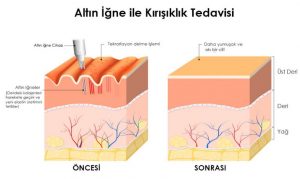
Benefits
Rejuvenation and tightening of lax skin
Softening of wrinkles and fine lines
Acne scar improvement, particularly depressed (pitted) scars left after adolescence
Active acne reduction by targeting overactive oil glands
Smaller-looking pores; see pore tightening treatments
Stretch marks and other scars on the face and body
Suitable for many skin types with a lower risk of pigmentation than some lasers
Before treatment
Smoking: stop as early as possible (ideally months before) and do not smoke around treatment, as it impairs healing.
Aspirin and blood thinners: stop about 3 weeks before if your doctor approves.
Alcohol: avoid for about 3 weeks before, as it also thins the blood.
On the day: remove make-up and do not apply chemical products to the face.
Numbing: an anaesthetic cream is applied so treatment is comfortable.
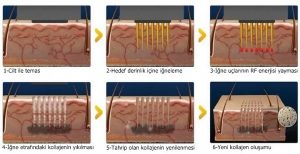
After treatment
Mild redness is normal, especially in fair skin, and usually settles within 1–3 days.
Do not shower or wash the face on the day of treatment unless instructed otherwise.
Avoid make-up for 24 hours, and saunas, hammams, swimming pools and intense exercise for 2–3 days.
Use a gentle moisturiser and SPF 50; avoid sun exposure.
Avoid peels, retinoids and exfoliants for about a week.
Frequently asked questions
1. Why gold needles?
Gold-plated needles conduct RF energy well to the target depth and are biocompatible, helping deliver effective, even treatment.
2. At what age can it be done?
From 18 for skin problems, particularly acne and acne scars. With parental consent it can be considered at 16–17 when medically appropriate, for example for acne scars, but not for anti-ageing concerns at that age.
3. Is it painful?
Numbing cream is applied beforehand, so most people feel little during the procedure and no pain afterwards; painkillers are usually not needed.
4. How many sessions are needed?
Typically 3–4 sessions about 4 weeks apart, depending on the concern.
5. When do results appear?
Skin looks fresher within days; collagen-driven improvement builds over 2–3 months after the series.
6. How long do results last?
Collagen improvement is long-lasting; maintenance once or twice a year helps against ageing.
7. Can old acne scars be treated?
Yes. Even long-standing scars and marks can improve, although deep scars may need combined methods; see acne and acne scar treatment.
8. Is there downtime?
Minimal: most people return to work the next day.
9. Can it be combined with other treatments?
Yes, with PRP, HIFU, peels or fillers as planned by your doctor; see HIFU treatment guide.
10. Who should not have it?
People with active skin infections, certain skin conditions, pregnancy, pacemakers or metal implants in the area, and those prone to keloids, should discuss suitability with their doctor.
Next step
Explore non-surgical treatments or contact Prof. Dr. Suleyman Tas Clinic to book a skin consultation.
About the author
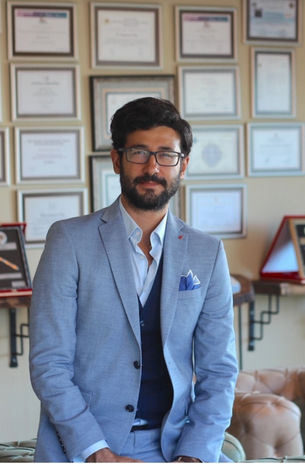
Prof. Dr. Suleyman Tas is a European Board-certified plastic, reconstructive and aesthetic surgeon based in Istanbul with over 20 years of experience, author of Rhinoplasty in Practice (CRC Press) and founder of the Closed Atraumatic Rhinoplasty Course. Read verified patient reviews or book a consultation.
This article is for general information and does not replace an individual medical consultation.


Comments