_edited.png)

Composite Breast Augmentation: Implants Combined with Fat Grafting for Natural Results
Key takeaways
Composite (hybrid) breast augmentation combines a silicone implant with fat grafting from your own body.
The implant provides reliable volume and projection; fat camouflages implant edges, softens the upper breast and improves cleavage.
It is especially useful for thin women with little breast tissue, where implants alone may show visible edges or rippling.
Stop aspirin and blood thinners before surgery, avoid alcohol for three weeks, and stop smoking as early as possible (ideally months before).
Why "composite"?
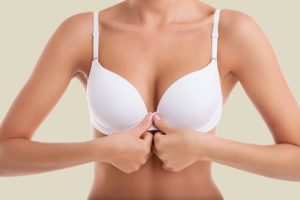
Breast augmentation is one of the most frequently performed aesthetic procedures in Turkey and worldwide. In women with thin skin and very little breast or fat tissue, an implant alone can look artificial: its upper edge may be visible, the cleavage area can look hollow, and rippling may appear. Adding a layer of the patient's own fat over and around the implant creates a softer, more natural transition. Because it combines two techniques, this approach is called composite or hybrid augmentation, and it is one of the more technically demanding breast procedures.
Breast procedures that can be combined
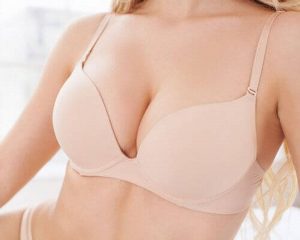
Breast aesthetic surgery includes breast augmentation, breast reduction, breast lift, breast reshaping, correction of inverted nipples, and fat grafting. Each can be performed alone, and many are combined: augmentation with lift, reduction with lift, or augmentation with fat transfer. See the breast augmentation guide.
How composite augmentation is performed
Liposuction gently harvests fat from areas such as the abdomen, flanks or thighs.
The fat is purified and prepared for grafting.
The implant is placed through a small incision, usually in the breast fold.
Fat is injected in small amounts and layers around the implant pocket, the upper pole and the cleavage area to smooth contours.
Implant placement: over or under the muscle?
Subglandular (over the muscle): less post-operative pain and faster recovery, but in thin women the implant edges are more visible and long-term shape can be less natural without tissue support.
Submuscular or dual-plane (partly under the muscle): more discomfort initially, but better implant coverage and more natural, stable results in thin patients.
Fat grafting improves coverage in both, and the placement is chosen for your anatomy. See breast implant incision and placement.
Who is a good candidate?
Thin women with little natural breast tissue
Women who want more volume than fat grafting alone can provide, with a natural look
Patients with visible implant edges or rippling after previous augmentation
Women with a wide gap between the breasts wanting better cleavage
Choosing your surgeon
Breast surgery requires a deep understanding of breast anatomy. An experienced plastic surgeon plans the implant, pocket and fat distribution to minimise recovery time and protect the breast glands, keeping future breastfeeding possible in most women.
Preparation
Do not take aspirin or blood-thinning medicines before surgery (only with medical approval).
Avoid alcohol for three weeks before surgery.
Stop smoking as early as possible, ideally months before, and do not smoke afterwards; nicotine impairs fat graft survival and wound healing.
Recovery
A support bra and compression garment for the liposuction areas are worn for about 4–6 weeks. Most women return to desk work in 1 week and exercise in 4–6 weeks. Some grafted fat is reabsorbed in the first months; the result is stable after about 3 months.
Frequently asked questions
Is the fat permanent?
Fat that survives the first three months usually remains long term.
Can I breastfeed after composite augmentation?
Most women can, as the glands are preserved.
Does it leave scars?
A small scar in the breast fold and tiny liposuction marks that fade.
Next step
See breast surgery results or contact Prof. Dr. Suleyman Tas Clinic for a consultation.
About the author
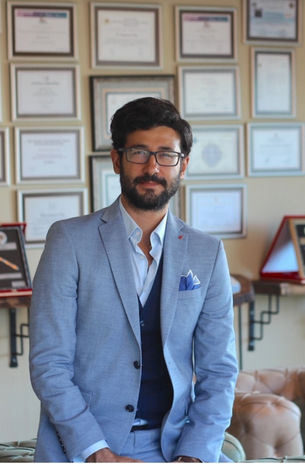
Prof. Dr. Suleyman Tas is a European Board-certified plastic, reconstructive and aesthetic surgeon based in Istanbul with over 20 years of experience, author of Rhinoplasty in Practice (CRC Press) and founder of the Closed Atraumatic Rhinoplasty Course. Read verified patient reviews or book a consultation.
This article is for general information and does not replace an individual medical consultation.


Comments