_edited.png)

Drooping Nasal Tip: Causes, Tip Rhinoplasty and Recovery
Updated: Oct 3
One of the deformities that most bothers people considering rhinoplasty, and that patients complain about most often, is a drooping nasal tip. Among the questions we receive, 'why does the tip of the nose droop?' is one we come across the most. This article is for anyone wondering exactly that. Enjoy the read.
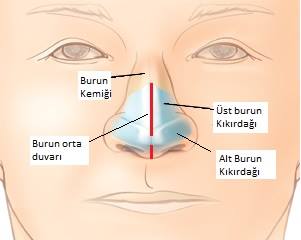
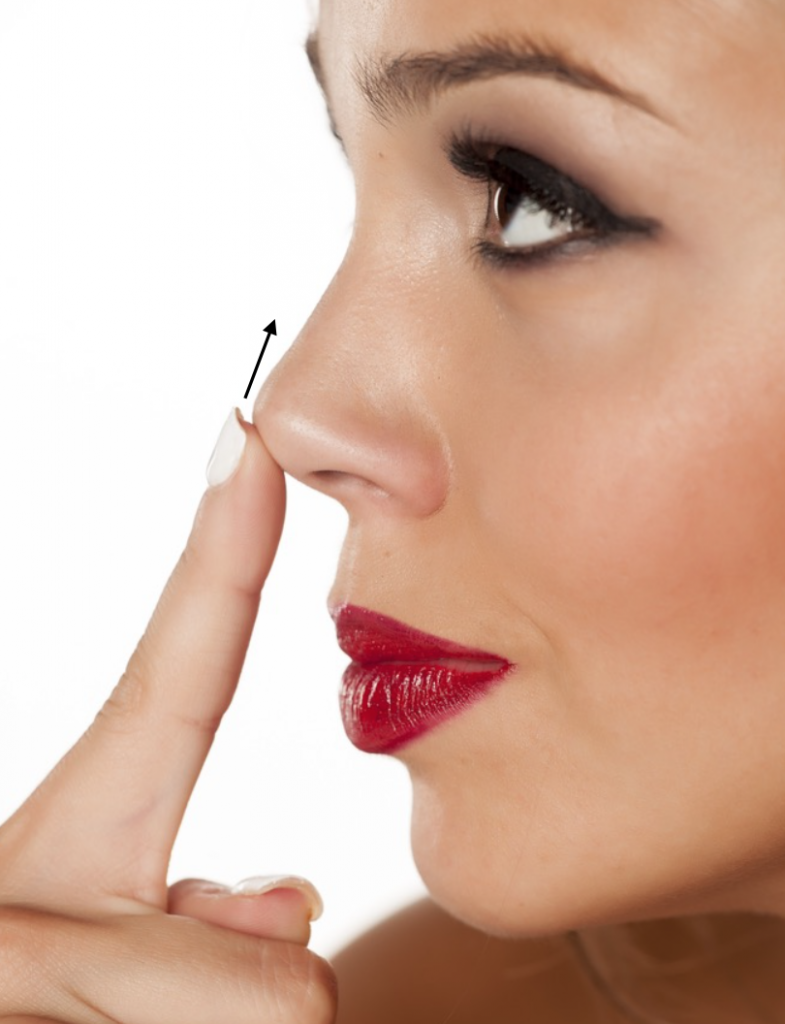
How to Tell If You Have a Drooping Nasal Tip
Causes of a Drooping Nasal Tip
There are two main causes of a drooping nasal tip. The first is weak cartilage structure at the tip of the nose. This weak cartilage can't support the weight at the tip and, unable to resist gravity, tends to droop downward. The second cause is overly strong smiling muscles. When these strong muscles contract as you smile, they pull the tip of the nose downward. The result is the unwelcome drooping of the nasal tip. As the tip drops, the bridge of the nose becomes more prominent at the same time, which can make it look as if there's a hump on your nose even when there isn't one.
For people with a drooping nasal tip, tip rhinoplasty is the solution. If there is no deformity on the bridge of the nose, a small intervention limited to the tip is enough. Tip rhinoplasty is a short surgical procedure — simpler than a full rhinoplasty. Most tip procedures don't require packing or a splint. Either local or general anesthesia can be used, depending on preference, though general anesthesia is usually recommended for the patient's comfort and to let the surgeon work more easily, since the nose sits right in the center of the face. If there is also a deformity on the bridge of the nose along with the drooping tip, tip rhinoplasty alone won't be enough. In that case, a full rhinoplasty is the better option. All the deformities are addressed and the patient is given a natural nose that suits their face.
How Is Tip Rhinoplasty Performed?
If you're aware of deformities in your nose, the surgical procedures performed as part of rhinoplasty can bring both functional and aesthetic relief. Being born with a beautiful nose can be a matter of luck, but having a nose shaped by genetics or altered by deformities over time isn't necessarily a misfortune either. Thanks to advancing technology and new techniques, rhinoplasty is no longer the difficult operation it once was. With the Closed and Atraumatic Technique we use, a natural yet striking nose free of deformities is well within reach. The procedure is carried out in an operating room under general anesthesia and takes about 2 hours on average.
Some patients have a beautiful nasal bridge but deformities at the tip. For these patients, tip rhinoplasty alone — a small intervention limited to the tip — can give them a completely beautiful nose. It takes less time than a full rhinoplasty. An operating room setting is still required. Under general or local anesthesia, it takes about 30–40 minutes on average, and there is no pain.
Tip Rhinoplasty Recovery Process
Patients can be discharged the same day after tip rhinoplasty. Recovery after tip rhinoplasty is also shorter compared to a full rhinoplasty. If no functional work was done on the airway, packing may not even be necessary. After a few days of rest, patients can return to their daily routine. Your rhinoplasty surgeon will guide you on the specifics of your case.
When Does Nasal Tip Swelling Go Down After Rhinoplasty? It takes about a year for the swelling in the tip to go down completely. Because swelling after rhinoplasty concentrates at the tip, you may not love what you see in the mirror at first. But after a year, the result you see will be satisfying.
Tip Rhinoplasty Techniques
We perform tip rhinoplasty using the Closed and Atraumatic Technique as well. Since there's no incision in the area known as the columella at the tip of the nose, there's no visible scarring afterward. With tip rhinoplasty, achieving a nose that's proportional to your nasal bridge and suits your face isn't difficult.
Can the Nasal Tip Droop Again After Rhinoplasty?
For patients with a drooping nasal tip, the underlying cause must first be identified. To prevent it from recurring, the interventions performed during surgery need to be matched to that cause. In other words, if weak tip cartilage is causing the droop, the plan should focus on strengthening that structure; if overly strong smiling muscles are the cause, the plan should focus on weakening those muscles. As a result, the tip does not droop again after surgery.
Tip Rhinoplasty Prices
One of the questions most often asked by people considering tip rhinoplasty for various reasons is 'How much does tip rhinoplasty cost?' Rhinoplasty prices vary depending on the structure of the patient's nose, the experience of the rhinoplasty surgeon performing the procedure, and several other similar factors. If you'd like to learn more, take a look at our article 'The Factors That Determine Rhinoplasty Prices'.
If you're aware of deformities in your own nose and they bother you, you can find general information about the aesthetic process, along with detailed information about what happens before, during and after surgery, on our rhinoplasty page, and you're welcome to reach out to us. During your detailed examination, we first assess the inside of your nose. Any issues affecting your breathing are identified. We take photos in our studio and create a simulation together of what you can expect to look like after surgery. During your nose surgery, we also address your airway to help you breathe comfortably. We then correct your aesthetic deformities to resolve your aesthetic concerns. For a more detailed clinical look at why the tip droops and how it's corrected, see our full guide to droopy nose tip surgery.
Core Rhinoplasty Guides From Prof. Dr. Suleyman Tas
Rhinoplasty in Istanbul — closed atraumatic technique, results and consultation with Prof. Dr. Suleyman Tas
How to choose the best rhinoplasty surgeon — the checks to make and the questions to ask
Rhinoplasty in Turkey for international patients — safety, process and aftercare
Revision rhinoplasty guide — when a second nose surgery is needed and how it is planned
Closed atraumatic rhinoplasty technique — how the operation avoids an external incision
Preservation rhinoplasty explained — dorsal preservation and who it suits
Rhinoplasty cost in Istanbul — what sets the price and what a quotation should list
Complete rhinoplasty guide — from consultation to recovery


Comments