_edited.png)

Rhinoplasty Guide 2026: Everything to Know Before Nose Surgery
Updated: 3 days ago
The Complete Guide to Rhinoplasty: Everything You Need to Know
Rhinoplasty — commonly called a "nose job" — is one of the most requested procedures in plastic surgery, with an estimated several million procedures performed worldwide every year. It is also one of the most technically demanding operations in aesthetic medicine, because the nose sits at the center of the face and has to work — breathing, structure, and symmetry all have to be balanced at once.
This guide walks through what rhinoplasty actually involves, from the first consultation to the year-one result, so you can walk into your own consultation asking the right questions.
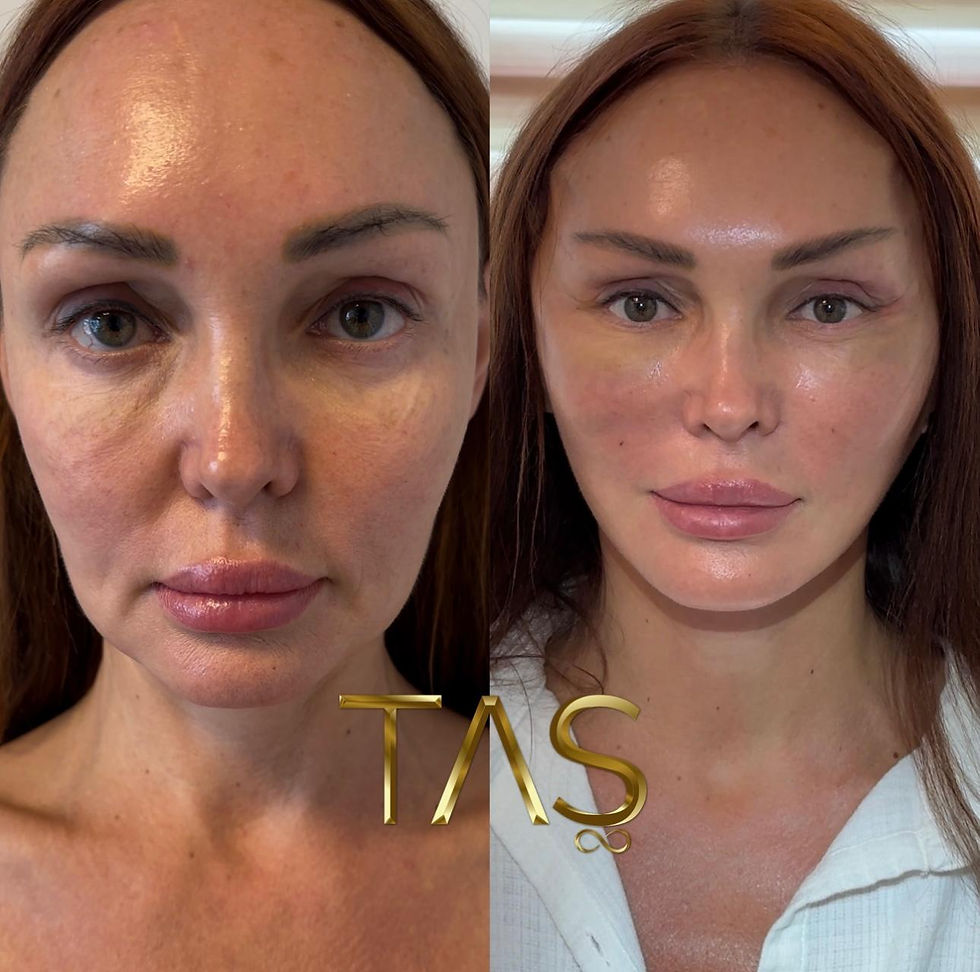
A rhinoplasty result 7 days after surgery, before swelling has fully resolved. The surgical markings on the "before" photo show the planned bridge and tip correction.
What Is Rhinoplasty, Exactly?
Rhinoplasty reshapes the bone and cartilage framework of the nose. During surgery, the skin is carefully lifted off this framework, the underlying bone and cartilage are reshaped, and the skin is then redraped over the new structure. That single fact — that the skin is not replaced, only the frame underneath it — explains almost everything about how rhinoplasty results form, and why two people with the same surgery can heal into very different final results depending on their skin. (We go deep on this in our companion post, How Skin Type Affects Your Rhinoplasty Results.)
The Rhinoplasty Consultation: What a Thorough Surgeon Actually Checks
A consultation that only lasts ten minutes cannot properly plan a rhinoplasty. A comprehensive evaluation includes:
A face-to-face conversation about what specifically bothers you and why, and what you're hoping changes about your life or confidence as a result.
A physical examination of the skin, cartilage strength, and nasal structure.
An endoscopic exam of the internal airway, especially if you have any breathing complaints — many patients don't realize a deviated septum is affecting them until it's addressed alongside the aesthetic surgery.
A geometric/proportional analysis of your face — where your nose sits in relation to your forehead, lips, and chin.
Digital simulation, used as a communication tool to confirm you and your surgeon are picturing the same outcome — not as a guarantee of the exact result.
A thorough rhinoplasty consultation includes hands-on physical examination, not just a photo and a quote.
Open vs. Closed Rhinoplasty
There are two surgical approaches:
Closed technique: all incisions are made inside the nostrils, with no external scar. Surgeons who favor this approach point to less tissue trauma, less swelling, and faster recovery, since the columella (the strip of skin between the nostrils) is never cut, and the vessels that cross the tip stay intact.
Open technique: a small incision is made across the columella so the skin can be lifted for a fully exposed view of the structure. This is sometimes preferred for complex or revision cases.
Both techniques can achieve excellent results in experienced hands — the right choice depends on your specific anatomy and your surgeon's training. Ask your surgeon which technique they use and why, for your specific nose. Even in a closed approach, an experienced surgeon working with endoscopic visualization can address significant structural deformities without needing to open the nose externally.
Why Skin Type Changes the Entire Plan
This is the detail most patients never hear before surgery, and it matters more than almost anything else. The final shape of a nose is determined by the combination of the reshaped framework underneath and how well the skin above it contracts down onto that new shape.
Thin skin shows every detail of the underlying structure — which means more dramatic definition, but also less room for error.
Thick or oily skin does not contract as tightly, so swelling resolves more slowly and fine tip definition is harder to achieve. Thick-skinned patients often benefit from pre-surgical skin preparation (like laser resurfacing or dermaroller collagen stimulation) and realistic expectations about how much the tip can be refined.
Loose, less elastic skin (often in patients over 35) behaves similarly to thick skin, since it also doesn't shrink-wrap well onto a smaller frame.
Thin skin (left) versus thick skin (right) — the same underlying surgical technique will produce a different level of visible definition depending on skin thickness.
(For a full breakdown, see our companion post on how skin type affects rhinoplasty results.)
Rhinoplasty Is Not One-Size-Fits-All: Gender and Ethnicity
A rhinoplasty that looks stunning on one face can look wrong on another, because the surgical goal isn't a single "ideal nose" — it's a nose that's proportional to that specific face. Two of the biggest variables:
Gender. Male and female noses differ in the forehead–nose angle, the nasolabial angle, dorsal width, and tip projection. Over-feminizing a male nose (too much tip rotation, too narrow a dorsum) is one of the most common regrets in male rhinoplasty — surgeons need to deliberately preserve masculine proportions unless a patient is specifically pursuing facial feminization surgery. (Read our full comparison: Male vs. Female Rhinoplasty.)
Ethnic background. Asian, African, Middle Eastern, European, and Latin American noses each have characteristic starting anatomy — different skin thickness, cartilage strength, and dorsal height — and each calls for a different surgical strategy rather than a single universal technique. (See our Ethnic Rhinoplasty Guide for specifics.)
How Much Symmetry Can Rhinoplasty Actually Achieve?
Here's an honest answer you deserve before surgery, not after: perfect symmetry is not medically achievable, for anyone. Your face develops from two separate halves in early embryonic life, joining around week 16 of pregnancy — and no two halves ever turn out identical. Surgeons reshape the bone and cartilage of the nose, but roughly 30% of the nose is made of soft tissue (muscle, fat, ligaments) that surgery cannot reshape without risking the nose's blood supply.
A skilled surgeon uses cartilage grafts to minimize visible asymmetry and camouflage what can't be corrected structurally — but the goal should be dramatic improvement, not mathematical perfection. Surgeons who promise 100% symmetry are setting patients up for disappointment. (This is worth reading in full — see Setting Realistic Expectations Before Rhinoplasty.)
Recovery, in Brief
Days 1–3: Swelling peaks around 72 hours; cold compresses and head elevation help manage it.
Day 7: The splint and any internal silicone supports are removed — this is the first time you'll see your new shape without swelling in the way.
Weeks 2–8: Light walking at 2 weeks, cardio at 4 weeks, swimming at 6 weeks, weightlifting at 8 weeks.
2 months: Most visible swelling has resolved.
12 months: The final result. In thick-skinned or revision patients, this can extend to 2 years.
(For the full week-by-week breakdown, see our Rhinoplasty Recovery Timeline.)
What If My Nose Was Already Operated On?
If you've had a previous rhinoplasty and aren't happy with the result, you're not out of options — revision rhinoplasty is its own specialty, with its own planning challenges (cartilage availability, scarring, altered anatomy). (See our dedicated guide: Revision Rhinoplasty: When You Need a Second Nose Surgery.)
Setting Realistic Expectations
The single biggest predictor of post-surgery happiness isn't surgical skill alone — it's whether your expectations were realistic and clearly discussed before surgery. A good surgeon will talk through this candidly, including whether your goals are achievable given your specific anatomy, and whether the motivation behind wanting surgery is coming from you, rather than from outside pressure or a passing comment from someone else.
FAQ
Can I get a perfect nose?
No — anatomic limitations (soft tissue that can't be surgically reshaped, natural facial asymmetry) mean rhinoplasty produces significant improvement, not mathematical perfection.
How long does rhinoplasty surgery take?
On average, 2–3 hours, depending on complexity.
Will I still look like myself?
A well-planned rhinoplasty is designed around your existing facial proportions, not a generic template — the goal is a nose that looks like it belongs on your face.
When can I fly after surgery?
Flying is generally fine the same day the splint is removed (day 7).
Can breathing problems be fixed at the same time as the aesthetic surgery?
Yes — functional (breathing) and aesthetic goals are commonly addressed in the same operation.
What's the minimum age for rhinoplasty?
Most surgeons wait until facial growth is complete — typically around 17 for female patients and 18 for male patients.
Does smoking affect rhinoplasty results?
Yes significantly — smoking impairs wound healing and blood supply to the skin. Most surgeons require quitting at least 6 weeks before surgery and recommend never resuming, given the nose's delicate blood supply during healing.
Choosing a Rhinoplasty Specialist in Istanbul
Choosing the surgeon matters as much as choosing the technique. Verify training, personal rhinoplasty volume and results at one year or more, and confirm who will operate and where. A step-by-step checklist is in How to choose the best rhinoplasty surgeon, the details for international patients are in Rhinoplasty in Turkey, and pricing is explained in Rhinoplasty cost in Istanbul.
How much does rhinoplasty cost in Istanbul?
The cost depends on the type of rhinoplasty and the complexity of your nose and is confirmed after examination. The rhinoplasty page on this site lists an overall range, and the cost guide explains what a written quotation should include.
How do I verify a rhinoplasty specialist?
Ask for board certification and society membership and confirm them in the official directories, ask how many rhinoplasties the surgeon performs personally, and ask to see results at one year or more.
Ready to Start the Conversation?
If you're considering rhinoplasty, the most important first step is a thorough, honest consultation — not a quick simulation. Book a consultation with Prof. Dr. Suleyman Tas to get a personalized assessment of your anatomy, skin type, and goals.
Prof. Dr. Suleyman Tas is a European Board–certified plastic surgeon with over 20 years of experience and 10,000+ procedures performed. Learn more about Prof. Dr. Tas.

Rhinoplasty reshapes the bone and cartilage framework of the nose. During surgery, the skin is carefully lifted off this framework, the underlying bone and cartilage are reshaped, and the skin is then redraped over the new structure. That single fact — that the skin is not replaced, only the frame underneath it — explains almost everything about how rhinoplasty results form, and why two people with the same surgery can heal into very different final results depending on their skin. (We go deep on this in our companion post, How Skin Type Affects Your Rhinoplasty Results.)
Related reading
About the author
Prof. Dr. Suleyman Tas is a European Board-certified plastic, reconstructive and aesthetic surgeon based in Istanbul with over 20 years of experience, author of Rhinoplasty in Practice (CRC Press) and founder of the Closed Atraumatic Rhinoplasty Course. Read verified patient reviews or book a consultation.
This article is for general information and does not replace an individual medical consultation.


Comments