_edited.png)

Rhinoplasty According to Your Nose Type
Updated: 1 day ago
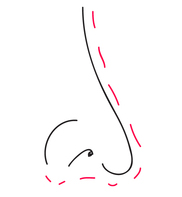
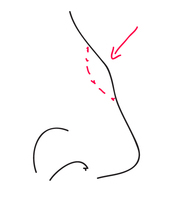
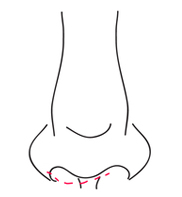
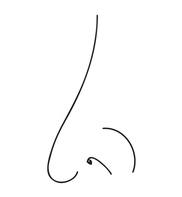
Rhinoplasty is generally divided into two categories: cosmetic rhinoplasty, performed to improve the nose's appearance, and functional rhinoplasty, performed to correct breathing problems. Cosmetic rhinoplasty is considered when the nose shows a hump (arched profile), a crooked line, a saddle-like collapse, a drooping tip, or a structure that is too large or too long for the face. Each of these nose shape irregularities has its own cause and its own surgical approach, and there are several distinct categories of cosmetic rhinoplasty depending on which feature is being corrected: drooping tip correction, arched (hump) nose correction, and reshaping of a large or overly long nose are among the most common.

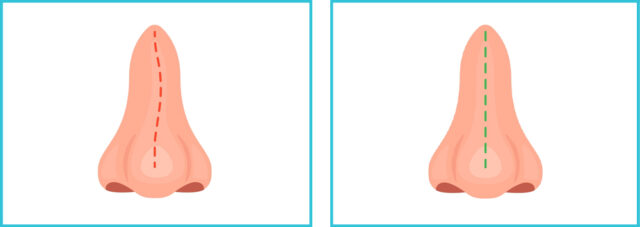
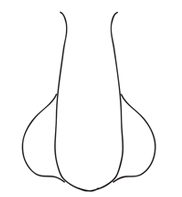
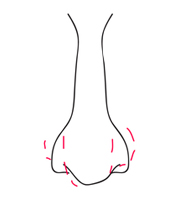
Other nose types that commonly need a tailored surgical plan include a crooked nose caused by septum deviation (deviation of the nasal bone and cartilage), thin-skinned and thick-skinned noses, which each heal and reshape differently, wide and narrow noses, including narrow nose syndrome, and noses with high or low tip projection. A wide-based nose, a short nose, a saddle nose, a parrot-beak nose, and a pointed nose are further variations that each require specific surgical techniques, as does a collapsed (sunken) nose or nostrils and nasal wings that are excessively wide; reducing the nostrils and the nasal wing is a distinct part of the operation in these cases.
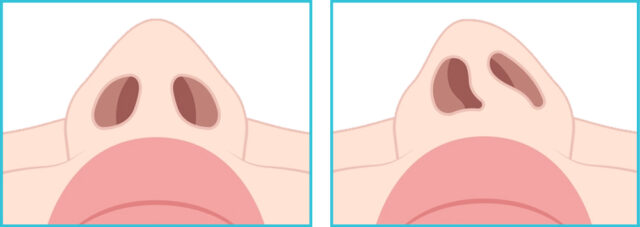
Nasal asymmetry and cases that need revision rhinoplasty after a previous operation likewise call for individual planning, since the aim in every case is a natural-looking result that matches the patient's own nose type rather than a single standard template. Functional rhinoplasty, by contrast, is considered whenever breathing is restricted because of the septum, the nasal valves, or the turbinates (nasal conchae), and its main forms include correction of septum deviation (deviation of the nasal bone and cartilage) and treatment of nasal polyps.
Nasal polyps are treated either with medication or, when needed, with surgery, and septal perforation is corrected through nasal septal perforation repair. Functional problems that appear after a previous rhinoplasty has failed are corrected with revision nose surgery, often combined with cosmetic correction in a single septorhinoplasty procedure; many of these operations, cosmetic and functional alike, can be performed using the closed rhinoplasty technique.
Core Rhinoplasty Guides From Prof. Dr. Suleyman Tas
Rhinoplasty in Istanbul — closed atraumatic technique, results and consultation with Prof. Dr. Suleyman Tas
How to choose the best rhinoplasty surgeon — the checks to make and the questions to ask
Rhinoplasty in Turkey for international patients — safety, process and aftercare
Revision rhinoplasty guide — when a second nose surgery is needed and how it is planned
Closed atraumatic rhinoplasty technique — how the operation avoids an external incision
Preservation rhinoplasty explained — dorsal preservation and who it suits
Rhinoplasty cost in Istanbul — what sets the price and what a quotation should list
Complete rhinoplasty guide — from consultation to recovery


Comments