_edited.png)

Revision Rhinoplasty: When Is It Needed, Techniques and Cost
Updated: Oct 3
Some patients are not happy with the results of their nose surgery due to reasons such as choosing the wrong surgeon, incorrect interventions, or trauma to the nose. For those who are not satisfied with their rhinoplasty, one of the most important options is a second nose surgery known as revision rhinoplasty. As TAS Aesthetic Surgery Center, we wanted to prepare an informative blog post about revision rhinoplasty to answer the most common questions on this topic. We hope this article about revision rhinoplasty, also known as secondary rhinoplasty, will be useful for those who want to learn more, and we wish you pleasant reading.
What Is Secondary Rhinoplasty?
We can start our article on revision rhinoplasty by explaining what revision rhinoplasty actually is. Revision rhinoplasty is a surgical procedure designed to repair both the form and function of the nose in patients who are not satisfied with the appearance or function of their nose despite having undergone one or more previous rhinoplasty operations. It is, in other words, the correction of dissatisfaction that may occur after a previous rhinoplasty. This dissatisfaction may involve difficulty breathing, dislike of the aesthetic appearance, or both at the same time.
A second nose surgery is when a patient who has previously had rhinoplasty undergoes nose surgery again for various reasons. Medically, this is called revision rhinoplasty. The word ‘revision’ means correction, and it derives from the French word ‘revision’, meaning ‘review’. Revision rhinoplasty tends to be a more complex procedure than primary rhinoplasty, which makes it essential for patients to find a sufficiently qualified and experienced surgeon. Revision rhinoplasty can vary in scope, ranging from minor to major revision operations. A minor revision operation takes approximately 45 minutes, while a major revision operation can take 5 to 6 hours.
When Is Revision Rhinoplasty Performed?
It is certainly natural to expect results from an aesthetic operation as soon as possible. However, it should not be forgotten that post-operative healing takes a long time and swelling can change throughout the day. Although the time it takes for the nose to reach its final shape varies from person to person, it generally requires a period of 1-2 years. After the nose reaches its final shape, secondary interventions may be needed in about 10% of cases for undesired results. Therefore, patients who have had rhinoplasty should be patient before deciding on secondary rhinoplasty and should wait for their nasal structures to fully settle. According to medical literature, the rate of revision after rhinoplasty is between 5% and 20%. As a result, we can answer this question as 1-2 years. The exact timeframe will become clear after your consultations with your surgeon.
In Which Cases Is Revision Rhinoplasty Necessary?
After giving general information about revision rhinoplasty, we can explain in which cases revision rhinoplasty may be necessary for those who are not satisfied with their rhinoplasty.
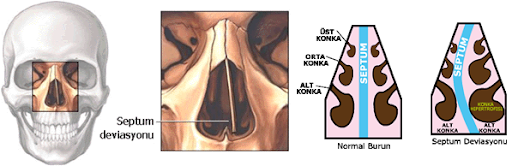
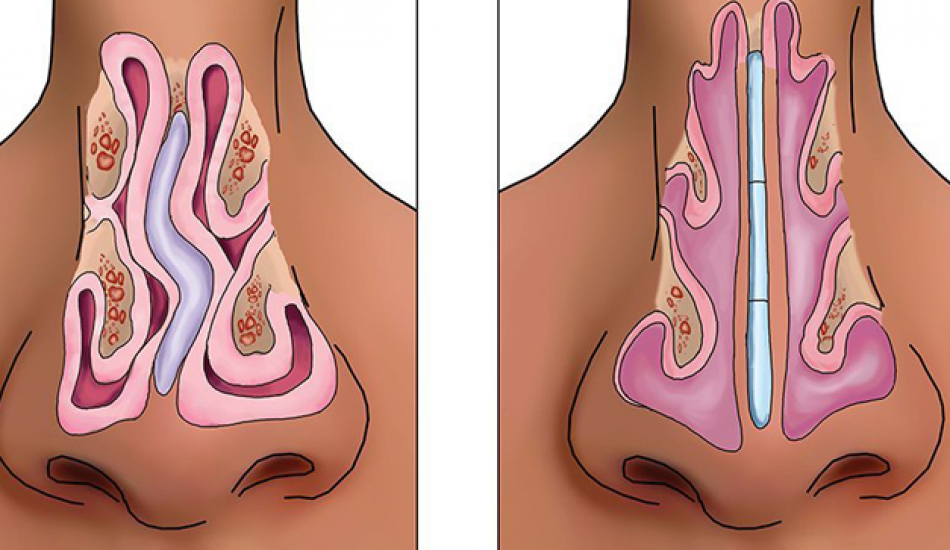
1. Breathing DifficultyOne of the reasons for undergoing nose surgery is difficulty breathing. If breathing difficulty begins or continues after surgery, this can be corrected with a 15-20 minute procedure. Patients who undergo revision rhinoplasty can overcome this problem after the intervention. 2. Nasal Tip DroopingAfter nose surgery, drooping of the nasal tip may occur as a result of weak tip cartilage or thick, oily skin. When this happens, a surgical revision may be required. This issue will be corrected after revision rhinoplasty. 3. AdhesionsAfter rhinoplasty, excessive adhesions may form in the nasal tissues. If the adhesion does not bother the patient visually or functionally, it is best left untouched. However, if it is causing discomfort, it needs to be corrected with surgical intervention.4. CrookednessA nose that was crooked before surgery does not have a 100% chance of being completely corrected after surgery. The main goal of crooked nose surgery is to make the nose look better after the operation compared to before. However, if the crookedness becomes worse than before surgery, or if the same crookedness persists, revision rhinoplasty may be necessary.5. Visible IrregularitiesAfter rhinoplasty, it takes a healing period of 1-2 years for the nose to reach its final result. If irregularities such as indentations, bumps, or depressions remain on the nasal surface after the healing process is complete, they may need to be corrected with revision rhinoplasty.6. Trauma to the NoseAfter surgery, the patient must absolutely avoid any trauma to the nose for the period specified by their surgeon. Great care should be taken to avoid bumps, blows, and collisions. Otherwise, the nose may be damaged and revision rhinoplasty may become necessary.7. Patient or Surgeon Dissatisfaction with the ResultIf the final result after the healing process is complete leaves the patient, the surgeon, or both unhappy, it may need to be corrected with revision rhinoplasty.
What Are the Differences Between Primary and Secondary Rhinoplasty?
We can list the differences between the two nose surgeries as follows:
Compared to the first surgery, patients tend to have more anxiety about secondary nose surgery. They worry more about whether their nose will turn out well this time.
In secondary rhinoplasty, cartilage may need to be taken from another part of the body.
Secondary rhinoplasty is more difficult than primary rhinoplasty.
The recovery period after secondary rhinoplasty is more difficult than after the first surgery.
Is Revision Surgery Difficult?
Which Revision Rhinoplasty Technique Should Be Used?
After covering when and under what circumstances revision rhinoplasty can be performed, we can explain which revision rhinoplasty technique should be used. The closed technique stands out at this point. Closed revision rhinoplasty offers many advantages, the most important of which include a faster healing process and no visible scarring. If you would like to review the other advantages of closed revision rhinoplasty, you can use the link below.
Which Technique Is Used in Revision Rhinoplasty?
Not only in revision rhinoplasty, but in rhinoplasty in general, two techniques are used: open technique rhinoplasty and closed technique rhinoplasty. The others are not techniques but methods. Both open and closed technique rhinoplasty have their own advantages and disadvantages. It is especially important for patients who will undergo two or more rhinoplasty operations to approach this issue more carefully and not overlook the fine details that need attention during their research.
Closed Technique Rhinoplasty
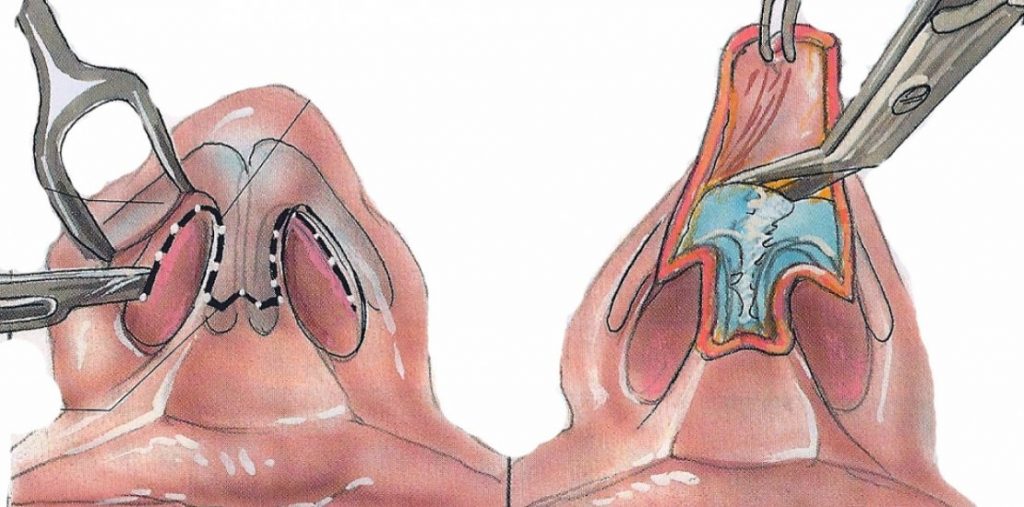
In closed technique rhinoplasty, the healing process is shorter and easier than with the open technique. Since no extra tissue damage or trauma is created with the closed technique, the healing process is more comfortable and easier for the patient. In closed technique rhinoplasty, the nasal tip is not cut; the intervention is performed through the nostrils, and once the surgery is complete, the incisions made inside the nostrils are closed with sutures. Although this technique gives the surgeon a more limited view compared to the open technique, it results in less post-operative swelling and bruising, which is why we can say it is the best technique used today.
Open Technique Rhinoplasty
Open technique rhinoplasty has certain requirements that must be followed. In the open technique, the nose is opened after an incision is made at the tip, and once the surgery is completed, the incision at the nasal tip is closed with sutures. This results in more bruising and swelling, and if the patient does not protect their nose from the sun after surgery, scarring may occur. For this reason, undergoing open technique rhinoplasty in the summer is not generally recommended, whereas with the closed technique you can have surgery in any season.
Revision Rhinoplasty
General anesthesia is used for both techniques. Since the patient receives general anesthesia, they are kept under observation in the hospital for one night, and ice therapy is applied until the morning after surgery. After surgery, your meals and drinks are prepared by the hospital and brought to your room by staff. It is recommended to consume soft, protein-rich foods until the splint and packing are removed after surgery. You should avoid hard foods that are difficult to chew, such as nuts.
How the Revision Rhinoplasty Process Proceeds
In this section of our article, we will give some information about the revision rhinoplasty process. Before surgery, the deformities must be clearly identified and explained to the patient who will undergo the operation. The patient should be informed about what will be addressed during the surgery. The level of expectation after surgery and the realistic result that can be achieved should be evaluated together with the surgeon. The first stage of revision rhinoplasty is a detailed examination. If it is decided to proceed with the operation after the detailed examination, the surgery date is set. Pre-operative tests and preparations for anesthesia are planned. Revision rhinoplasty is performed under general anesthesia. It is recommended to stay in the hospital for one night after revision rhinoplasty. Patients can return to social life after a one-week splint and packing period.
How Many Hours Does Revision Rhinoplasty Take?
In the previous section of our article, we mentioned that a roadmap for secondary rhinoplasty is drawn up after the initial consultation between the surgeon and the patient. The duration of revision rhinoplasty varies according to the roadmap created together by the surgeon and the patient. For instance, the duration of a revision nasal tip lift will differ from that of revision nasal filler. In some cases, the duration may be even longer since multiple interventions may be required. That said, revision rhinoplasty operations generally take between 1 and 4 hours on average.
Recovery After Revision Rhinoplasty
The recovery process after revision rhinoplasty takes longer than for patients who have not had previous nose surgery. It is recommended to stay in the hospital for one night after revision rhinoplasty. Patients can gradually return to social life after a one-week splint and packing period. However, the damage remaining from the patient's previous surgery or surgeries directly affects the new surgical process. Even after a successful revision rhinoplasty, unforeseen minor issues may occur. Surgical or non-surgical interventions can be performed to resolve these issues. The total recovery time for revision rhinoplasty patients can take up to 2 years. Since this is a long period, it requires patience. To positively affect and speed up the healing process, the patient should prepare themselves not only financially but also psychologically. They should build a relationship of trust with their surgeon and think positively. During the recovery period after revision rhinoplasty, patients should remain under their surgeon's follow-up and comply with the instructions given. As a result, the recovery process for revision rhinoplasty patients can take somewhat longer compared to those who have never had nose surgery.
Choosing a Surgeon for Revision Rhinoplasty
As we mentioned earlier, revision rhinoplasty becomes necessary in cases such as choosing the wrong surgeon, incorrect interventions, or trauma to the nose. The revision rhinoplasty process is more challenging compared to the process for patients who have not had previous surgery. Technically, it requires more care and much better planning on the surgeon's part. Depending on the intervention and deformity to be addressed in revision rhinoplasty, the cartilage inside the nose is often not sufficient. In this case, cartilage needs to be taken from behind the ear or from the rib. For all these and similar reasons, when it comes to revision rhinoplasty, the best surgeon you should be careful in your search. You should research all the details and try to choose the best revision rhinoplasty surgeon for you. At this point, we would like to emphasize that TAS Aesthetic Surgery Center, where Assoc. Prof. Dr. Suleyman TAS, one of the successful surgeons in revision rhinoplasty, practices, is here for you and ready to answer your questions.
Revision Rhinoplasty Prices
Revision rhinoplasty prices vary depending on the scope of the surgery to be performed. As we mentioned in the section explaining when revision rhinoplasty is necessary, many situations can require revision rhinoplasty. The prices for revision nasal tip surgery and revision nose reduction surgery will differ from one another. Other factors that determine revision rhinoplasty prices include the length of hospital stay, the surgeon performing the operation, and the hospital where the surgery is performed. You can find more information about secondary rhinoplasty prices through the link below, and feel free to ask us anything you would like to know on this topic.
As TAS Aesthetic Surgery Center, we have come to the end of the blog post we prepared about revision rhinoplasty. In the article, where we tried to provide detailed information on the topic, we aimed to answer questions such as ‘What is revision rhinoplasty?’ and ‘When is revision rhinoplasty performed?’ For more information about secondary rhinoplasty, you can reach the clinic of Assoc. Prof. Dr. Suleyman TAS, one of the surgeons who performs revision rhinoplasty, at +90 532 056 3693, and we wish you good health.
Core Rhinoplasty Guides From Prof. Dr. Suleyman Tas
Rhinoplasty in Istanbul — closed atraumatic technique, results and consultation with Prof. Dr. Suleyman Tas
How to choose the best rhinoplasty surgeon — the checks to make and the questions to ask
Rhinoplasty in Turkey for international patients — safety, process and aftercare
Revision rhinoplasty guide — when a second nose surgery is needed and how it is planned
Closed atraumatic rhinoplasty technique — how the operation avoids an external incision
Preservation rhinoplasty explained — dorsal preservation and who it suits
Rhinoplasty cost in Istanbul — what sets the price and what a quotation should list
Complete rhinoplasty guide — from consultation to recovery


Comments