_edited.png)

Interview: Prof. Dr. Suleyman Tas on the History, Limits and Future of Aesthetic Surgery
Key takeaways
Plastic surgery is thousands of years old: the Indian surgeon Sushruta reconstructed amputated noses with forehead skin, a technique still used today as the forehead flap.
Aesthetic surgery has limits: it shapes living tissue, and age, healing capacity, tissue elasticity and collagen all affect results.
The optimal age for rhinoplasty is roughly 18–45; before 18 growth may be disturbed.
Patients are observed over 2–3 consultations across 2–3 months before surgery; those with obsessive expectations are advised not to have surgery.
Social media and selfies have made the wish to look good in photographs the leading reason for aesthetic surgery today; natural beauty remains the goal.
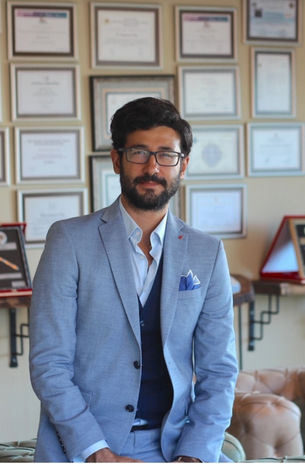
This interview with Prof. Dr. Suleyman Tas (then Associate Professor) was conducted by Açelya Akkoyun for the programme Gülümse Hayata. It has been translated from Turkish and edited for length.
When did aesthetic surgery become popular?
Answering this is like tracing the path from the discovery of fire to electric cars: a long evolution. In ancient India, people convicted of theft or adultery had their noses cut off as a mark of shame. The surgeon Sushruta rebuilt these noses using an island of skin lifted from the forehead. This is the oldest known history of plastic surgery, which is why Sushruta is regarded as its father; his text survives, and his technique is still used as the forehead flap. It took centuries to reach Europe: in the 16th century Gaspare Tagliacozzi described a similar reconstruction using skin from the arm for war injuries. The first purely cosmetic rhinoplasty is credited to John Orlando Roe in 1887. Social acceptance took time: first actors and the wealthy chose these operations as a status symbol; reality television spread them in the 2000s, and in the 2010s social media increased self-awareness so much that many now see aesthetic surgery almost as a necessity.
Does aesthetic surgery have limits?
Of course. Science pushes the boundaries every day, but many limits remain. Aesthetic surgery shapes living tissue, so results can never be as predictable as a product designed in a factory. Age, wound healing capacity, tissue stiffness, elasticity, collagen content and how well tissue can be shaped all affect the outcome.
Is there an age for aesthetic surgery?
Yes, and it varies by operation. For rhinoplasty, roughly 18–45 is optimal. Later in life, healing capacity decreases and surgery can be riskier and less predictable. Before 18, surgery is not recommended because it may interfere with development and the new shape may not suit the final face. See rhinoplasty age limits.
Where does the wish to be beautiful become an obsession?
Everyone has the right to be beautiful, and looking better can bring positive energy, happiness, confidence and success. But analysis is essential. For a 2–3 hour operation, we observe the patient for 2–3 months, seeing them 2–3 times before surgery, explaining the operation thoroughly and asking them to share whether they will be happy with what we can do. Obsessive patients reveal themselves in this process, and we advise them not to have surgery because they will not be happy afterwards.
For example, imagine a patient with a very large, humped, crooked, droopy nose and breathing problems who has lived with it for 35 years. Naturally, the nostrils in such a nose are not identical. If, after surgery that brings the nose into proportion, removes the hump, restores breathing and lifts the tip, the patient says they will still be unhappy unless both nostrils are geometrically identical from below, that patient should not have surgery. See psychological benefits of rhinoplasty.
A patient asks for a longer chin. How do you decide?
We take photographs and analyse the face: the proportions and harmony of forehead, nose and chin, and the dental bite. From these evaluations we determine where the chin should be according to accepted facial proportions, and a simulation predicts the possible result. This guides both patient and doctor, and helps the patient understand how the change will affect them and whether it will make them happy. See nasal analysis before rhinoplasty.
Has aesthetic surgery changed the idea of beauty?
Beauty is subjective and differs between societies. But fashion (what is popular at a given time) should not be confused with beauty. Beauty is always the same: natural anatomical light and shadow that pleases the eye, in art as in medicine. Thirty years ago a nose with no bridge and a pinched tip was fashionable; it was abandoned as an "operated look" because it distorted anatomy and caused serious functional problems. Today the BBL (Brazilian butt lift) look with a very narrow waist is fashionable. Fashion never ends, but in aesthetic surgery beauty means change that preserves what is natural.
Why do we see so many "factory-made" faces?
Procedures that become fashionable but do not respect anatomy produce mass-produced results, and high supply and demand can make this worse. The answer is public awareness and encouraging anatomical, natural changes. "Pure beauty" is the essential goal of our field. I can say with confidence that this is the principle of my surgical philosophy and my clinic: our motto, registered with the Turkish Patent Institute, is "The Address of Natural Beauty".
What are the most popular procedures today?
Rhinoplasty comes first and has held that position throughout the history of aesthetic surgery, for both functional and cosmetic reasons. In our geography humped, droopy noses are common, and they dominate facial expression when smiling. Humped, droopy noses concentrate light toward the tip, so in face-to-face conversation the other person's focus shifts from the eyes to the nose. People notice this: "Why is he looking at my nose instead of my eyes?" That subconscious thought leads them to seek change. The same analysis applies to other procedures: fuller breasts, buttocks or lips catch more light, while wrinkle treatments are sought by those who do not want to look older.
Which areas will be treated in the future?
Almost every area is already treated. What the future holds is not a new procedure but genetics: with gene mapping and phenotype prediction, we may one day foresee facial features before birth, and a world without the need for many of these operations may await us.
Does social media trigger the desire for surgery?
Social media is where people interact intensely and often spend more time than with their closest friends or family. Being on social media largely means existing through photos and videos, and making an impression matters, so it inevitably triggers aesthetic self-judgement.
What about patients who want to look exactly like a celebrity?
This is not new: even before social media, people came wanting to look like someone on television. Wanting to become someone else is not appropriate for aesthetic surgery and has always been recognised as such in plastic surgery; such patients are not accepted for surgery. Everyone is unique. You should tell your surgeon your specific complaints, which are examined to create a roadmap. Trying to resemble another person is neither logically possible nor medically appropriate, as it may reflect psychological issues that need addressing. See celebrity rhinoplasty before and after.
Have selfies increased the need to look perfect?
Absolutely. Before smartphone cameras, I went to a photographer only for school registration and passport photos. Those images cannot compare with the sharpness and depth of today's front cameras, and people now share them publicly for others' approval. Features that were never an issue have become "deformities" that must be corrected. People had mirrors before, too, but patients now rarely describe a flaw they see in the mirror; they describe a flaw that appears in photographs. The desire to look good in photos is, today, the number one reason for aesthetic surgery.
Isn't the pressure to look young exhausting?
Every ambition requires effort. If looking young helps someone continue to contribute to society as a young person, and to be happier and more energetic, they have truly benefited. But if it is only for a friend to say "you look so young", then yes, it becomes exhausting, because there is so much to do, from exercise and diet to treatments.
Plastic surgery also heals: burns, cleft lip, breast reconstruction...
Exactly. Our specialty is Plastic, Reconstructive and Aesthetic Surgery. "Plastic" comes from the Latin plasticus, to shape; "reconstructive" means rebuilding; "aesthetic" means improving the appearance of an existing form. In other words, our field corrects the shape of what exists and creates what is missing. That is why shape deformities in every area of medicine eventually fall within the interest of plastic surgery. See breast reconstruction after breast cancer and what makes the best plastic surgeon.
Frequently asked questions
Is there an age limit for aesthetic surgery?
There is no fixed upper limit. What matters is general health, the reason for the request and realistic expectations; for operations that change facial growth, surgery waits until growth is complete.
How do you decide whether to refuse an operation?
When the request does not match the anatomy, when the expectation cannot be met by surgery, or when the wish appears to come from outside pressure rather than the patient, the honest answer is to explain why and to decline.
Does aesthetic surgery only serve appearance?
No. The same techniques repair burns, cleft lip, breast loss after cancer and injuries after accidents; reconstructive and aesthetic surgery share a single set of skills.
Next step
About the author
Prof. Dr. Suleyman Tas is a European Board-certified plastic, reconstructive and aesthetic surgeon based in Istanbul with over 20 years of experience, author of Rhinoplasty in Practice (CRC Press) and founder of the Closed Atraumatic Rhinoplasty Course. Read verified patient reviews or book a consultation.
This article is for general information and does not replace an individual medical consultation.


Comments