_edited.png)

The Let-Down Technique in Preservation Rhinoplasty: How It Works and Who It Suits
Updated: 21 hours ago
Key takeaways
The let-down technique is a dorsal preservation method: instead of shaving off a hump, the whole bridge is lowered as a unit, keeping its natural surface intact.
It preserves the smooth lines of the nasal dorsum and the internal nasal valves, reducing irregularities and breathing problems.
It suits noses with a straight or mildly humped bridge that needs lowering, and is less suitable for very crooked or previously operated noses.
Recovery is typically comfortable, with minimal swelling; most patients resume daily routines in 3–7 days and sports after 6–8 weeks.
From reduction to preservation
For decades, hump removal meant cutting away the top of the bony and cartilaginous bridge and then closing the resulting "open roof" by breaking the nasal bones inward. This works, but it changes the natural anatomy of the dorsum, can leave irregularities, and may narrow the internal nasal valves. Preservation rhinoplasty takes a different approach: it keeps the bridge intact and changes its position rather than its surface.
What is the let-down technique?
In the let-down technique, strips of bone are removed at the base of the nasal pyramid on both sides, where the nasal bones meet the cheek bones. A small segment of septum under the bridge is also removed. The entire bony-cartilaginous vault, with its natural smooth surface, is then lowered ("let down") into the space created, so the hump disappears without being cut from the top. The keystone area, where bone meets cartilage, is preserved.
It is closely related to the push-down technique; the difference is in how bone is managed at the base of the pyramid. The choice depends on nasal anatomy and the amount of lowering required. Prof. Dr. Suleyman Tas's Fix Down Concept, published in PRS Journal, builds on these principles to align the nose in all three planes; see this article.
How it can be performed
Let-down rhinoplasty can be combined with closed (endonasal) techniques, avoiding an external scar. Ultrasonic (piezo) instruments make precise bone cuts with less trauma to the surrounding soft tissue. Tip refinement, septal correction and other steps are added as needed. Learn more about ultrasonic rhinoplasty and our preservation rhinoplasty page.
Who is a good candidate?
A dorsal hump with a fundamentally straight nose
A high bridge that needs lowering
Thin or medium skin where dorsal irregularities would be visible
Patients who want a natural, not over-operated, bridge
Less suitable:
Severely crooked noses (may need structural techniques instead)
Very large humps with a deep bony component
Many revision cases where the dorsum has already been altered
Advantages
Natural, smooth bridge line with fewer visible irregularities
Preserved nasal valves, supporting good breathing
Less tissue trauma, often meaning less swelling and bruising
Lower risk of an "operated" look such as an inverted-V deformity
How long does surgery take?
Typically around 2–3 hours, depending on the additional steps (tip work, septum, osteotomies).
Recovery
Swelling and oedema are usually minimal after preservation techniques.
Recovery is generally comfortable; most patients return to daily routines in 3–7 days, with the splint removed at about a week.
Good-quality rest is important in the first days.
Sports and exercise can resume after 6–8 weeks; see exercise after rhinoplasty.
Frequently asked questions
Can a hump come back after let-down rhinoplasty?
A small residual or recurrent hump is possible, particularly in the cartilaginous part; experienced surgeons use specific manoeuvres to minimise it.
Is let-down rhinoplasty better than conventional hump removal?
For suitable noses it offers a more natural bridge and better valve preservation; for others, structural techniques are more predictable. The best surgeons use both.
Does let-down rhinoplasty leave scars?
When combined with the closed approach, there are no external scars.
Next step
Contact Prof. Dr. Suleyman Tas Clinic to find out whether a preservation technique suits your nose.
About the author
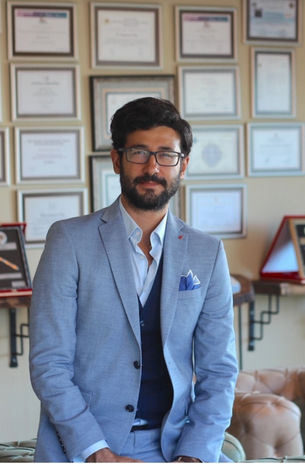
Prof. Dr. Suleyman Tas is a European Board-certified plastic, reconstructive and aesthetic surgeon based in Istanbul with over 20 years of experience, author of Rhinoplasty in Practice (CRC Press) and founder of the Closed Atraumatic Rhinoplasty Course. Read verified patient reviews or book a consultation.
This article is for general information and does not replace an individual medical consultation.


Comments