_edited.png)

Rhinoplasty Expectations: What Really Predicts Happiness
Updated: 2 days ago
Here's a fact that surprises most first-time rhinoplasty patients: the biggest predictor of whether you'll be happy with your results isn't just surgical skill. It's whether your expectations were realistic, specific, and openly discussed before surgery — because even an excellent surgical outcome can leave a patient unhappy if it doesn't match what they were picturing.
Why This Conversation Matters More Than It Seems
A rhinoplasty patient and their surgeon can both do everything "right" — thorough consultation, technically excellent surgery, smooth healing — and the patient can still end up disappointed, if what they expected wasn't achievable in the first place. This is arguably the most important, and most under-discussed, part of the entire process.
Ask Yourself: Whose Decision Is This?
The single most useful question to ask yourself before rhinoplasty is simple but not always easy to answer honestly: Am I doing this for myself, or because of something someone else said?
This isn't a rhetorical or moralizing question — it has real clinical relevance. Patients who pursue surgery primarily because of an unresolved comment from someone else (a former partner, a family member, a passing remark years ago) often experience a much harder emotional adjustment after surgery, even when the surgical result itself is excellent. A thoughtful surgeon will ask this question directly during consultation, not to judge the answer, but because the honest answer changes how much extra emotional support a patient may need during recovery.
"Wish Pictures" Are a Starting Point, Not a Blueprint
It's completely normal to bring reference photos to a consultation — but they work best as a way to communicate your aesthetic preferences (upturned vs. straight tip, defined vs. soft bridge), not as a literal template. The same nose shape can look completely different on two different faces, because a nose is only ever "right" in relation to the forehead, chin, and lips around it. A good surgeon will use your reference photos to understand your taste, then design a nose proportional to your face specifically.
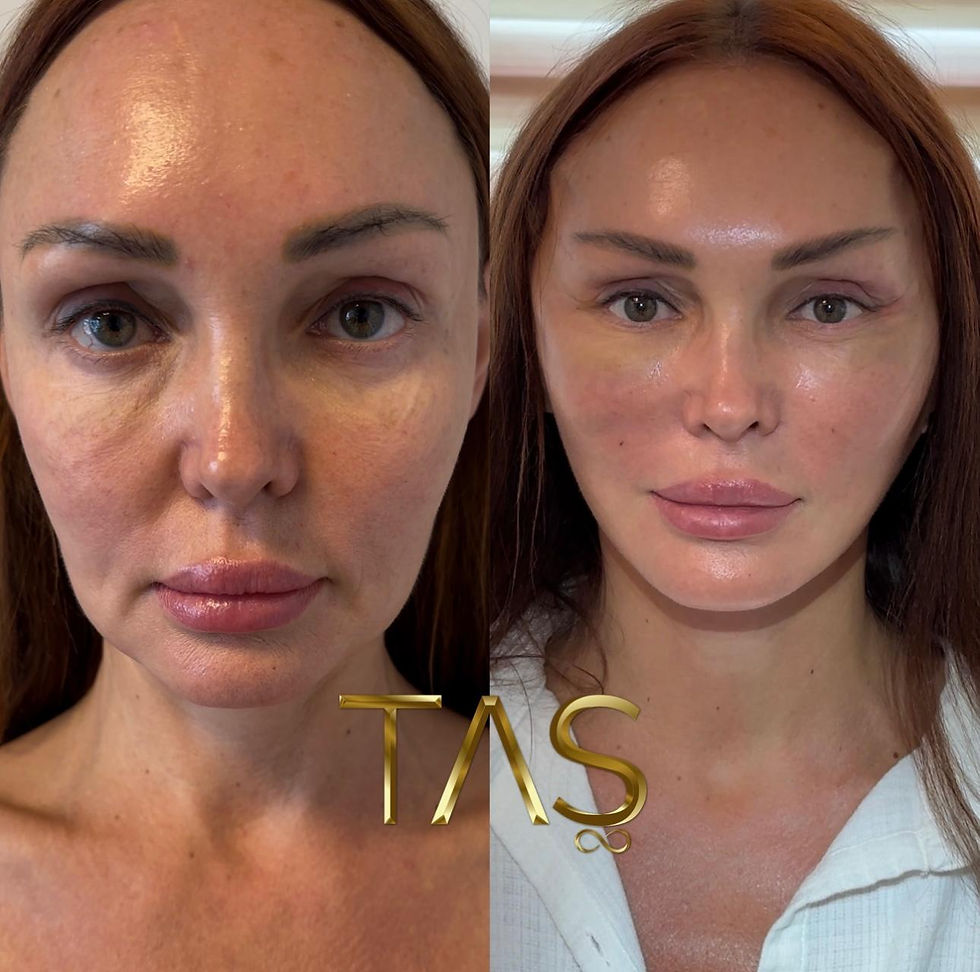
Each of these results was planned individually around that patient's own facial proportions — not toward a single universal "ideal" nose shape.
Understanding Perfect Symmetry — and Why It Isn't the Goal
No face is perfectly symmetrical — not yours, not anyone's, including the most photographed celebrities in the world. This isn't a flaw; it's basic human embryology: the left and right halves of every face develop somewhat independently before fusing around the 16th week of pregnancy, and they never turn out identical. Roughly 30% of the nose (muscle, fat, and ligament tissue) can't be surgically reshaped without risking its blood supply — meaning complete symmetry isn't a realistic surgical goal for anyone, no matter how skilled the surgeon.
This matters because patients who are especially focused on perfect symmetry, down to the millimeter, are often the least likely to feel satisfied post-surgery — not because the surgery failed, but because the standard being applied isn't one surgery can meet. If this describes how you're approaching the decision, it's worth discussing directly and honestly with your surgeon before booking anything.
The Adjustment Period Is Normal — Even When Results Are Excellent
Many patients describe the emotional experience of seeing their new nose for the first time (splint removal, around day 7) as intense — comparable, some surgeons say, to a wedding day: joyful for most, but occasionally disorienting even when everything went well. A period of feeling unfamiliar with your own reflection is common and typically resolves within days to a few weeks as swelling settles and you adjust. This is a well-recognized part of recovery, not a sign that something is wrong. (For the full physical timeline alongside this emotional one, see Rhinoplasty Recovery Timeline.)
When Expectations Point to a Deeper Concern
Occasionally, what looks like a straightforward cosmetic request is connected to something surgery alone can't resolve — for example, a persistent focus on a flaw others don't perceive, or a pattern of never feeling satisfied regardless of how much visibly changes. This is a recognized clinical picture called Body Dysmorphic Disorder (BDD), and it's more common among people seeking cosmetic procedures than in the general population. A thoughtful surgeon will raise this gently as part of the consultation process — not to dismiss a patient's concerns, but because real satisfaction, in these cases, tends to come from working with a mental health professional rather than from additional surgery.
If any of this resonates with how you're feeling about your own appearance, that's worth an honest conversation — either with your surgeon or with a therapist — before any surgical decision, not after.
What Makes Someone a Good Candidate
Across thousands of consultations, a few consistent patterns emerge in patients who report being genuinely happy with their results one and five years later:
They can clearly articulate what specifically bothers them and why.
Their motivation is primarily their own, not driven by someone else's comment or opinion.
They understand and accept that perfect symmetry isn't achievable.
They ask detailed questions about the plan for their specific skin, gender, and anatomy — rather than requesting a specific celebrity's nose.
They have realistic timeline expectations (up to a full year, longer for thick skin or revision cases).
A Simple Self-Check Before Your Consultation
Before your first consultation, it can help to write down honest answers to these three questions:
What specifically bothers me, and can I describe it without comparing myself to a specific other person's nose?
Is this something I've wanted for myself over time, or something that surfaced after a specific comment or event?
Am I prepared for a result that is a significant, meaningful improvement — but not a mathematically perfect or "flawless" outcome?
There's no wrong answer here — this exercise is simply meant to help you and your surgeon have a more honest, productive first conversation.
FAQ
Is it normal to feel unsure right after seeing my new nose?
Yes — this is a well-documented and common part of adjustment, especially in the first days to weeks after splint removal.
How do I know if my expectations are realistic?
A thorough consultation, including a physical exam and an honest conversation about your specific anatomy, is the best way to calibrate expectations before surgery — ask your surgeon directly what is and isn't achievable for you.
Should I bring reference photos to my consultation?
Yes, as a way to communicate aesthetic taste — just be open to your surgeon adapting the concept to your own facial proportions rather than replicating it exactly.
What should I do if I still feel unhappy months after surgery, even though my surgeon says the result is good?
Start with an honest conversation with your surgeon about specifically what's bothering you — sometimes this reveals a treatable detail, and sometimes it reveals that the underlying concern may benefit from psychological support alongside (or instead of) further surgery.
This article discusses body image and psychological wellbeing in the context of cosmetic surgery for informational purposes. If you're struggling with persistent distress about your appearance, a conversation with a licensed mental health professional is a valuable step, whether or not surgery is part of your plans.
Next Step
A consultation that takes your expectations seriously — and is honest about what's achievable — is the foundation of a result you'll be happy with long-term. Book a consultation with Prof. Dr. Suleyman Tas.
Continue reading: The Complete Guide to Rhinoplasty · Rhinoplasty Recovery Timeline · Meet Prof. Dr. Suleyman Tas

The biggest predictor of rhinoplasty satisfaction isn't surgical skill alone — it's realistic expectations. A surgeon's honest guide to setting them.
About the author
Prof. Dr. Suleyman Tas is a European Board-certified plastic, reconstructive and aesthetic surgeon based in Istanbul with over 20 years of experience, author of Rhinoplasty in Practice (CRC Press) and founder of the Closed Atraumatic Rhinoplasty Course. Read verified patient reviews or book a consultation.
This article is for general information and does not replace an individual medical consultation.
Core Rhinoplasty Guides From Prof. Dr. Suleyman Tas
Rhinoplasty in Istanbul — closed atraumatic technique, results and consultation with Prof. Dr. Suleyman Tas
How to choose the best rhinoplasty surgeon — the checks to make and the questions to ask
Rhinoplasty in Turkey for international patients — safety, process and aftercare
Revision rhinoplasty guide — when a second nose surgery is needed and how it is planned
Closed atraumatic rhinoplasty technique — how the operation avoids an external incision
Preservation rhinoplasty explained — dorsal preservation and who it suits
Rhinoplasty cost in Istanbul — what sets the price and what a quotation should list


Comments