_edited.png)

Closed Rhinoplasty: How the Scarless Technique Works, Candidates and Recovery
Key takeaways
Closed (endonasal) rhinoplasty is performed through incisions inside the nostrils, so there is no visible external scar, which is why it is also called scarless rhinoplasty.
It preserves more of the natural supporting tissue, typically meaning less swelling, less bruising and faster recovery than open rhinoplasty.
Most primary rhinoplasties, including hump removal, tip refinement, narrowing and many crooked noses, can be performed closed in experienced hands.
Open rhinoplasty remains useful for severe tip deformities, advanced bone and septal deviation and complex revisions.
What is closed rhinoplasty?
In rhinoplasty the surgeon must reach the bones and cartilages under the skin. In the closed technique, all incisions are placed inside the nose. Through these, the skin is gently elevated and the framework is reshaped. Sutures are internal, so nothing is visible from the outside.
In the open technique, a small incision is also made across the columella (the strip of skin between the nostrils), allowing the skin to be lifted like a hood for direct visualisation. This scar usually heals well regardless of skin tone, but it exists.
Who is a good candidate?
Humped noses
Droopy or bulbous tips needing refinement
Wide noses requiring narrowing
Long or large noses
Many crooked noses and septal deviations
Patients who want minimal downtime and no external scar
How is closed rhinoplasty performed?
General anaesthesia (occasionally sedation for limited procedures).
Incisions inside the nostrils.
Careful elevation of the skin and soft tissue in the correct plane, preserving ligaments where possible.
Reshaping: hump reduction, bone repositioning (preferably with ultrasonic piezo instruments), septal correction, tip sutures and grafts.
Internal absorbable sutures, soft internal splints and an external splint.
Advantages
No external scar
Less disruption of blood supply and supporting tissues
Less swelling and bruising, especially with atraumatic techniques
Faster recovery and earlier return to social life
Tip support preserved, often giving more natural, stable results
The atraumatic approach
Atraumatic rhinoplasty refers to minimising tissue trauma at every step: precise dissection planes, preserving ligaments and blood vessels, ultrasonic bone work and gentle handling. Prof. Dr. Suleyman Tas combines the closed approach with atraumatic principles; in many patients this means little or no bruising and a presentable appearance within about a week. He also teaches the technique to surgeons in his plastic surgery course.
Open or closed: which is better?
Neither is universally better; the right choice depends on the nose.
Incision: closed, inside the nostrils only; open, inside plus across the columella.
Scar: closed, none visible; open, small and usually well hidden.
Swelling and recovery: generally less and faster with closed.
Access: open offers direct view for very complex structural work.
Tissue preservation: better with closed.
Open rhinoplasty is typically preferred for severe tip problems and advanced bony and septal deformities.
Recovery after closed rhinoplasty
Week 1: splint on, mild congestion, limited bruising; splint removed at about 7 days.
Weeks 2–3: return to work and social life.
Weeks 6–8: sport resumes.
Months 3–12: progressive refinement.
Frequently asked questions
Are there stitches in closed rhinoplasty?
Yes, but they are inside the nose and usually dissolve, so no stitch removal is needed from the outside.
Does skin colour affect the choice of open or closed technique?
Not significantly; open rhinoplasty scars generally heal well in all skin tones. The choice depends on the anatomy.
Can revision rhinoplasty be done closed?
Some revisions can; complex cases often benefit from the open approach.
Next step
See closed rhinoplasty before and after results or contact Prof. Dr. Suleyman Tas Clinic for a consultation.
About the author
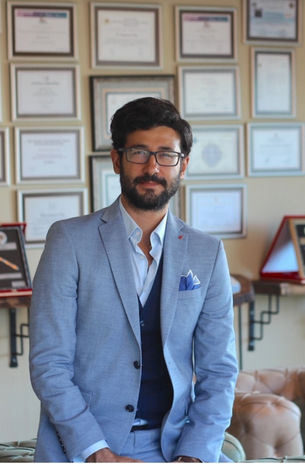
Prof. Dr. Suleyman Tas is a European Board-certified plastic, reconstructive and aesthetic surgeon based in Istanbul with over 20 years of experience, author of Rhinoplasty in Practice (CRC Press) and founder of the Closed Atraumatic Rhinoplasty Course. Read verified patient reviews or book a consultation.
This article is for general information and does not replace an individual medical consultation.


Comments