_edited.png)

Can Nose Exercises or Shapers Change Your Nose Shape? What Actually Works
Updated: Oct 3
Key takeaways
In adults, exercises cannot make a nose smaller, straighter, shorter or narrower, because its shape is determined by bone and cartilage, not by muscle.
Nose shaper clips, bands and "nose-up" devices only compress soft tissue temporarily; they do not change the framework and can irritate skin.
Gentle shaping by paediatricians or midwives may have a small effect in newborns, whose cartilage is still very soft, but not in older children or adults.
Real options are surgical rhinoplasty for structural change, or nose fillers for small camouflage when appropriate.
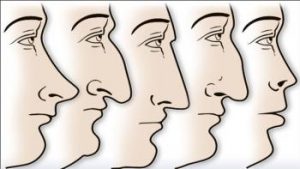
The promise of nose exercises
Search online and you will find videos claiming that pinching, pushing, smiling in certain ways or "face yoga" can lift a nasal tip, slim the bridge or straighten a crooked nose. Clips and silicone shapers promise similar results while you sleep. For someone hoping to avoid surgery, this sounds attractive. Unfortunately, the anatomy does not support these claims.
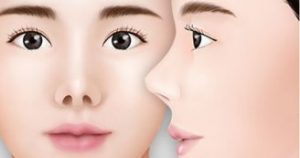
Why exercises cannot reshape the nose
The nose's shape comes from three layers:
Bone at the top (nasal bones), which is rigid and does not remodel with exercise.
Cartilage in the middle and tip, which is firm and elastic, springing back to its original shape.
Skin and soft tissue covering the framework.
The nose has only small muscles, mainly involved in flaring the nostrils and wrinkling the nose. Strengthening them does not change bones or cartilage. At most, temporary swelling or soft-tissue compression may create a brief visual difference that disappears.
What about nose shaper clips and devices?
Clips that squeeze the nasal bridge or tip compress soft tissue while worn. When removed, the nose returns to its shape. Prolonged pressure can cause skin marks, irritation, pain and, in thin skin, even pressure sores. These devices are not recommended.
The exception: newborns
In newborns, nasal cartilage is extremely soft, and some doctors use gentle moulding in specific conditions, such as nasal deformities associated with cleft lip, under medical supervision. This does not apply to older children or adults.
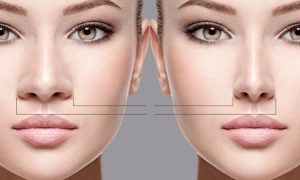
Nose types that exercises cannot correct
Humped nose: a bony or cartilaginous bump on the bridge, often genetic
Long or large nose: out of proportion with the face
Over- or under-projected nose: too far from or too close to the face in profile
Crooked or S-shaped nose: deviated from the midline; see S-shaped nose
Short nose: underdeveloped cartilage or previous surgery
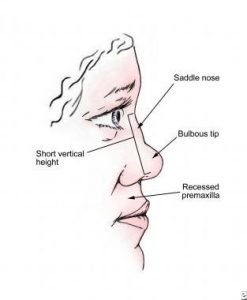
Saddle nose: collapsed bridge after trauma or over-resection; see saddle nose repair
Wide nose: wide bones or flaring nostrils
Narrow nose: often with breathing problems; see narrow nasal passages
Explore all nose types in rhinoplasty by nose type.
What actually works
Surgical rhinoplasty changes bone and cartilage permanently and can improve breathing at the same time. Read the complete rhinoplasty guide.
Nose fillers can camouflage a small hump or slightly lift the tip for 9–18 months, but cannot reduce size. See nose fillers FAQ.
Make-up contouring creates a temporary optical illusion without risk.
Frequently asked questions
Can I lift my nose tip with exercises?
No. A droopy tip is caused by cartilage and ligament support, which exercises do not change.
Do nose shaper clips work permanently?
No. Any effect disappears once the clip is removed.
Can breathing exercises help a blocked nose?
Breathing exercises can help some people feel calmer and breathe more efficiently, but they do not fix a deviated septum or enlarged turbinates.
Is there a non-surgical way to make my nose smaller?
No treatment reduces nasal size without surgery.
Next step
Contact Prof. Dr. Suleyman Tas Clinic for an honest assessment of which option can achieve your goals.
About the author
Prof. Dr. Suleyman Tas is a European Board-certified plastic, reconstructive and aesthetic surgeon based in Istanbul with over 20 years of experience, author of Rhinoplasty in Practice (CRC Press) and founder of the Closed Atraumatic Rhinoplasty Course. Read verified patient reviews or book a consultation.
This article is for general information and does not replace an individual medical consultation.
Core Rhinoplasty Guides From Prof. Dr. Suleyman Tas
Rhinoplasty in Istanbul — closed atraumatic technique, results and consultation with Prof. Dr. Suleyman Tas
How to choose the best rhinoplasty surgeon — the checks to make and the questions to ask
Rhinoplasty in Turkey for international patients — safety, process and aftercare
Revision rhinoplasty guide — when a second nose surgery is needed and how it is planned
Closed atraumatic rhinoplasty technique — how the operation avoids an external incision
Preservation rhinoplasty explained — dorsal preservation and who it suits
Rhinoplasty cost in Istanbul — what sets the price and what a quotation should list


Comments