_edited.png)

Expert Recommendations for the Best Rhinoplasty Experience
Updated: 3 days ago
Key takeaways
A good rhinoplasty experience starts before surgery: understand the plan, ask every question and prepare your mind for a temporary "ugly" phase.
Do not scrub the inside of your nose; crusts clear on their own over 6–8 weeks with cream and saline.
Sneezing does not damage the nose; sneeze through the mouth and do not suppress it.
Massage, smell training with Turkish coffee and patience with asymmetry all belong to the normal recovery.
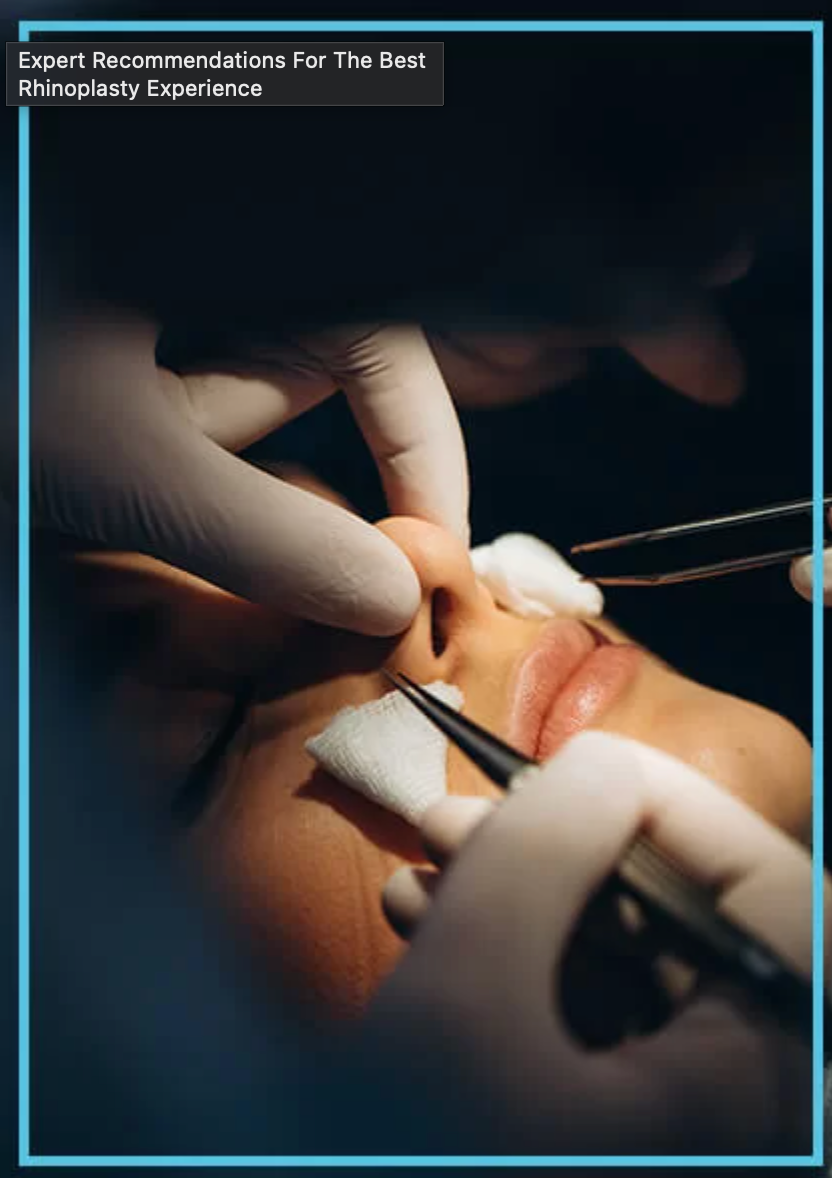
Why preparation shapes the result
Many people carry the idea of a nose job for years and still hesitate. The fear usually comes from watching someone else's difficult recovery, worrying about regret or reading about complications. Rhinoplasty is a decision that should be researched thoroughly and taken with full knowledge, and the experience is much better when patients know what will happen before, during and after surgery. The recommendations below are the ones Prof. Dr. Suleyman Tas gives his own patients at Prof. Dr. Suleyman Tas Clinic.
Prepare your mind for rhinoplasty
Preparing psychologically is one of the most overlooked stages. Ask your surgeon to explain the operation in detail: what will be changed, what will be kept, how the nose will look in the first week, the first month and the first year. Look at the simulation, look at photographs of other patients at each stage, and understand that swelling will hide the result for a while. When every question mark has been removed, anxiety falls dramatically. Read more about simulation in rhinoplasty.
Do not panic over small setbacks
Changing the structure of an organ is a significant intervention and minor issues (a little bleeding, unequal swelling, a bruise that spreads further than expected) are part of the normal course. Report them, do not worry about them, and follow the guidance of your doctor rather than forums or friends.
Leave the inside of your nose alone
For 6–8 weeks after surgery mucus, dried blood and crusts come away from the nostrils piece by piece. Do not pick, scrub or use cotton buds. Continue the prescribed cream and saline spray. Before bed, place a chickpea-sized amount of cream inside each nostril and breathe in; in the morning, blow the nose gently, without pinching it, to clear what has loosened overnight.
Do not be afraid to sneeze
"Does sneezing hurt my nose?" is one of the first questions after surgery. No. Sneezing does not displace the bones or the grafts. Keep the mouth open when you sneeze to reduce pressure, and do not try to hold it in. The worst that usually happens is a small nosebleed; if bleeding continues, contact the clinic.
Use massage as instructed
Nostril asymmetry, tip numbness and a feeling of excess skin over the bridge are common for three to six months while the swelling resolves. A massage routine, taught by your surgeon and started when he says so, can help the soft tissue settle. Get the instructions from your doctor, not from friends; a massage done wrongly or too early can do harm. See our detailed guide on massage after rhinoplasty.
Wake up your sense of smell with Turkish coffee
Smell can be reduced for 6–12 weeks after rhinoplasty because of internal swelling. It returns by itself, but if it bothers you, do smell-training exercises once or twice a day: inhale the aroma of freshly ground Turkish coffee, then other strong, pleasant scents such as lemon, rose or clove, for a few seconds each. Smell training helps the olfactory nerves recover faster.
Additional expert tips
Sleep with the head elevated on two or three pillows for two weeks; it reduces swelling every night.
Cold compresses around the eyes (not on the nose) for 48 hours.
Low-salt, protein-rich food; see what to eat after rhinoplasty.
No glasses on the nose for six weeks; tape them to the forehead or use contact lenses.
No smoking or alcohol; read smoking and alcohol after rhinoplasty.
Protect the nose from sun for three months to prevent discolouration of the bridge.
Be patient. The nose looks good at one month and finished at one year.
Frequently asked questions
When can I blow my nose after rhinoplasty?
Gently from about two weeks, without pinching the nostrils. Before that, sniff and use saline spray.
Is it normal for one nostril to look different?
Yes, for several months. Swelling resolves unevenly; true asymmetry is judged at one year.
How long is smell reduced after rhinoplasty?
Usually 6–12 weeks. Smell training with strong pleasant aromas speeds recovery.
Can I wear make-up after rhinoplasty?
From the day after the splint is removed, avoiding incision lines for two weeks.
When can I exercise again?
Light walking immediately; gym and running from three weeks; contact sports after three months.
Related reading
Follow the full rhinoplasty recovery timeline, visit the rhinoplasty page, or contact Prof. Dr. Suleyman Tas Clinic to speak with Prof. Dr. Suleyman Tas about your own operation.
About the author
Prof. Dr. Suleyman Tas is a European Board-certified plastic, reconstructive and aesthetic surgeon based in Istanbul with over 20 years of experience, author of Rhinoplasty in Practice (CRC Press) and founder of the Closed Atraumatic Rhinoplasty Course. Read verified patient reviews or book a consultation.
This article is for general information and does not replace an individual medical consultation.

Comments