_edited.png)

Septorhinoplasty: What It Is, Who Needs It, How It Is Performed and Recovery
Key takeaways
Septorhinoplasty = septoplasty (straightening the septum for breathing) + rhinoplasty (reshaping the nose) in a single operation.
Typical signs you may need it: blocked nasal breathing, mouth breathing, poor sleep and snoring, dry mouth, post-nasal drip or frequent upper airway infections, together with a nose shape that bothers you.
It can be performed on men and women once facial growth is complete, generally from about 17 in women and 18 in men.
Surgery usually takes 2–3 hours; the splint is removed after a week, and final refinement continues for about a year.
What does septorhinoplasty mean?
Nasal problems can be functional (affecting breathing), aesthetic (affecting appearance) or both. Straightening bent cartilage or bone that blocks breathing is called septoplasty. Reshaping the nose is rhinoplasty. When both are performed at the same time, the operation is called septorhinoplasty. Because a crooked outer nose is usually linked to a crooked septum inside, combining them is often essential for a straight, well-breathing result. Compare the two in rhinoplasty vs septoplasty.
Signs you may need septorhinoplasty
Difficulty breathing through the nose and breathing with the mouth open
Poor-quality sleep, waking up tired
Snoring
Dry mouth during the day
Post-nasal drip
A tendency to upper respiratory infections
A crooked, humped, droopy or asymmetric nose
Who can have it?
People with congenital (genetic) nasal deformities that affect breathing, and those whose breathing and shape were affected by trauma, are typical candidates. Men and women are equally suitable. Surgery is not recommended until body and facial growth is complete, usually around 18 for men and 17 for women; functional surgery for severe obstruction can occasionally be considered earlier. Good general health and realistic expectations are required. See rhinoplasty age limits.
How is septorhinoplasty performed?
Assessment: examination with an endoscope, photographs, analysis and simulation; see nasal analysis before rhinoplasty.
Anaesthesia: general anaesthesia.
Approach: closed (incisions inside the nostrils, no external scar) or open (small incision across the columella), chosen according to complexity.
Septal correction: deviated cartilage and bone are straightened or removed, preserving a strong L-shaped support; removed cartilage is often reused as grafts.
Turbinates and valves: enlarged turbinates are reduced and weak valves supported with spreader grafts when needed.
Rhinoplasty: hump reduction, bone repositioning (preferably with ultrasonic piezo instruments), tip refinement and alignment.
Closure and splints: soft internal silicone splints and an external splint support the nose.
How long does it take?
Usually 2–3 hours, longer for revision or complex crooked noses.
Recovery
Days 1–3: congestion and pressure; mild painkillers; sleep with the head elevated.
Day 5–7: internal and external splints removed; breathing improves noticeably.
Weeks 2–3: return to social life; most bruising gone.
Weeks 6–8: return to sport.
Up to 12 months: gradual refinement of the tip and final result.
Read the rhinoplasty recovery timeline and how painful is rhinoplasty.
Risks
Bleeding, infection, persistent obstruction, septal perforation, asymmetry and the need for revision are possible but uncommon in experienced hands. See rhinoplasty risks and safety.
Frequently asked questions
Is septorhinoplasty covered by insurance?
The functional septal portion may be covered in some systems; the cosmetic part generally is not.
Will my breathing improve immediately?
It improves once splints are removed and continues to improve as internal swelling settles over weeks.
Does septorhinoplasty leave scars?
No visible scars with the closed technique; a small, hidden columellar scar with the open technique.
Next step
Contact Prof. Dr. Suleyman Tas Clinic for a combined breathing and aesthetic assessment with Prof. Dr. Suleyman Tas.
About the author
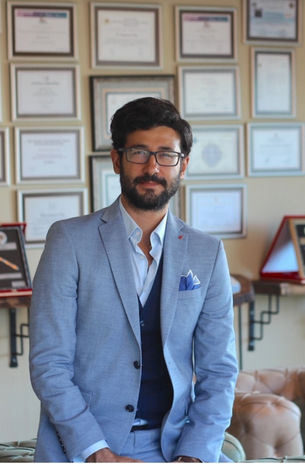
Prof. Dr. Suleyman Tas is a European Board-certified plastic, reconstructive and aesthetic surgeon based in Istanbul with over 20 years of experience, author of Rhinoplasty in Practice (CRC Press) and founder of the Closed Atraumatic Rhinoplasty Course. Read verified patient reviews or book a consultation.
This article is for general information and does not replace an individual medical consultation.


Comments