_edited.png)

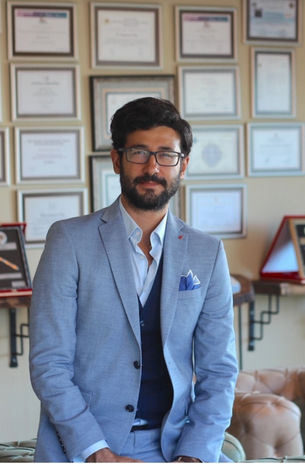
Interview: Prof. Dr. Suleyman Tas on Plastic and Reconstructive Surgery, Atraumatic Rhinoplasty and New Techniques
Key takeaways
Prof. Dr. Suleyman Tas chose plastic surgery as a medical student at Istanbul University Faculty of Medicine, drawn by operations that combine aesthetic perception, skill and a profound effect on people's lives.
His surgical philosophy is "primum non nocere" (first, do no harm), expressed in the atraumatic approach: achieving the goal without damaging tissue.
He developed a microdissected prefabricated flap technique to create a new face from the patient's own tissues, an alternative to face transplantation without rejection or lifelong immunosuppression.
His antihelixplasty flap technique for prominent ears, used since 2009, won a Turkish Society of Plastic Surgery award in 2012 and was published in 2013 in a leading American plastic surgery journal.
His advice to patients: never decide in a hurry, meet at least three surgeons, and choose the one you truly trust.
This interview was originally published in Turkish, when Prof. Dr. Suleyman Tas held the title of Associate Professor. It has been translated and edited for length.
Education and the choice of plastic surgery
What led you to this profession?
I have always tried to do my best, so my school and working years were full of achievements and first places. My imagination has been the most important force pushing me forward. Perfection and beauty always attracted me; my interest in art began with charcoal drawings as a child. I loved mathematics and science, solving problems and making precise analyses, and in high school I placed third in Turkey in the TÜBİTAK Science Olympiad. But helping people made me incredibly happy, so I chose medicine at Istanbul University. In my fourth year I attended plastic surgery operations and was deeply impressed: these demanding operations touch people's lives and souls and require aesthetic perception and talent. I decided this had to be my profession.
What is the source of your success?
Imagination, the patience to follow the roadmap I draw to realise it without giving up, aesthetic perception, empathy and manual skill. By imagination I mean the pleasure of always thinking ten moves ahead, as in chess.
Philosophy: first, do no harm
What is your philosophy in aesthetic surgery?
The fundamental philosophy of medicine: primum non nocere, first, do no harm. I constantly ask how I can perform an operation without harming any tissue, or even a single cell. This is the atraumatic philosophy; "atraumatic" means without trauma. When you operate this way, the operation becomes a work of art, alive and meaningful. As people say, "like a poem". My philosophy is to make every operation like a poem.
What is plastic and reconstructive surgery?
"Plastic" means to shape, "reconstructive" to rebuild, and "aesthetic" to aim for beauty. We specialise in replacing every kind of tissue defect and in aesthetic surgery, from congenital conditions like cleft lip and palate to facelifts, across all ages.
Can aesthetic operations benefit health?
Yes, they have secondary gains. People make peace with a body part that bothered them. In breast reduction, for example, tissue is removed from regions where breast cancer commonly develops, and studies have associated reduction with a lower breast cancer risk. See breast reduction surgery.
Which operations are most common?
In Turkey: rhinoplasty, breast implants, liposuction, hair transplant, fat injection, eyelid surgery, facelift and prominent ear surgery, all of which we perform.
Can several operations be combined?
Yes, but there are limits. The body has a certain wound-healing capacity, proportional to age and health; exceeding it prolongs recovery. In my practice I do not combine more than two or three operations.
A new face from the patient's own tissue
You created a new face for a patient with severe burns using a microdissected prefabricated flap. Can you explain?
It was my dream, and achieving it makes me very happy. The patient had undergone 12 operations and had no option left except face transplantation. I showed that it is possible to create a new face from the patient's own body, with advantages over transplantation.
Imagine a tree with roots, trunk, branches and a flower. If you want to move a flower from one branch to another and simply cut and glue it, it dies. But if you follow the vessel that feeds the flower back to the root and isolate it, you can place the flower wherever you want. My technique finds that vessel and determines the territory it feeds, creating a transferable "flower" for a branch that has none.
Why develop an alternative to face transplantation?
Face transplantation is a remarkable scientific achievement, but it has major handicaps. Skin is the most antigenic organ, with the highest rejection rates, so the immune system must be suppressed with many drugs for life, leading to infections and potentially organ failure. Moreover, patients who only need skin receive another person's muscles and nerves, which can create a mask-like face, and rejection can expose bone.
What are the benefits of your technique?
Because the patient's own tissue is used, there is no rejection and no need for immunosuppressive drugs. Only skin is transferred, so healthy muscles and nerves are not sacrificed and there is no mask-like appearance. No donor is needed, so there is no waiting list; the new face is prepared in the patient's body in about one to two months. The only disadvantages are that it is laborious and requires advanced microsurgery, isolating vessels one by one, like finding a needle in a haystack, which is manageable for an experienced surgeon. I believe that in the future large, single-piece skin reconstructions such as face reconstruction will be performed with this approach.
Closed, atraumatic rhinoplasty
Tell us about your closed and atraumatic rhinoplasty.
Microsurgery taught me that everything we see has its own world inside, and there is much we can do without disturbing it: operating without hurting even an ant. That is why I perform closed rhinoplasty. Opening the nose leaves a scar at the tip and cuts the vessels, nerves and lymphatics of the tip, which can never be fully restored. But not every closed rhinoplasty is atraumatic: the philosophy must continue throughout the operation, preserving all structures and their relationships while reaching the planned shape. Done this way, the nose looks as if it had never been touched. People are called "operated-looking" when an operation was not performed with this philosophy. Read the closed rhinoplasty guide.
Is psychological support needed before rhinoplasty?
If you are not psychologically ready, very anxious or depressed, the body may not respond well to healing. Our clinic works with a psychologist to prepare patients and support them after surgery.
What should patients avoid after rhinoplasty?
It depends on the procedure, but generally no glasses, impacts or face-down sleeping for two months; heavy sport is restricted for four to five weeks; and daily and work life can resume on day 7, after the splint is removed.
How do you treat a nasal hump?
Entirely individually: sometimes we shape, rasp or conceal the hump rather than remove it; when removal is needed we use precise micromotor instruments. See humped nose surgery.
What about nose fillers?
Hyaluronic acid fillers can camouflage irregularities, depressions and asymmetry, or support the tip, especially when revision surgery would be risky. They are temporary, lasting from about six months to several years depending on the product. See nose fillers FAQ.
How do male and female rhinoplasty differ?
Completely, from the spirit of the operation onward. For women we use the angles and secrets of femininity; for men those of masculinity. In a man the nose symbolises strength and handsomeness; in a woman beauty and elegance. See male vs female rhinoplasty.
Is there a best season for facial surgery?
Not anymore. Winter was once preferred because bleeding control was harder in heat, but today winter flu often causes postponements. The best time is whenever you are healthy and can set aside a week physically and psychologically.
Prominent ears and other procedures
Tell us about your antihelixplasty technique.
Seeing complications of existing techniques (suture extrusion, infection, tenderness, shape irregularities), I developed a flap technique that folds the ear back naturally using tissue behind the ear rather than suspending it with sutures. I have used it since 2009; it won an award at the Turkish Society of Plastic Surgery competition in 2012 and was published in 2013 in America's most prestigious plastic surgery journal. We also use it for patients whose ears reopened after other techniques. See prominent ear surgery for children.
At what age should children have ear surgery?
Ideally at 5–6 years, before starting school, to avoid teasing and lifelong confidence problems, although it can be done at any age.
Which procedures do men request most?
Rhinoplasty, then hair transplant, prominent ear surgery, gynecomastia surgery and liposuction. See gynecomastia surgery guide.
What about hair transplantation?
We use FUE, transferring follicles one by one under local anaesthesia. Results depend on the size of the bald area and the donor reserve; large areas may need several sessions. See hair loss treatment.
How do you treat migraine?
Patients are first evaluated by neurology to confirm migraine. We then apply botulinum toxin; if attacks stop, we either repeat it periodically or, for a permanent solution, perform migraine surgery, releasing the specific compressed nerves through small incisions. See Botox.
Who is liposuction for?
It is not a weight-loss method but a shaping operation for people with normal or near-normal body mass index. We use VASER technology, which liquefies fat before removal, reducing irregularities and skin laxity.
What is the best age for a facelift?
We prefer 40–65; later depends on health. The earlier in the ageing process and the healthier the patient, the better the result. All ageing signs can be improved, but they cannot be completely erased.
What is your approach to lip enhancement?
We do not find overfilled "duck lips" aesthetic. We aim for attractive, full lips with unrestricted movement, using hyaluronic acid (about six months) or fat injection, of which about a third remains long term.
Chin surgery?
A retruded chin is augmented with an implant or fat; a prominent chin is reduced with genioplasty.
Can under-eye bags be removed without an incision?
Yes, with the transconjunctival approach from inside the lower eyelid, when skin laxity is limited.
Advice for patients
What misconceptions do you encounter?
That the tip will drop or the nose become crooked again after rhinoplasty, or that implants will burst or prevent breastfeeding. In properly performed surgery, these are not expected outcomes.
What look do patients request?
Aesthetics must be personal. We do not plan with celebrity photos. Patients describe what bothers them, and together we create a simulation suited to their face.
Where should new techniques focus?
On the cellular level: increasing the capacity and speed of healing.
What is your advice when choosing where to have surgery?
Never decide in a hurry. I even advise the patients who come to me to meet at least three doctors and continue with the one they feel truly comfortable with. Well-researched, carefully considered decisions rarely lead to unhappiness.
More from a second interview
In another interview from the same period, Prof. Dr. Suleyman Tas summarised his work in these terms:
Innovation: more than 30 techniques and scientific publications of his own description in the literature, from face reconstruction and arm and foot replantation to rhinoplasty and ear surgery, several patented surgical instruments, and three first-place awards at national and international level.
Face reconstruction: after seeing burn patients who no longer wanted to be seen in public, and the lifelong medication and limited results of cadaver face transplantation, he developed a way to reshape the vascular anatomy of the patient's own tissue so that a large, thin, well-vascularised flap could imitate the whole face, building on his microsurgery experience in arm, foot and finger replantation.
Rhinoplasty: more than 10 of his rhinoplasty techniques are published, and one of his articles became the most-read paper in Aesthetic Surgery Journal in the month after publication. Combining these techniques produced the Closed Atraumatic approach: no external scar, quick recovery and minimal swelling and bruising.
Prominent ears: his flap technique folds the ear back without cutting the cartilage or harming its elasticity.
Seasonal advice: after summer, sun-damaged skin benefits from treatments that stimulate or supply collagen building blocks, such as PRP, mesotherapy or salmon DNA; before summer, Botox can prevent frown lines around the forehead, brows and eyes; later in life, facelift, neck lift, facial fat grafting and eyelid surgery turn back the years.
His closing message: aesthetic surgery should always aim for what is natural and beautiful.
Next step
About the author
Prof. Dr. Suleyman Tas is a European Board-certified plastic, reconstructive and aesthetic surgeon based in Istanbul with over 20 years of experience, author of Rhinoplasty in Practice (CRC Press) and founder of the Closed Atraumatic Rhinoplasty Course. Read verified patient reviews or book a consultation.
This article is for general information and does not replace an individual medical consultation.


Comments