_edited.png)

Smoking and Rhinoplasty: When Can You Smoke After a Nose Job?
Updated: Oct 3
Quick answer: Prof. Dr. Suleyman Tas asks rhinoplasty patients to stop smoking at least six months before the operation and not to smoke at all afterwards. Nicotine narrows the small blood vessels that feed the skin and cartilage of the nose, so every cigarette, vape or nicotine patch in the weeks around surgery slows healing, keeps the swelling longer and raises the risk of infection, skin damage and a poor final shape. The commonly quoted minimum of four weeks before and four weeks after surgery is the absolute floor, not the goal.
Key takeaways
Stop smoking at least 6 months before rhinoplasty; the longer the nicotine-free period, the better the blood supply to the healing nose.
Do not smoke after rhinoplasty. The first 2 weeks are the most dangerous, but the nasal tip keeps healing for 12 months.
Vaping, nicotine gum and patches are not a safe alternative: it is the nicotine, not only the smoke, that constricts the vessels.
Stop alcohol at least one week before surgery and avoid it while you take medication afterwards.
Smokers heal more slowly, bruise more, scar worse and are more likely to need corrective treatment than non-smokers.

Why smoking is a problem for a nose operation
Rhinoplasty reshapes bone and cartilage under a thin envelope of skin. That skin survives the operation only because tiny blood vessels keep it supplied with oxygen. Nicotine constricts those vessels for hours after each cigarette, and the carbon monoxide in smoke binds to red blood cells so that even the blood that does arrive carries less oxygen. In closed atraumatic rhinoplasty the blood supply of the nose is deliberately preserved, which is one reason recovery is quicker; smoking undoes exactly that advantage.
The 8 risks of smoking before and after rhinoplasty
1. Slower healing
Wound healing depends on oxygen and nutrients reaching the tissues. Non-smokers usually see the final result of rhinoplasty after about one year, depending on skin thickness and healing capacity; in smokers that period is longer and the tip swelling is more stubborn.
2. Higher anaesthesia risk
Rhinoplasty is performed under general anaesthesia. Smokers have more reactive airways and more mucus, which increases the risk of breathing complications during and immediately after anaesthesia.
3. A congested airway
Rhinoplasty often improves breathing, but smoke irritates and swells the nasal lining. Active and passive smoking both congest the operated airway and make the nose feel blocked for longer.
4. Skin necrosis, scarring and skin loss
The operation involves osteotomies, incisions, sutures and grafts. When the skin over the nose does not receive enough oxygen, small areas can die (necrosis), leaving visible scars or skin loss. This is the most serious smoking-related complication and it is almost entirely avoidable.
5. Wound infection
The immune response is weaker after surgery, and nicotine reduces the blood flow that carries immune cells to the wound. Smokers have a clearly higher infection rate after facial surgery.
6. Narrowed vessels and reduced oxygen delivery
Each cigarette narrows the blood vessels for several hours, so a patient who smokes a pack a day keeps the healing tissues in a near-permanent state of reduced circulation. Grafts and repositioned cartilage need that circulation to survive and to fuse in the intended position.
7. Asymmetry and a poor result
Uneven healing means uneven swelling and uneven scar formation. The fine work done during surgery can be lost to thick scar tissue, a droopy or asymmetric tip, or irregularities along the bridge.
8. More bleeding
Smoking and alcohol both increase bleeding during and after the operation. Excessive bleeding makes the surgery harder, prolongs the bruising and increases the risk of haematoma.
When can you smoke after rhinoplasty?
Ideally never. If you are asking about a specific date, the honest answer is that no timing is safe in the first weeks, and the risk falls only gradually:
Days 1–14: the splint and internal healing phase. Smoking now carries the highest risk of skin damage, infection and bleeding. Two weeks after rhinoplasty is far too early.
Weeks 3–6: the incisions have closed, but the tissues are still repairing and swollen. Smoking prolongs the swelling and worsens scar quality.
Months 2–12: the nasal tip is still refining. Nicotine during this period slows the final settling of the nose and can lead to a thicker, less defined tip.
Patients who cannot stop permanently should treat six months after surgery as the earliest point to consider it, and should understand that any smoking before then may cost them part of the result.
How long before rhinoplasty should you stop smoking?
Prof. Dr. Suleyman Tas requires at least six months without smoking before the operation. This is stricter than the four-to-six-week minimum quoted by many clinics, and it is deliberate: the blood vessels and the lining of the nose need months, not weeks, to recover from years of nicotine exposure. Patients who are still smoking at the consultation are asked to postpone surgery rather than to operate with a higher complication rate.
Vaping, nicotine gum and patches
Nicotine replacement products avoid the smoke and the carbon monoxide, but they still deliver nicotine, and nicotine is the substance that constricts the vessels. E-cigarettes, heated tobacco, nicotine gum, lozenges and patches therefore create the same circulation problem and are stopped on the same schedule as cigarettes.
Alcohol before and after rhinoplasty
Alcohol thins the blood, dilates the vessels of the face and interacts with anaesthesia and painkillers. Stop drinking at least one week before surgery and do not drink while you are taking medication afterwards; most patients wait about two weeks. More detail is in our guide to smoking and alcohol after rhinoplasty.
"Smoking stops healing, keeps the swelling from going away and creates poor-quality healing. For a smooth recovery, patients must quit smoking at least six months before the operation and must not smoke afterwards." — Prof. Dr. Suleyman Tas
Expert note from the book
In Rhinoplasty in Practice (CRC Press), Prof. Dr. Suleyman Tas describes the closed atraumatic technique as a way of protecting the ligaments and the blood supply of the nose so that swelling resolves faster and the result is more predictable. Smoking works directly against that principle, which is why the clinic treats it as a medical contraindication rather than a lifestyle preference. Read more on the Rhinoplasty in Practice book page.
Frequently asked questions
How long before surgery should I stop smoking?
Prof. Dr. Suleyman Tas asks patients to stop at least six months before the operation and not to smoke afterwards. The longer the nicotine-free period, the better the blood supply to the healing tissues.
Can I smoke 2 weeks after rhinoplasty?
No. The first two weeks are the highest-risk period for skin damage, infection and bleeding, and the nose is still healing for up to a year. There is no safe date in the early weeks.
What happens if I smoke after rhinoplasty?
Nicotine narrows the small vessels that feed the skin of the nose. That slows healing and raises the risk of infection, visible scarring, skin problems and an unpredictable final shape.
Do e-cigarettes or nicotine patches count?
Yes. It is the nicotine rather than the smoke alone that constricts the vessels, so vaping, patches and gum create the same circulation problem.
Does smoking change the final shape of the nose?
It can. Prolonged swelling and thicker scar tissue in smokers can leave the tip less defined and the bridge less smooth, and smokers are more likely to need corrective treatment.
What about alcohol?
Alcohol is stopped at least a week before surgery because it increases bleeding and interacts with anaesthesia and painkillers, and it is avoided while you are taking medication after the operation.
Related reading
Learn more on the rhinoplasty page, follow the rhinoplasty recovery timeline, see what to eat after rhinoplasty and read about swelling and bruising after rhinoplasty. If you have questions about smoking or about rhinoplasty in general, contact Prof. Dr. Suleyman Tas Clinic or call +90 543 456 36 93.
About the author
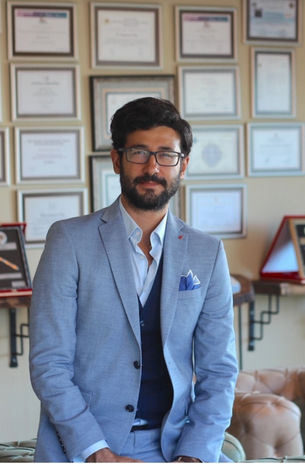
Prof. Dr. Suleyman Tas is a European Board-certified plastic, reconstructive and aesthetic surgeon based in Istanbul with over 20 years of experience, author of Rhinoplasty in Practice (CRC Press) and founder of the Closed Atraumatic Rhinoplasty Course. Read verified patient reviews or book a consultation.
This article is for general information and does not replace an individual medical consultation.
Core Rhinoplasty Guides From Prof. Dr. Suleyman Tas
Rhinoplasty in Istanbul — closed atraumatic technique, results and consultation with Prof. Dr. Suleyman Tas
How to choose the best rhinoplasty surgeon — the checks to make and the questions to ask
Rhinoplasty in Turkey for international patients — safety, process and aftercare
Revision rhinoplasty guide — when a second nose surgery is needed and how it is planned
Closed atraumatic rhinoplasty technique — how the operation avoids an external incision
Preservation rhinoplasty explained — dorsal preservation and who it suits
Rhinoplasty cost in Istanbul — what sets the price and what a quotation should list
Complete rhinoplasty guide — from consultation to recovery


Comments