_edited.png)

Best Age for a Facelift: Is 40 Too Young, Is 70 Too Late?
Quick answer. There is no correct age for a facelift. The right time is determined by anatomy, not by the number on your passport. Most patients are between forty five and sixty five, but a forty year old with early jowling and a loose neck can be a better candidate than a fifty five year old with strong bone structure and good skin. Seventy is not too late, provided general health is good.
Key takeaways
Anatomy decides, not age.
Most facelifts are performed between forty five and sixty five.
Forty is not too young if there is genuine structural descent.
Operating too early on a face that has not descended produces an unnatural result.
Health, not age, is the limiting factor in older patients.
Why the age question is the wrong question
When patients ask whether they are too young, they usually mean two different things. Sometimes they mean is my face bad enough to justify surgery. Sometimes they mean will it look obvious. Both are reasonable, and neither is answered by a birthday.
What a surgeon looks at is whether the tissues have actually descended. Press your fingers on the upper cheek and lift gently upward and outward. If that movement restores a jawline and a clean neck, the problem is descent and surgery addresses it. If it changes very little, the problem is volume, skin quality or bone structure, and a facelift is the wrong tool.
The case for operating earlier
Interest in surgery in the late thirties and early forties has risen sharply, partly because patients who started injectables early can see where the trajectory leads, and partly because photographs of early, natural results circulate widely.
The argument in favour is reasonable. Younger tissue has better elasticity and heals faster. The operation required is usually smaller. And because less has been lost, the result tends to look like a rested version of the same person rather than a change.
The argument against is equally reasonable. A face that has not yet descended has nothing to reposition. Surgery in that situation risks an over tightened look, and it starts the clock early: a facelift at thirty eight probably means a second one before sixty.


Realistic guidance by decade
Thirties. Rarely a facelift. Usually skin quality, volume, and sometimes early endoscopic or temporal lifting in patients with genuine mid face descent or a heavy neck from genetics rather than age.
Early forties. A minority need surgery. Those who do usually have early jowling, a family pattern of neck laxity, or significant weight loss. A limited or deep plane lift can be appropriate.
Late forties to fifties. The typical window. Jowls, jaw border loss and platysmal bands are established and a deep plane facelift with a neck lift gives the largest, most natural improvement.
Sixties. Excellent results, often with more dramatic before and after differences because more has been lost. Skin quality matters more, and combining surgery with resurfacing is common.
Seventies and beyond. Age alone is not a contraindication. Cardiovascular health, medication, smoking history and anaesthetic risk are what matter. Many patients in this group do very well.
What makes someone a good candidate at any age
Real structural descent that improves when the tissue is lifted manually.
Reasonable skin quality, or a willingness to treat the skin alongside surgery.
Stable weight and no active smoking.
Good general health and controlled blood pressure.
Realistic expectations. A facelift restores your own younger face. It does not give you someone else.
The risk of operating too early
An under indicated facelift has a characteristic look: tight, flat in the mid cheek, with a slightly stretched appearance around the mouth and ears, because the surgeon was pulling on tissue that had not descended. The result is not more youthful, it is simply different. This is the single strongest argument for choosing a surgeon willing to say not yet.
I have told patients in their late thirties to come back in five years more often than I have operated on them. The operation is easy to sell and hard to undo. Waiting is a legitimate medical recommendation.
Frequently asked questions
Is forty too young for a facelift?
Not necessarily. If there is genuine jowling and neck laxity, a forty year old can be an excellent candidate. If the face has not descended, forty is too young.
What is the best age for a facelift?
Most patients are between forty five and sixty five, because that is when descent is established but tissue quality is still good.
Is seventy too old for a facelift?
No. General health, cardiovascular fitness and anaesthetic risk matter, not the number itself.
Should I have fillers first and surgery later?
Volume loss and descent are different problems. Filler is appropriate for volume, but using it to disguise descent tends to make the lower face heavier. The article on facelift versus fillers explains where the line sits.
Does having a facelift early mean I will need more of them?
It usually means you will consider a second one in your late fifties or sixties, yes. Most patients have one or two in a lifetime.
Will a facelift at my age look obvious?
Obviousness comes from technique and over correction, not from age. A deep plane lift repositions the deep layer without tension on the skin, which is what keeps the result natural.
An honest assessment
Prof. Dr. Suleyman Tas is a double board certified plastic, reconstructive and aesthetic surgeon in Istanbul with over 20 years of experience and more than 10,000 operations. At consultation he will show you on your own photographs what lifting the deep layer would and would not change, including when the right answer is to wait. You can also read how long a facelift lasts before deciding on timing.
Continue reading in this facelift series
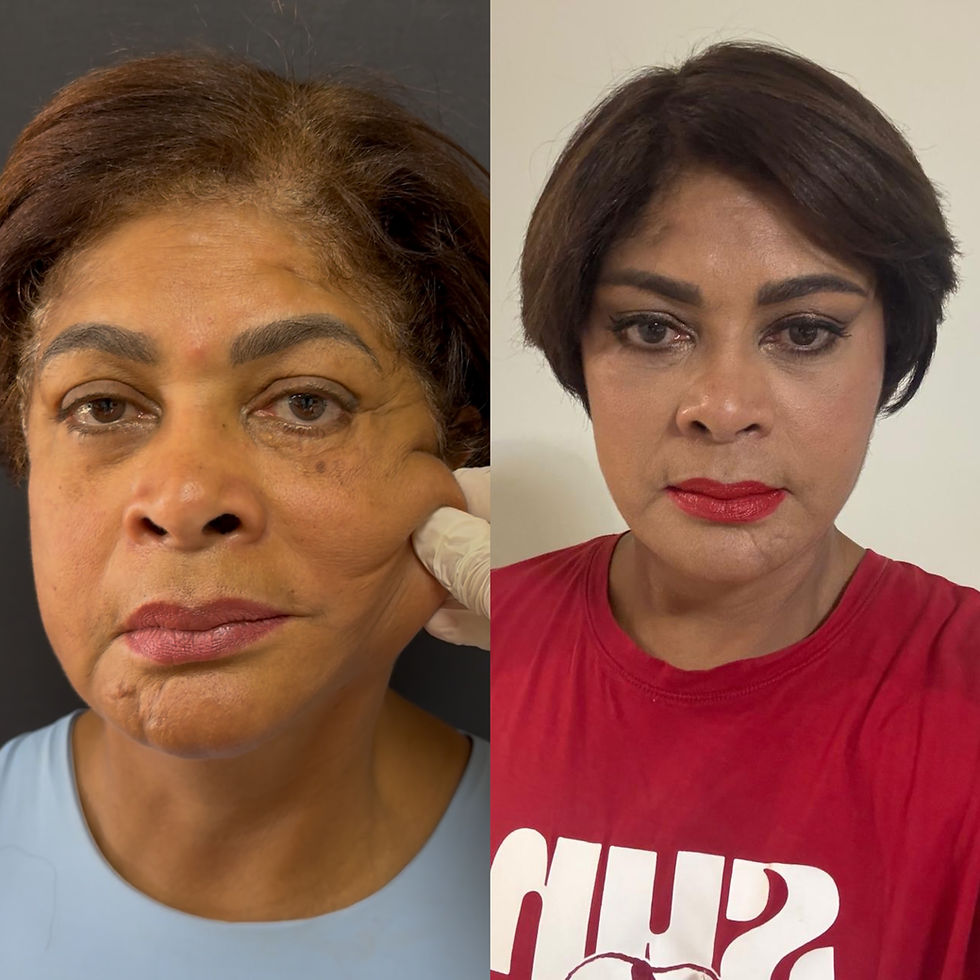
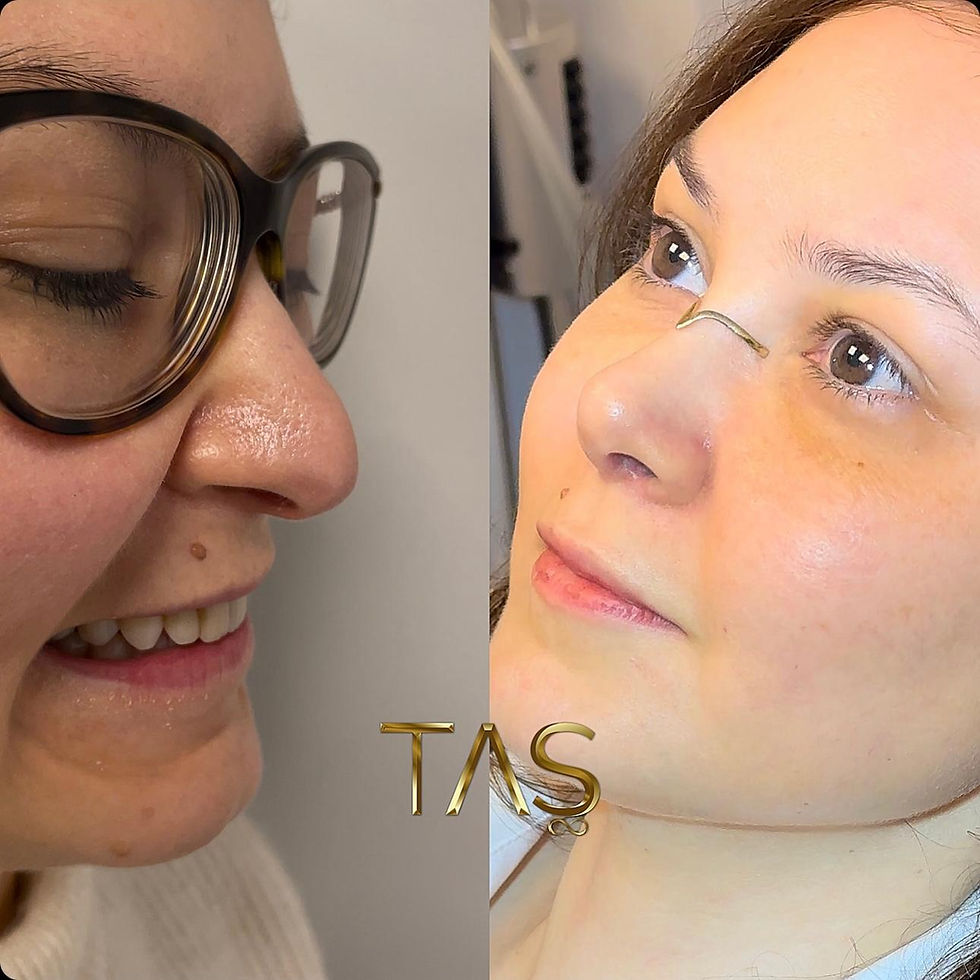
See Prof. Dr. Suleyman Tas's Viral Before and After Results


Before you decide anything, spend a few minutes with the real cases and the real voices. Every photograph below belongs to a patient of Prof. Dr. Suleyman Tas, published with consent, and every review is signed by the person who wrote it.
400 verified patient reviews, with photographs and video testimonials — read what patients say in their own words.
Deep plane facelift and neck lift before and after gallery — the face and neck lift results that made the practice known, case by case.
Happy patient, happy doctor — photographs taken with patients on the day they went home.
Would You Like the Same Result?
If you are considering facial surgery yourself, the next step is a personal assessment. Prof. Dr. Suleyman Tas reviews your photographs, explains which technique suits your anatomy, and tells you honestly whether surgery is the right answer for you at this stage.
Create your consultation with Prof. Dr. Suleyman Tas — Prof. Dr. Suleyman Tas Clinic, Terrace Fulya, Sisli, Istanbul.

Comments