_edited.png)

Facelift vs Fillers: When Injectables Stop Working
Quick answer. Fillers replace volume. A facelift repositions tissue. They solve different problems, and the moment to switch from one to the other is when your face has stopped looking fuller and started looking heavier. If each new syringe gives a smaller improvement than the last, or if friends say you look different rather than rested, the anatomy has moved past what injectables can address.
Key takeaways
Filler is for lost volume, surgery is for descended tissue.
The commonest mistake is using volume to treat descent, which adds weight to a face that is already falling.
Filler fatigue is real: diminishing returns, rising cost and a gradually altered face.
A deep plane facelift plus a modest amount of fat grafting solves both problems at once.
Injectables remain excellent after surgery, in smaller quantities and in the right places.
The two different problems
Ageing in the face is not one process. Volume is lost as the deep fat compartments shrink and bone resorbs, and tissue descends as the retaining ligaments loosen and the skin loses elasticity. Most people over forty five have both, in varying proportions.
Filler is genuinely excellent for the first problem. Placed deep, in the right compartments, in modest quantity, it restores support in the mid cheek, the temple and along the jaw and can make a real difference in the right face.
What it cannot do is move tissue upward. If the cheek fat has slid forward to form a jowl, injecting the jowl or the cheek does not put it back. The volume simply adds to what has already descended.
How to tell which one you need
Do this in front of a mirror.
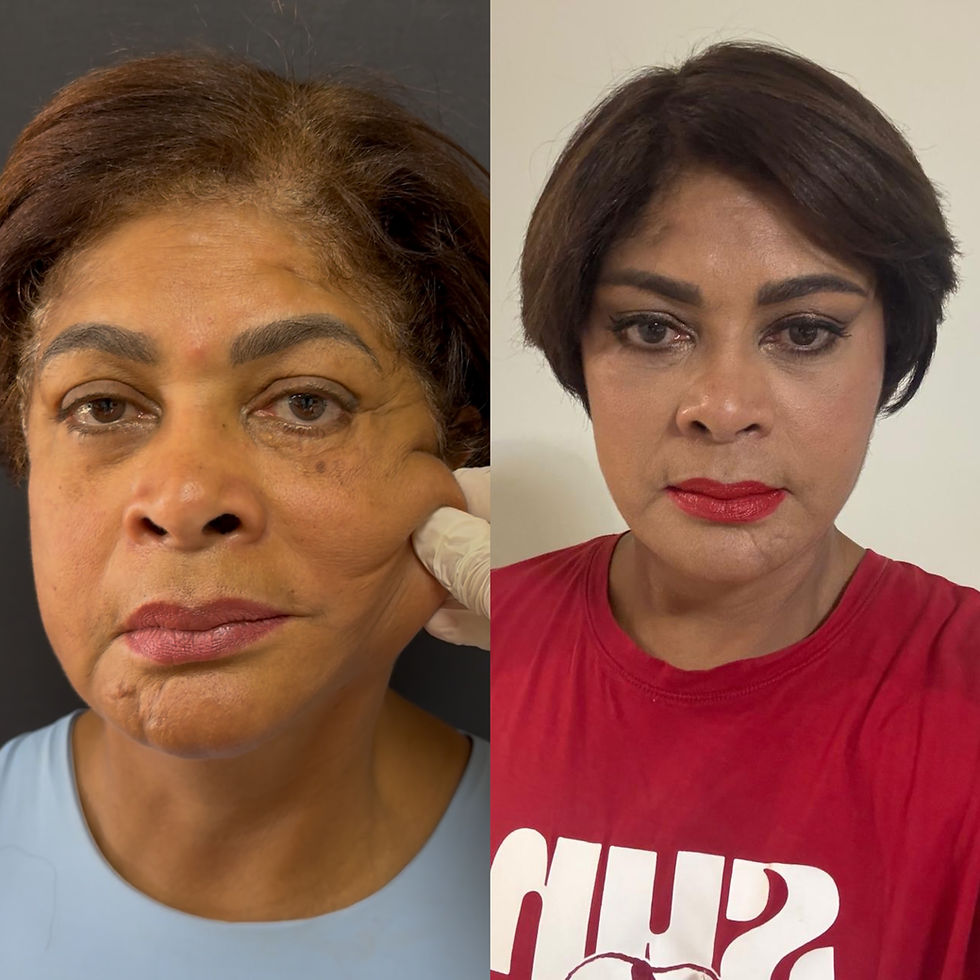
Place two fingers on the upper cheek, just below the outer corner of the eye.
Lift gently upward and slightly outward, without pulling the skin.
Watch the jowl, the jaw border and the fold beside the mouth.
If that small movement restores a jaw border and softens the fold, your problem is descent and surgery is the operation that reproduces it. If almost nothing changes but the face looks better when you imagine it fuller, your problem is volume and injectables are appropriate.


What filler fatigue looks like
Each treatment lasts less time and achieves less than the one before.
The mid face looks full at rest but heavy when you smile.
The lower face is getting wider rather than tighter.
Photographs from five years ago show a different face, not a younger one.
The annual cost of maintenance is approaching the one off cost of surgery.
None of this means the injector did anything wrong. It usually means the face crossed a line and the treatment plan did not change with it.
What surgery does that filler cannot
A deep plane facelift releases the retaining ligaments, repositions the deep layer of the cheek and jowl upward and redrapes the skin without tension. That restores the jaw border, flattens the fold beside the mouth by moving tissue rather than filling in front of it, and re establishes the angle under the chin when a neck lift is included.
Where volume genuinely has been lost, fat grafting performed at the same time replaces it with your own tissue rather than a product that needs repeating.
What injectables do best after surgery
Surgery does not end the role of injectables, it corrects it. After a facelift, small amounts of filler in the temple or tear trough, botulinum toxin for the forehead and around the eyes, and skin treatments for texture, all work better because they are being used for what they are good at rather than compensating for something structural.
I see patients who have spent more on eight years of filler than the operation would have cost, and who now need both the lift and time for the face to settle. The injectables were not the mistake. Continuing them past the point where they could help was.
Cost, honestly
A single facelift is a large one off cost. Filler is a smaller recurring one. Over a decade the two often converge, and beyond that surgery is usually the cheaper route. That is an argument for choosing the right treatment rather than the cheaper looking one, not an argument for rushing into surgery. There is a detailed article on facelift cost in Istanbul if you want the numbers.
Frequently asked questions
Is a facelift better than fillers?
Neither is better. Fillers replace lost volume, a facelift repositions descended tissue. The right choice depends on which problem your face actually has.
How do I know when to stop having fillers?
When results last less time and achieve less each session, when the lower face is widening, or when the face looks full but not lifted.
Can fillers delay the need for a facelift?
In a younger face with genuine volume loss, yes. In a face that has already descended, filler tends to bring the operation forward rather than delay it.
Will I still need injectables after a facelift?
Often yes, in much smaller amounts, for volume in the temple or under the eye and for lines that are caused by muscle rather than descent.
Do I need to dissolve my fillers before a facelift?
Not always, but your surgeon needs to know exactly what has been injected, where and when, because it affects the tissue planes. Sometimes dissolving hyaluronic acid filler before surgery gives a clearer assessment.
What about threads instead of surgery?
Threads give a modest and temporary effect and do not release the ligaments. For genuine descent they are not a substitute for a lift.
Working out which one you need
Prof. Dr. Suleyman Tas is a double board certified plastic, reconstructive and aesthetic surgeon in Istanbul with over 20 years of experience and more than 10,000 operations. At consultation he will show you on your own photographs which part of your appearance is volume and which part is descent, and will say plainly when injectables are still the better answer. See also best non surgical wrinkle treatments and the complete facelift guide.
Continue reading in this facelift series
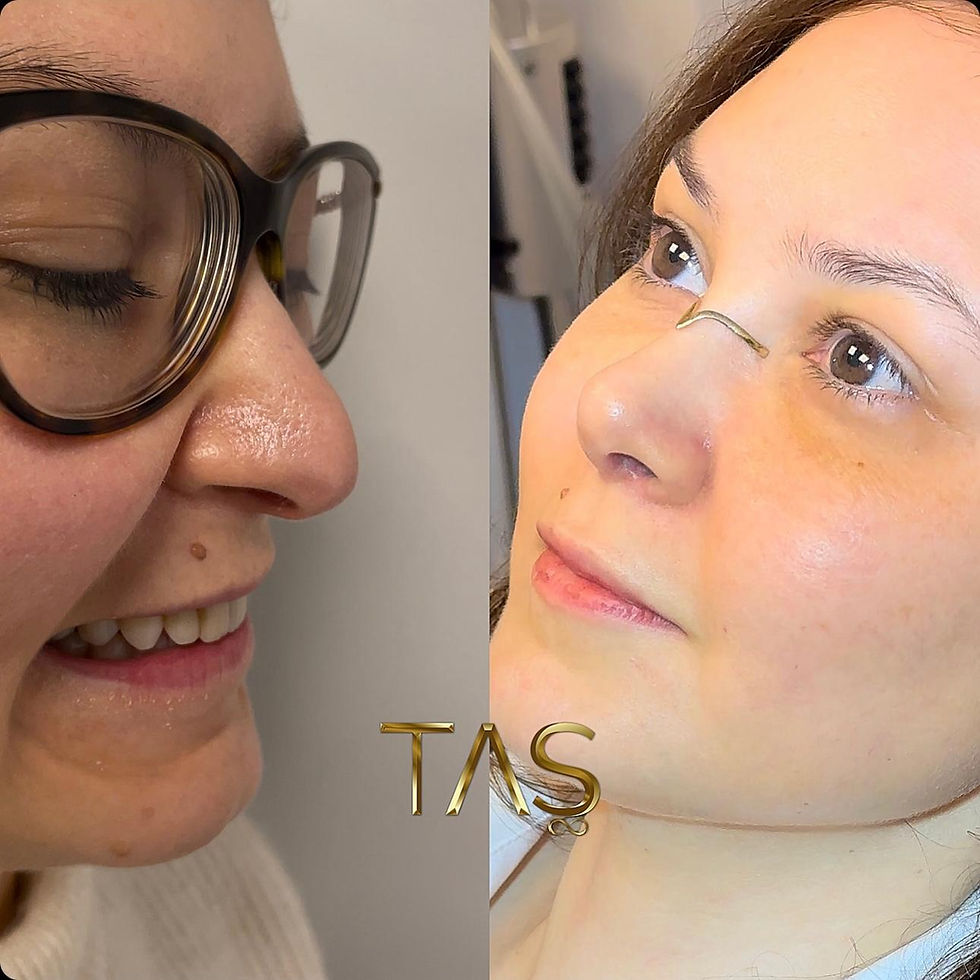
See Prof. Dr. Suleyman Tas's Viral Before and After Results


Before you decide anything, spend a few minutes with the real cases and the real voices. Every photograph below belongs to a patient of Prof. Dr. Suleyman Tas, published with consent, and every review is signed by the person who wrote it.
400 verified patient reviews, with photographs and video testimonials — read what patients say in their own words.
Deep plane facelift and neck lift before and after gallery — the face and neck lift results that made the practice known, case by case.
Happy patient, happy doctor — photographs taken with patients on the day they went home.
Would You Like the Same Result?
If you are considering facial surgery yourself, the next step is a personal assessment. Prof. Dr. Suleyman Tas reviews your photographs, explains which technique suits your anatomy, and tells you honestly whether surgery is the right answer for you at this stage.
Create your consultation with Prof. Dr. Suleyman Tas — Prof. Dr. Suleyman Tas Clinic, Terrace Fulya, Sisli, Istanbul.

Comments