_edited.png)

Scarless Facelift: What It Really Means and Who It Suits
Updated: 9 hours ago
"Scarless facelift" is a marketing name for lifting techniques whose incisions are hidden inside the hairline and inside the mouth rather than running around the ear. The skin is still cut — no operation lifts tissue without an incision — but nothing is placed where a scar would be visible on an exposed part of the face. Understanding that distinction is the difference between a realistic expectation and a disappointment.
What the term actually describes
In practice, three things are marketed as scarless:
Endoscopic lifting of the brow, temple and midface, through incisions of one to two centimetres inside the hair, with a camera guiding the release and fixation.
Intraoral (through the mouth) midface lifting, which leaves no external incision at all.
Thread lifting, which is not surgery and gives a limited and temporary effect.
The first two are operations with real and lasting results in the right patient. The third is a different category and should not be compared with them.
Who is a good candidate
Scarless techniques work best when the problem is descent of the cheek, the temple and the brow, and when the skin still has elasticity. That is typically patients in their late thirties to early fifties, and older patients whose ageing is concentrated in the midface rather than in the neck.
Who is not
If the complaint is loose skin along the jawline, vertical bands in the neck or a sharp fold under the chin, hiding the incisions in the hairline cannot solve it. Skin has to be removed, and that means an incision around the ear — a deep plane or extended SMAS lift with a neck lift. A surgeon who offers a scarless operation for a heavy neck is selling the name rather than the result.
What the operation involves
The endoscopic approach is performed under general anaesthesia and usually takes two to three hours on its own. The tissue is released at the correct plane under camera vision, lifted vertically and fixed to fixed points on the bone or deep fascia. Because the vector is vertical rather than backwards, the result tends to look restored rather than stretched. Fat grafting is frequently added in the same session, since a lifted but deflated face still looks tired.
Recovery
Most swelling settles within ten to fourteen days, and patients are typically comfortable in public after two weeks. Hair around the incisions is not shaved, numbness in the scalp is normal for several weeks, and the final contour appears over three to six months.
How to judge the surgeon rather than the name
Ask which plane is released and where the fixation is placed; ask to see twelve-month photographs of patients with your starting anatomy; ask what the surgeon would do if the neck also needs treatment. The checklist for choosing a deep plane facelift surgeon applies here in full.
Frequently asked questions
Is a scarless facelift really without scars?
No. The incisions are hidden inside the hairline or inside the mouth, so no scar is visible on exposed skin, but incisions are still made and they still heal as scars where they are placed.
How long do the results last?
When the lift is fixed at the deeper layer, most patients keep the improvement for years rather than months. It is not equivalent to a thread lift, which fades within about a year.
Can it replace a full facelift?
Only when the ageing is limited to the midface, temple and brow. Once there is excess skin at the jawline and neck, a lift with incisions around the ear gives a result that the endoscopic approach cannot.
Will my hairline move?
It should not. The technique is planned so that the temporal hairline stays where it is; an elevated hairline is a sign of a poorly planned or over-tightened lift.
Can it be combined with eyelid surgery or fat grafting?
Yes, and it commonly is. Brow position, upper eyelid skin and midface volume are one problem seen from three angles, and treating them together usually looks more natural than treating one alone.
Related reading
Next step
Contact Prof. Dr. Suleyman Tas Clinic in Istanbul to have your own anatomy assessed and to discuss which approach fits it.
About the author
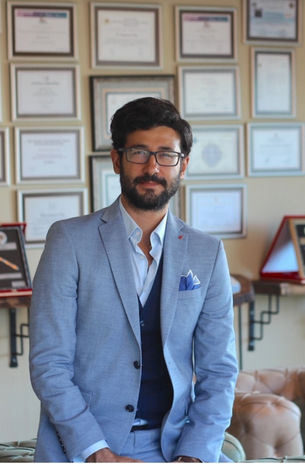
Prof. Dr. Suleyman Tas is a European Board-certified plastic, reconstructive and aesthetic surgeon based in Istanbul with over 20 years of experience, author of Rhinoplasty in Practice (CRC Press) and founder of the Closed Atraumatic Rhinoplasty Course. Read verified patient reviews or book a consultation.
This article is for general information and does not replace an individual medical consultation.


Comments