_edited.png)

How Long Does a Facelift Last? An Honest Answer
Quick answer. A well performed facelift lasts, on average, ten to fifteen years, and a deep plane facelift tends to sit at the longer end of that range. It does not stop you ageing. What it does is set your face back by roughly a decade and then let it age from that new starting point, which is why patients who had surgery at fifty often still look better at sixty five than they would have without it.
Key takeaways
Ten to fifteen years is the realistic expectation for a modern facelift.
The deeper the plane of the lift, the longer the result generally holds.
A skin only or mini lift gives a shorter result, often five to seven years.
Smoking, sun, large weight swings and untreated skin quality shorten the result more than time does.
Lasting does not mean frozen. You continue to age, from a younger baseline.
What does it actually mean for a facelift to last?
A facelift repositions tissue that has descended with age. It does not stop the biological processes that caused the descent in the first place: the ligaments continue to loosen, fat pads continue to shrink and move, bone continues to remodel, and the skin continues to lose collagen and elastin.
So the honest way to describe longevity is this. At any point after surgery, you will look younger than you would have looked without it. The gap between those two versions of you stays roughly the same for a very long time. What patients call the result wearing off is usually just the normal ageing that has happened since, superimposed on a better foundation.
Why the deep plane lasts longer
A traditional skin lift pulls on the skin. Skin is elastic, and elastic tissue under tension relaxes. That is why the earliest facelifts looked good for a couple of years and then settled.
Modern surgery works on the SMAS, the fibromuscular layer beneath the skin. A deep plane facelift goes one step further and releases the retaining ligaments that tether that layer to the deeper structures, then repositions the whole composite flap upward without tension on the skin. Because the strength of the lift sits in a layer that does not stretch, the result holds for longer and the skin is free to drape naturally rather than being pulled.
That is also why a deep plane result tends to look more natural as it ages. There is no pulled quality to unwind.


How long does each type of facelift last?
Mini or short scar lift. Usually five to seven years. Smaller dissection, faster recovery, less correction, shorter result.
SMAS facelift. Typically eight to twelve years.
Deep plane facelift. Typically twelve to fifteen years, sometimes longer in patients with good skin quality.
Endoscopic or so called scarless facelift. Designed for younger patients with mid face descent rather than heavy jowling. The result is real but more limited in scope, and is best thought of as intervening earlier rather than lasting longer.
Thread lifts and energy devices. Months to around two years. These are maintenance treatments, not surgery, and are not comparable.
What shortens a facelift result
Smoking. It damages the microcirculation of the skin and accelerates collagen breakdown. Smokers age faster after surgery, exactly as they did before it.
Sun exposure without protection. Ultraviolet light is the single largest external driver of skin ageing. A facelift repositions tissue, it does not repair sun damaged skin.
Large weight fluctuations. Losing and regaining ten kilos repeatedly stretches the skin envelope. Rapid weight loss on GLP-1 medication has made this newly relevant.
Untreated skin quality. If the skin is thin, crepey and sun damaged, lifting it does not change its texture. Patients who combine surgery with proper skin treatment keep their result looking fresher for longer.
Choosing too small an operation. A limited lift on a face that needed a full one does not last, because the underlying anatomy was never addressed.
Can you have a second facelift?
Yes. A secondary or revision facelift is a routine part of facial plastic surgery, usually performed ten to fifteen years after the first. It is technically more demanding because the planes are scarred and the anatomy is altered, and it should be done by a surgeon who does this work regularly. Many patients choose a smaller refresh of the neck and jawline rather than a full repeat procedure. The article on revision facelift surgery explains what changes the second time.
How to make your result last
Stop smoking, before surgery and permanently.
Use a broad spectrum sunscreen every day, not only in summer.
Keep your weight stable within a few kilos.
Treat the skin itself: medical skin care, and where appropriate resurfacing or energy based treatments once healing is complete.
Keep the deeper volume balanced. Fat grafting at the time of surgery, or later, supports the lift as the face continues to lose volume.
Longevity is decided in two places. One is the operating room, in which layer the surgeon chooses to work. The other is the next ten years of the patient life, in the sun, with or without cigarettes.
Frequently asked questions
How long does a deep plane facelift last?
Typically twelve to fifteen years, and sometimes longer in patients with good skin quality who protect their skin and do not smoke.
Does a facelift stop you ageing?
No. It resets your starting point by around a decade. You continue to age from there, which is why the benefit remains visible even many years later.
Is a mini facelift worth it if it does not last as long?
For the right patient, yes. A mini lift suits early jowling in a younger face and can be repeated. For a face with significant neck laxity it is the wrong operation and will disappoint.
How many times can you have a facelift?
Most patients have one or two in a lifetime. A third is possible but each operation is technically harder and the gains become smaller.
Do non surgical treatments extend a facelift?
Good skin care, sunscreen, and appropriately used energy based devices maintain skin quality, which keeps the result looking better. They do not extend the structural lift itself.
Will I look pulled as the facelift ages?
Not with a deep plane technique done well, because the lift is carried by the deep layer and the skin is not under tension. A pulled appearance years later is a sign that the original operation relied on skin tension.
Getting a realistic answer for your own face
How long your facelift lasts depends on your anatomy, your skin and your habits, and none of that can be judged from an article. Prof. Dr. Suleyman Tas is a double board certified plastic, reconstructive and aesthetic surgeon in Istanbul with over 20 years of experience and more than 10,000 operations, and he will tell you which technique your face actually needs, including when the honest answer is to wait. You can also read the complete facelift guide and the comparison of full, mini and deep plane facelifts.
Continue reading in this facelift series
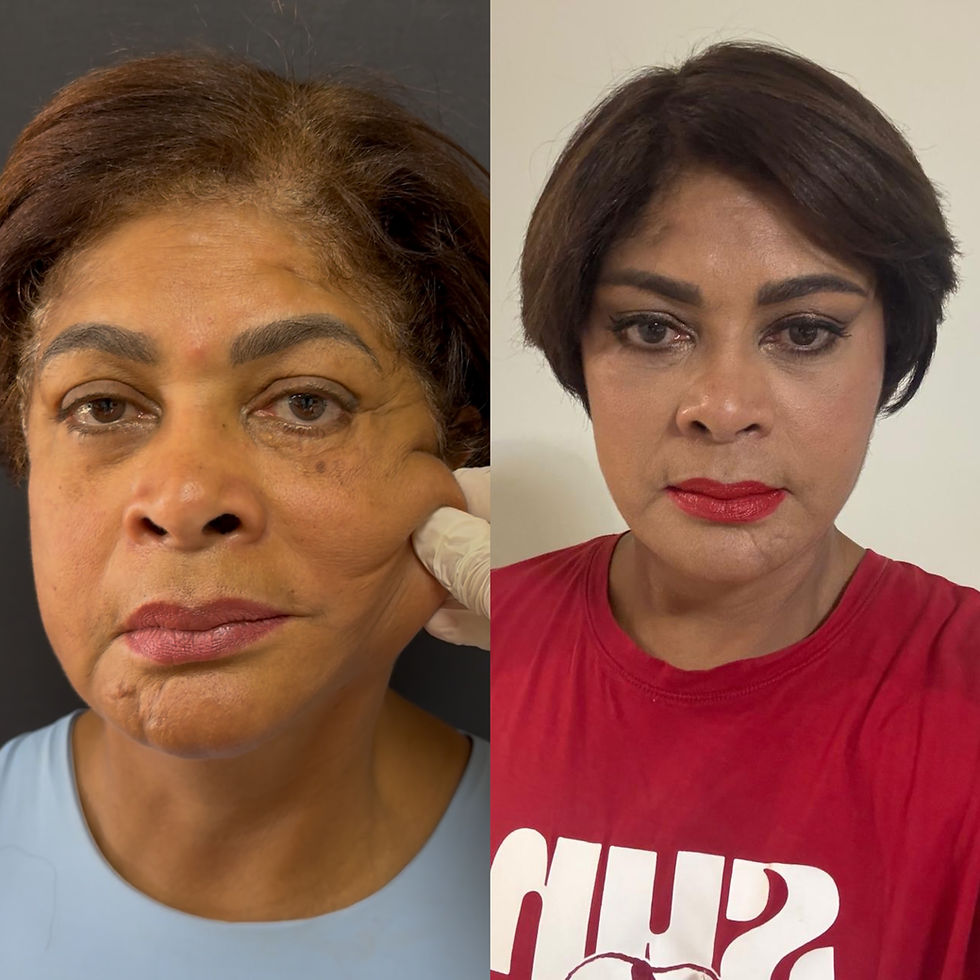
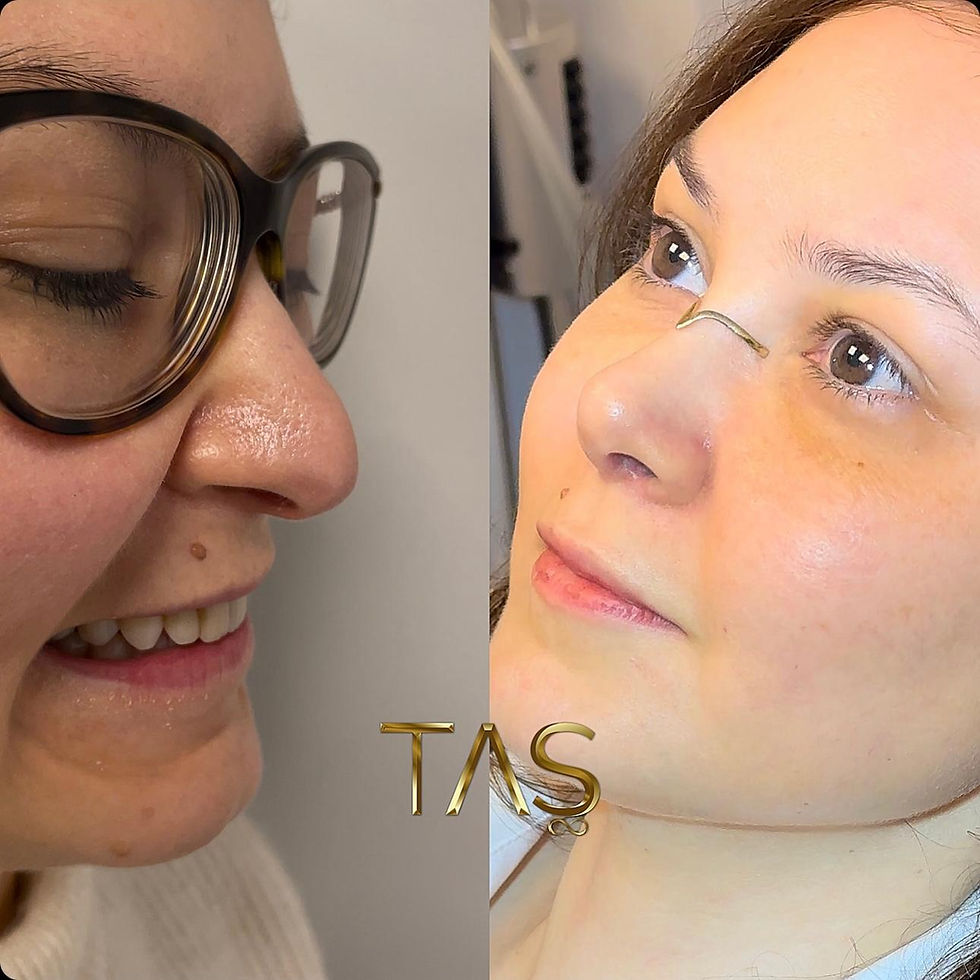
See Prof. Dr. Suleyman Tas's Viral Before and After Results


Before you decide anything, spend a few minutes with the real cases and the real voices. Every photograph below belongs to a patient of Prof. Dr. Suleyman Tas, published with consent, and every review is signed by the person who wrote it.
400 verified patient reviews, with photographs and video testimonials — read what patients say in their own words.
Deep plane facelift and neck lift before and after gallery — the face and neck lift results that made the practice known, case by case.
Happy patient, happy doctor — photographs taken with patients on the day they went home.
Would You Like the Same Result?
If you are considering facial surgery yourself, the next step is a personal assessment. Prof. Dr. Suleyman Tas reviews your photographs, explains which technique suits your anatomy, and tells you honestly whether surgery is the right answer for you at this stage.
Create your consultation with Prof. Dr. Suleyman Tas — Prof. Dr. Suleyman Tas Clinic, Terrace Fulya, Sisli, Istanbul.

Comments