_edited.png)

Facelift Scars: Where the Incisions Go and How They Heal
Quick answer. Facelift scars are placed where they are least visible: in front of the ear, around the earlobe, behind the ear and into the hairline at the temple and the nape, and sometimes in a small crease under the chin. They are pink and firm for the first months, then fade and flatten over twelve to eighteen months. In most patients they are hard to notice at conversation distance once healed, but no facelift is truly scarless.
Key takeaways
Incisions follow natural creases and the hairline: at the temple, in front of the ear, around the lobe and behind the ear.
Scars are pink and raised early, and mature over twelve to eighteen months.
Sun protection, not smoking and low-tension closure are the main things that influence how a scar heals.
Scars in some people heal thicker or darker; this can be treated.
Ask to see healed photographs at one year, not photographs from the first weeks.
Where facelift incisions are placed
A facelift needs access to the tissue under the skin of the cheeks and neck. The surgeon reaches it through incisions placed at the edge of structures that hide them. The exact pattern depends on the technique, on your hair and on how much skin needs to be repositioned, but the main locations are consistent.
In the hair at the temple, just above and in front of the ear, so that the hairline is not shifted.
In front of the ear, following the fold at the edge of the ear or the small flap of cartilage in front of the canal.
Around the earlobe, where the skin meets the cheek.
Behind the ear, in the crease where the ear meets the head, and sometimes extending into the hair behind the ear.
A small incision beneath the chin, in the natural crease, when the neck is treated.
A shorter incision is used in mini lifts and endoscopic approaches, and these have shorter scars but treat less tissue. Our guides on the endoscopic facelift and on scarless facelift claims explain what such techniques can and cannot do.
How facelift scars look over time
Days 1 to 10. Sutures or staples along the incisions, bruising and swelling around them. Sutures are removed in stages, usually between days five and ten.
Weeks 2 to 6. Bright pink or red lines, slightly raised and firm. This is normal and not the final scar.
Months 3 to 6. Scars begin to soften and lose redness, although they may still feel tight or itchy.
Months 6 to 12. Most scars become pale and flat.
Months 12 to 18. Scar maturation finishes. Most patients then find the scars difficult to see from a normal distance.


What determines how well a scar heals
Tension
Scars that are closed under tension widen and thicken. The purpose of lifting the deeper tissue is to carry the load in the deeper layers, so that the skin can be closed with little tension. This is one reason deeper techniques tend to produce finer scars than operations that pull on the skin alone.
Where the scar sits
A scar in front of the ear should follow the natural fold, and behind the ear it should sit in the crease. A scar that runs across the cheek skin or drags the earlobe downward is a technical problem, not a healing problem.
Smoking and blood supply
Smoking reduces the blood supply to the skin flaps and increases the risk of wound healing problems and widened scars. Surgeons ask you to stop for a period before and after surgery for this reason.
Sun
New scars are sensitive to ultraviolet light and darken in sun. A hat and a high-factor sunscreen protect them for at least the first year.
Your own skin
Some people, especially those with a personal or family history of thick or raised scars, or with darker skin, tend to form scars that are thicker or darker than average. Tell your surgeon in advance, so that a plan for treatment is in place.
How to help your scars heal
Keep the incisions clean and dry as instructed, and do not pick at crusts.
Avoid pulling, stretching or rubbing the skin around the incisions.
Once the wounds are fully closed, and if your surgeon approves, silicone gel or sheets can be used.
Protect scars from sun with a hat and high-factor sunscreen.
Do not smoke.
Attend follow-up visits so that any problem is treated early.
Hair, earlobes and other scar-related worries
Some hair loss around the incisions in the temple and behind the ear is common and usually temporary, growing back over several months. A well-planned incision keeps the sideburn and hairline where they were. The earlobe should not be pulled downward or look attached to the cheek, and if the closure pulls it, that is a technical problem that a surgeon can plan to avoid. Women with long hair and men with short hair have different patterns of hiding scars, which is discussed in our article on the male facelift.
The best evidence for a facelift scar is a photograph of a real patient at twelve months, taken in ordinary light with the hair off the ear. I encourage patients to ask every surgeon they consult for exactly that.
If a scar heals poorly
A scar that is wide, thick, raised or discoloured can usually be improved. Options include silicone treatment, injections into a raised scar, light or laser treatment for colour and, in some cases, surgical revision after the scar has matured. These are decided individually, and it is worth waiting until the scar has matured before deciding, because many scars improve substantially between six and eighteen months. Our revision facelift guide covers correction in more depth.
Questions to ask before surgery
Where exactly will my incisions be, and how long will they be?
How will you handle my sideburn and hairline?
Can I see healed photographs of patients with hair and skin similar to mine, at twelve months?
What is your plan if a scar heals thickly?
Which factors in my own case affect scar healing?
Frequently asked questions
Where are facelift scars located?
In front of the ear, around the earlobe, behind the ear and into the hairline at the temple and nape, and sometimes in a small crease under the chin when the neck is treated.
Are facelift scars visible?
In most patients, healed scars are hard to see at conversation distance, especially with the hair styled over them. They are visible on close inspection, and no facelift is truly scarless.
How long do facelift scars take to fade?
Incisions close within two weeks, but scar maturation takes twelve to eighteen months. They are pink and firm at first and become pale and flat with time.
Can I hide facelift scars with makeup or hair?
Yes. Makeup can cover redness once the wounds are closed, and hair styled over the ear and hairline hides most scars in the early months.
What makes facelift scars heal badly?
Tension on the closure, smoking, sun exposure, wound healing problems and personal tendency to form thick or dark scars. A careful technique and good aftercare reduce most of these.
Is a scarless facelift possible?
No operation that lifts the face is completely scarless. Some techniques use shorter incisions, but they treat less tissue and are suited only to selected patients.
Planning treatment with Prof. Dr. Suleyman Tas
Prof. Dr. Suleyman Tas plans each incision individually, explains where the scars will be for your hair and skin, and shows healed results. To discuss your own case, use the online consultation form or look at the face and neck lift before and after gallery.
Continue reading in this facelift series
See Prof. Dr. Suleyman Tas's Viral Before and After Results
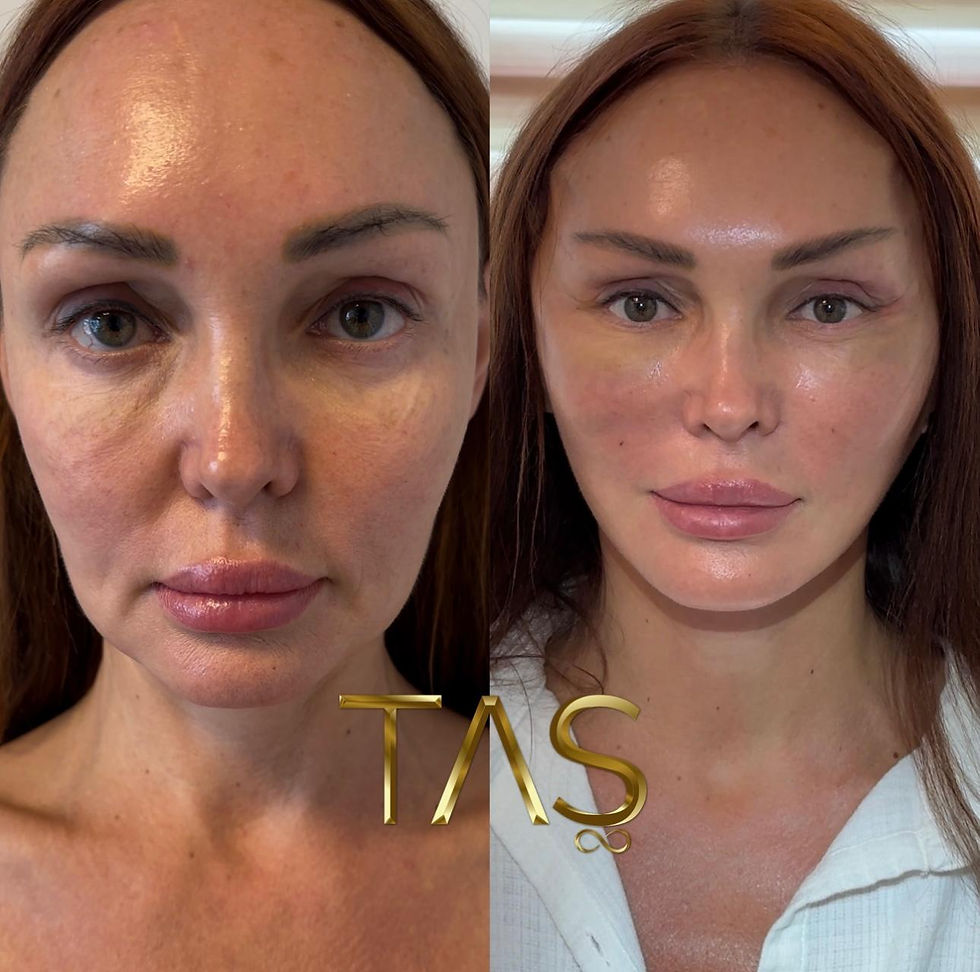
Before you decide anything, spend a few minutes with the real cases and the real voices. Every photograph above belongs to a patient of Prof. Dr. Suleyman Tas, published with consent, and every review is signed by the person who wrote it.
400 verified patient reviews, with photographs and video testimonials — read what patients say in their own words.
Deep plane facelift and neck lift before and after gallery — the face and neck lift results that made the practice known, case by case.
Happy patient, happy doctor — photographs taken with patients on the day they went home.
Would You Like the Same Result?
If you are considering facial surgery yourself, the next step is a personal assessment. Prof. Dr. Suleyman Tas reviews your photographs, explains which technique suits your anatomy, and tells you honestly whether surgery is the right answer for you at this stage.
Create your consultation with Prof. Dr. Suleyman Tas — Prof. Dr. Suleyman Tas Clinic, Terrace Fulya, Sisli, Istanbul.


Comments