_edited.png)

Facelift Swelling and Bruising: What Is Normal and What Is Not
Quick answer. Facelift swelling and bruising usually peak around day three or four, fade noticeably in the second week, and are mostly gone by six weeks, with the last subtle swelling taking three to six months. It is normal for one side to swell more than the other, for the neck to feel tight and for bruising to travel down toward the neck and chest. A sudden, tense, painful swelling on one side, spreading redness or fever are not normal and need a call to your surgeon at once.
Key takeaways
Swelling peaks around day three or four, then improves steadily; bruising changes colour from purple to green to yellow as it fades.
Asymmetry, tightness and numbness are common and temporary.
Most bruising is gone by two to three weeks; subtle swelling can last three to six months.
Head elevation, rest and following the surgeon's instructions are what help; supplements and gadgets add little.
A rapidly enlarging, tense swelling on one side, severe one-sided pain, spreading redness or fever need urgent contact with the surgeon.
Why the face swells after a facelift
A facelift lifts the skin and the deeper tissue, and any surgery on tissue causes fluid to collect around the operated area. The face has a rich blood and lymphatic supply, it sits above the heart when you are upright, and gravity pulls the fluid downward, so the face and neck swell more visibly than many other parts of the body. Some bruising is also inevitable because tiny blood vessels are opened during surgery and their blood spreads through the tissue.
The American Society of Plastic Surgeons describes swelling and bruising as peaking around day three and four and persisting for several additional weeks, often with numbness and tightness. That matches our own experience and is the reason patients are advised not to judge the result in the first month. Our facelift recovery timeline follows the whole sequence.
Swelling and bruising by stage
Days 1 to 2. The face feels tight and heavy. The dressing keeps swelling under control. Rest with the head raised.
Days 3 to 4. Swelling peaks. Bruising darkens and spreads toward the neck, jaw and sometimes the upper chest. This is normal.
Days 5 to 10. Swelling begins to drop, especially in the morning after sleeping upright. Bruises turn green and yellow. Sutures start to be removed.
Weeks 2 to 3. Most bruising fades and can be covered with makeup. The face looks presentable for many patients.
Weeks 4 to 6. Most swelling is gone. Residual swelling shifts through the day, worst in the morning or after exertion.
Months 3 to 6. The last swelling, often visible only in photographs and to you, resolves. The final shape appears.


What is normal
Asymmetry. One side often swells and bruises more than the other, especially if it was the side operated on for longer or the one you sleep on.
Tightness and numbness. The skin of the cheeks, ears and neck loses sensation for weeks to months as small nerves recover.
Bruising that travels. Gravity moves blood from the face to the neck and chest. It looks alarming and is harmless.
Morning puffiness. Swelling collects overnight and gradually eases through the day.
Lumps and firm areas along the incisions and in the neck as tissue heals. These soften over weeks.
Emotional swings. Many patients feel low around day three to seven, when swelling is at its worst and the result is hidden. It passes.
What is not normal: when to call your surgeon
These signs need a call to your surgeon immediately, and, if you cannot reach them, urgent medical care where you are.
A sudden, tense, painful swelling on one side of the face or neck, especially in the first days and especially if it keeps growing. This can be a hematoma, a collection of blood under the skin, and it is treated by draining it.
Severe pain on one side that is not controlled by your prescribed painkillers.
Spreading redness, warmth, pus or a fever, which can indicate an infection.
Skin that turns dark, blue or blistered near the incisions.
Difficulty breathing or swallowing because of neck swelling.
Chest pain, shortness of breath or a swollen, painful calf, which need emergency care.
These situations are rare, and when they are treated quickly they are almost always fully resolved. That is a large part of why we ask patients from abroad to stay in the city for the first ten to fourteen days, as described in our article on how long to stay in Istanbul after a facelift.
What actually helps
Keep your head raised on extra pillows or a wedge for the first one to two weeks.
Rest, and keep activity light: short walks are good, bending, lifting and straining are not.
Follow your surgeon's instructions on cold compresses. Gentle cold may be advised in the first days; ice pressed hard on the skin may be harmful.
Avoid aspirin, ibuprofen and supplements that thin the blood unless your surgeon has approved them.
Do not smoke and avoid alcohol, both of which impair healing and increase swelling.
Drink water and eat lightly, and limit very salty food while swelling is at its peak.
Keep blood pressure under control. High blood pressure is a recognised risk factor for bleeding.
Ask about lymphatic massage and start it only if your surgeon recommends it and at the time they advise.
Products marketed as swelling reducers, such as arnica, bromelain or special garments beyond what the surgeon prescribes, have limited evidence. They are unlikely to cause harm in normal doses, but they should not replace the basics or delay a call to the surgeon when something looks wrong. For more on the practical side, see our guide on how to speed up facelift recovery.
Almost every patient looks worse on day four than on day one, and almost every patient is surprised by it. Swelling is expected, and it is my job to tell you in advance which swelling is expected and which is not.
Swelling in a neck lift and in combined operations
When the neck is treated, or when eyelid surgery and fat grafting are done in the same session, swelling can be more pronounced and last a little longer, especially under the chin and around the eyes. Our article on neck lift pain and recovery describes the neck in detail.
Frequently asked questions
How long does facelift swelling last?
Swelling peaks around day three or four, drops sharply in the second week and is mostly gone by six weeks. The last subtle swelling can take three to six months to settle.
Is it normal for one side of the face to swell more after a facelift?
Yes. Asymmetry in swelling and bruising is common in the first weeks and evens out as the tissue settles. Mention it at your check-ups, but it is rarely a cause for concern on its own.
How long does facelift bruising last?
Most bruising fades over two to three weeks, changing from purple to green to yellow. It may travel down to the neck and chest, which is harmless.
What does a hematoma after a facelift look and feel like?
A hematoma is usually a sudden, tense, painful swelling on one side that keeps growing, often in the first days. It needs an immediate call to the surgeon, because draining it early prevents complications.
Can I do anything to reduce facelift swelling faster?
Keep your head raised, rest, avoid smoking, alcohol and blood-thinning medication, and follow your surgeon's instructions on cold compresses and massage. Supplements and gadgets have limited evidence.
When does facelift swelling look worst?
Around days three and four. Many patients feel at their lowest then, before the face starts to improve day by day.
Planning treatment with Prof. Dr. Suleyman Tas
Prof. Dr. Suleyman Tas sees international patients daily during the first week and reviews photographs at one month, three months and six months, so that swelling, bruising and healing are checked by the surgeon who performed the operation. You can book an online consultation to discuss your own case, or read more about facelift and face aesthetics in Istanbul.
Continue reading in this facelift series
See Prof. Dr. Suleyman Tas's Viral Before and After Results
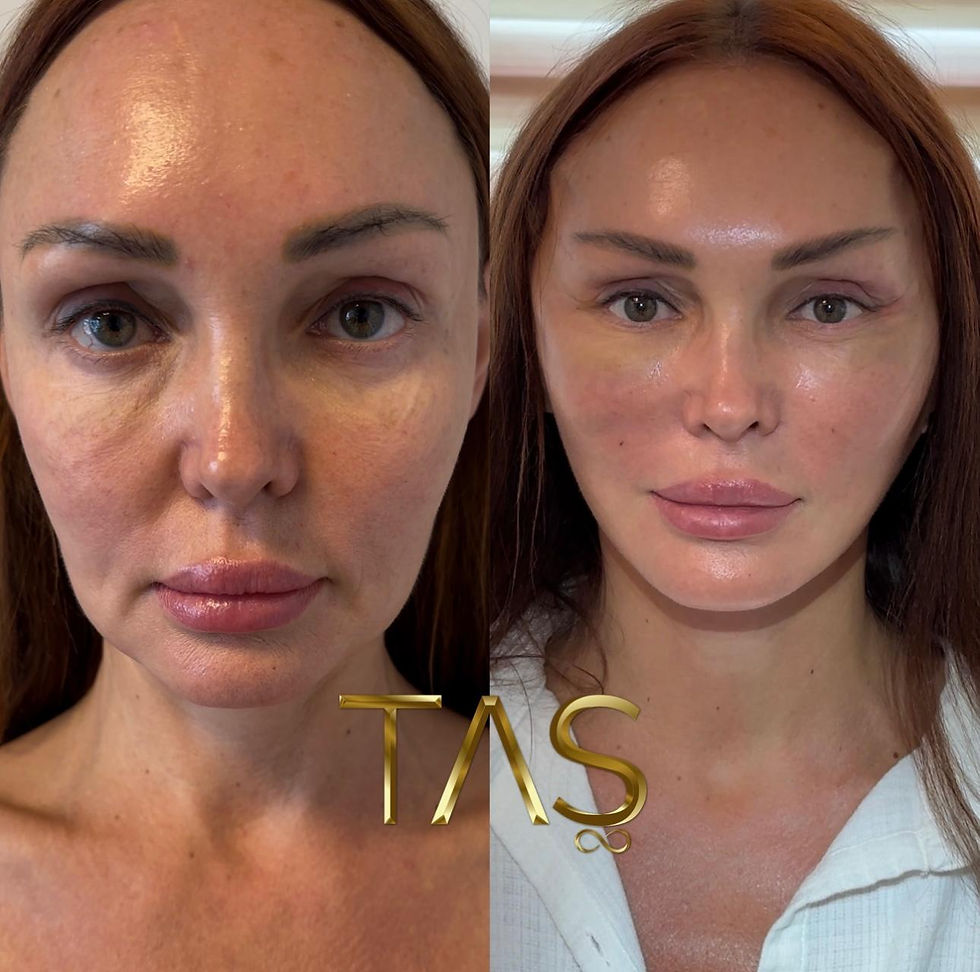
Before you decide anything, spend a few minutes with the real cases and the real voices. Every photograph above belongs to a patient of Prof. Dr. Suleyman Tas, published with consent, and every review is signed by the person who wrote it.
400 verified patient reviews, with photographs and video testimonials — read what patients say in their own words.
Deep plane facelift and neck lift before and after gallery — the face and neck lift results that made the practice known, case by case.
Happy patient, happy doctor — photographs taken with patients on the day they went home.
Would You Like the Same Result?
If you are considering facial surgery yourself, the next step is a personal assessment. Prof. Dr. Suleyman Tas reviews your photographs, explains which technique suits your anatomy, and tells you honestly whether surgery is the right answer for you at this stage.
Create your consultation with Prof. Dr. Suleyman Tas — Prof. Dr. Suleyman Tas Clinic, Terrace Fulya, Sisli, Istanbul.


Comments