_edited.png)

Facelift vs Neck Lift: Which One Fixes Jowls and a Sagging Neck?
Quick answer. A facelift lifts and repositions the cheeks, jowls and jawline, while a neck lift tightens the muscle and skin under the chin and along the neck. If the problem is jowls and a drooping mid face, you need a facelift. If the problem is a loose neck, vertical bands and a soft angle under the chin, you need a neck lift. Most people over about fifty have both, which is why the two are so often done together.
Key takeaways
A facelift works on the cheeks, jowls and jawline; a neck lift works on the platysma muscle, the skin and the fat beneath the chin.
A neck lift alone will not lift jowls, and a facelift alone will not fully correct platysma bands or a hanging neck.
Most patients who want a natural jawline benefit from treating the face and neck in one operation.
A deep plane technique lifts the face and neck as one continuous unit rather than pulling skin.
The right choice is made by examination, not by age.
The short difference between a facelift and a neck lift
The face and the neck are one unit, but they age in different layers. In the lower face, the cheek fat pad slips downward, the ligaments that hold the cheek weaken, and the tissue collects along the jawline as jowls. In the neck, the platysma, a thin sheet of muscle, loosens and separates in the midline, forming vertical bands, while skin and fat gather under the chin. Because these are different structures, the operations that correct them are different, although they are usually planned together.
What a facelift corrects
Jowls and a broken line of the jaw.
The deepening fold between the nose and the corner of the mouth, at least in part.
The downward slide of the cheek and a hollow beneath the eyes, when the mid face is included.
A general loss of tension in the lower face.
A facelift does not stop the face from aging, and it does not change who you are. It restores the position of tissue that has descended. Our guide to full, mini and deep plane facelifts explains how the different techniques compare, and the article on deep plane facelift in Istanbul describes how the deeper release works.
What a neck lift corrects
Vertical platysma bands that appear when you speak or clench.
Loose skin and a soft angle between the chin and the neck.
Fat beneath the chin, which may be treated with liposuction or direct removal.
A visible contour difference between a lifted face and a neck that has not been treated.
A neck lift can be done on its own through incisions under the chin and behind the ears, and it can be combined with liposuction. The article on the deep plane neck lift and jawline definition explains how a neck lift defines the jawline, and the piece on neck lift pain and recovery describes what the first weeks feel like.


Which do you need? A practical self-check
Stand in front of a mirror in good light and look at three things. This is not a diagnosis, but it shows you which conversation to have with a surgeon.
Look at the jawline. If there is a line of soft tissue hanging over it, a facelift is the operation that lifts it.
Look under the chin with your head level. If the skin hangs, or you see a vertical cord on each side, the neck needs its own attention.
Look at the transition. If you imagine lifting only the cheeks, would the neck look wrong next to them? That is the usual reason to treat both.
Why most people have both
A facelift lifts the tissue upward and backward. If the neck skin and platysma are not tightened at the same time, the lifted jawline meets an unchanged neck and the result can look unfinished. Conversely, a neck lift alone will tighten under the chin but will not lift jowls that hang above the jawline. For patients in their late forties and beyond, treating both in one operation usually produces the more natural and more durable result, and a single recovery.
When a neck lift alone is enough
A neck lift on its own is reasonable if the face is in good shape, the jowls are minimal, and the problem is limited to the neck: a younger patient after significant weight loss, someone with a strong jawline and a soft neck, or a patient who has already had a facelift that did not address the platysma. Thorough examination, sitting and lying down, decides this.
When non-surgical treatments may be enough
If the changes are early, treatments such as skin tightening technology, neuromodulators for the neck bands or fillers for volume can delay surgery in some patients. They do not lift descended tissue. Our articles on facelift vs fillers and on the Cinderella facelift and other lighter options explain where the limits of non-surgical treatment lie.
Recovery: what changes when you add the neck
A facelift with a neck lift is not much longer to recover from than a facelift alone, but the neck is often the tightest and most uncomfortable area in the first week, and a compression garment is usually worn for a period. Swelling peaks around day three and four, most people are socially presentable in two to three weeks, and the final result settles over six to twelve months. Our facelift recovery timeline covers this in detail.
The question is never facelift or neck lift. The question is which layers have changed in your face and neck, and which operation corrects those layers rather than tightening skin over them.
Questions to ask your surgeon
Which layer do you plan to lift in my face, and why?
Is my platysma being tightened, and how?
Do I need liposuction or direct fat removal under the chin?
Will my scars be in front of the ear, behind the ear and within the hairline, and how will they look at one year?
What will the neck look like compared with the face at six months?
Frequently asked questions
Is a neck lift the same as a facelift?
No. A facelift lifts the cheeks, jowls and jawline. A neck lift tightens the platysma muscle, skin and fat under the chin and along the neck. They are often done together, but each corrects different structures.
Will a facelift fix a sagging neck?
Partly. A facelift lifts the neck skin along with the lower face, but vertical platysma bands and heavy fat under the chin usually need a specific neck procedure at the same time.
Can a neck lift fix jowls?
Not on its own. Jowls sit above the jawline and are lifted by a facelift. A neck lift improves the contour below the jaw and under the chin.
Which is better for a defined jawline, a facelift or a neck lift?
A defined jawline usually needs both: the facelift lifts the jowl tissue and the neck lift tightens the tissue beneath the jaw, so the two work together to create the angle between the jaw and the neck.
Is 60 too old for a neck lift?
Age alone does not decide it. Skin quality, general health and expectations matter more, and many patients in their sixties and seventies have a neck lift with or without a facelift.
Is the recovery from a facelift with a neck lift longer than from a facelift alone?
Slightly. The neck is often the most uncomfortable and tight area in the first week, but most patients are presentable in two to three weeks either way.
Planning treatment with Prof. Dr. Suleyman Tas
Prof. Dr. Suleyman Tas assesses the face and neck together, looks at which layers have changed, and explains honestly whether you need a facelift, a neck lift, both, or neither yet. To discuss your own case, send your photographs through the online consultation form, or read about the jawline and neck procedures on the service page.
Continue reading in this facelift series
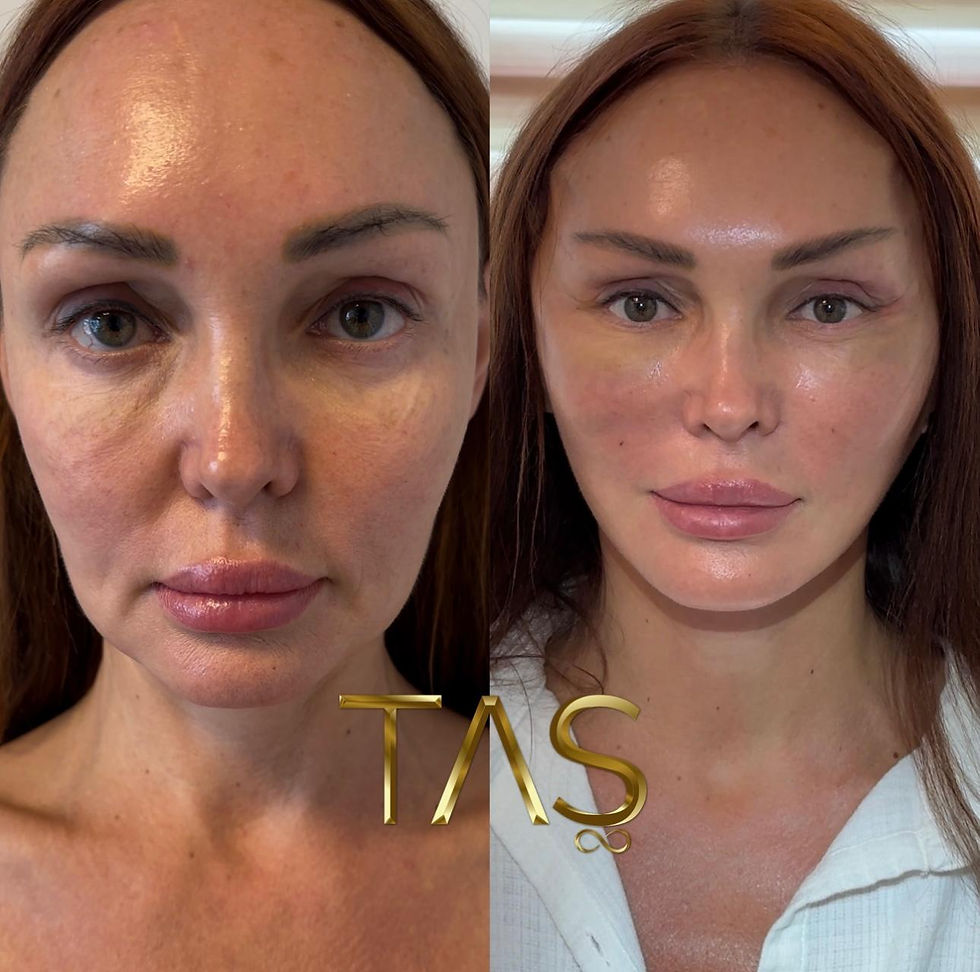
See Prof. Dr. Suleyman Tas's Viral Before and After Results
Before you decide anything, spend a few minutes with the real cases and the real voices. Every photograph above belongs to a patient of Prof. Dr. Suleyman Tas, published with consent, and every review is signed by the person who wrote it.
400 verified patient reviews, with photographs and video testimonials — read what patients say in their own words.
Deep plane facelift and neck lift before and after gallery — the face and neck lift results that made the practice known, case by case.
Happy patient, happy doctor — photographs taken with patients on the day they went home.
Would You Like the Same Result?
If you are considering facial surgery yourself, the next step is a personal assessment. Prof. Dr. Suleyman Tas reviews your photographs, explains which technique suits your anatomy, and tells you honestly whether surgery is the right answer for you at this stage.
Create your consultation with Prof. Dr. Suleyman Tas — Prof. Dr. Suleyman Tas Clinic, Terrace Fulya, Sisli, Istanbul.


Comments