_edited.png)

How to Speed Up Facelift Recovery: What Helps and What Does Not
Quick answer. The things that speed up facelift recovery are unglamorous: stopping nicotine well before surgery, keeping your head raised and resting in the first days, following the activity plan, protecting the skin from sun and eating properly. Supplements, special devices and aggressive massage add little and can cause harm. Recovery cannot be rushed past the point at which tissue heals, but it can be made smoother and safer.
Key takeaways
Preparation counts: stop smoking and nicotine, review medication and arrange help at home before surgery.
The first week is about elevation, rest and short walks, not about doing more.
Do not start exercise, massage or heavy lifting earlier than your surgeon allows.
Sun protection, hydration and reasonable nutrition support healing; expensive supplements do not add much.
Most patients feel their worst around day three or four; it improves daily after that.
What you can and cannot speed up
Healing follows a biological timetable. Swelling peaks around day three or four, wounds close over the first two weeks, and scars mature over twelve to eighteen months. No product changes that sequence. What you can change is how well the tissue heals, how much unnecessary swelling occurs, and how much risk you carry, and those are the things that make recovery feel shorter.
Before surgery: the part that matters most
Stop smoking and nicotine products for the period your surgeon requires, usually several weeks before and after. Nicotine narrows small blood vessels and is linked to skin healing problems after a facelift.
Review your medication with the surgeon. Aspirin, ibuprofen, some supplements such as fish oil, vitamin E and herbal products can increase bleeding and are usually stopped in advance.
Control blood pressure. Poorly controlled blood pressure increases the risk of a hematoma.
Arrange your recovery space: pillows or a wedge, front-opening clothes, easy food, and someone to help in the first days.
Plan the time. A facelift needs ten to fourteen days off, and longer if combined with other procedures.
The first days: elevation, rest and short walks
Keep your head raised, on two or three pillows or a wedge, for the first one to two weeks. Walk for a few minutes every hour or two while awake, because movement reduces the risk of blood clots. Avoid bending forward, lifting and straining, all of which raise pressure in the head and neck. Take the prescribed medication on time, so pain does not get ahead of you, and stop it as soon as you no longer need it.
Activity: a sensible ladder
Week 1: walking, resting, gentle self-care.
Week 2: longer walks, desk work if you feel well enough and your surgeon agrees.
Weeks 3 to 4: light cardio and normal daily activity, as advised.
Weeks 4 to 6: gradual return to full training, with the surgeon's approval. Anything that raises blood pressure sharply, such as heavy lifting, should be reintroduced slowly.
The American Society of Plastic Surgeons describes a similar course: most patients feel ready for light activity and work by the end of the second week and return to normal activity and exercise around weeks three to four.


Eating, drinking and sleeping
Protein and a normal balanced diet support wound healing. There is no need for a special diet.
Hydration helps, and limiting salty food may reduce swelling in the first days.
Alcohol should wait until you are off strong painkillers and your surgeon approves, as it can worsen swelling and bruising.
Sleep is when repair happens. Sleeping upright is uncomfortable at first; a wedge helps more than a stack of pillows.
Scar care and sun protection
What does not help much
Expensive supplements and swelling remedies. Evidence for arnica, bromelain and similar products is limited. They are unlikely to cause harm in normal doses, but they are no substitute for the basics.
Starting massage early or doing it hard. Lymphatic massage may be recommended by some surgeons at a specific time. Doing it earlier or more forcefully can cause harm.
Ice packs pressed on the skin for long periods. The skin is numb and can be injured without you noticing.
Rushing back to the gym or to work. Feeling well is not the same as being healed.
Hiding the recovery. Tell your surgeon if something looks or feels wrong. Early contact is what speeds up solving problems.
The patients who recover most smoothly are not the ones who do the most. They are the ones who follow the plan, protect their skin and call me early when something worries them.
The worst day after a facelift
Most patients feel at their lowest around day three or four. The swelling is at its peak, the bruising is at its darkest, the face is tight, and the result feels far away. It helps to know that this is the day the graph turns, and from here each day is visibly better. Our article on facelift swelling and bruising explains what is normal and which warning signs to watch for, and the day by day recovery timeline shows the rest of the sequence.
When the recovery does not feel right
A sudden, tense swelling on one side, severe one-sided pain, spreading redness, fever, or chest pain and breathlessness are not part of a normal recovery. Call your surgeon straight away, and, if you cannot reach them, seek urgent medical care. For a fuller discussion of the risks and how they are managed, see our honest guide to deep plane facelift risks and complications.
Frequently asked questions
How can I speed up my facelift recovery?
Stop smoking and nicotine before surgery, follow your surgeon's instructions on medication and activity, keep your head raised and rest in the first days, walk regularly, protect your skin from the sun and eat and drink normally. Supplements and gadgets add little.
What is the worst day after a facelift?
Most patients feel their worst around day three or four, when swelling and bruising peak and the result is hidden. It improves steadily after that.
When can I go back to work after a facelift?
Desk work is usually possible after ten to fourteen days, and public-facing or physical work after about three weeks. Your surgeon will advise based on your operation.
When can I exercise after a facelift?
Walking is encouraged from the first days, light exercise around three to four weeks, and full training at four to six weeks with your surgeon's approval.
Does lymphatic massage help facelift recovery?
Some surgeons recommend it at a specific time. Starting too early or massaging too hard can cause harm, so only do it if your surgeon advises and at the time they advise.
Do supplements like arnica speed up facelift healing?
Evidence is limited. They are unlikely to cause harm in normal doses, but they are not a substitute for elevation, rest, not smoking and following your surgeon's plan.
Planning treatment with Prof. Dr. Suleyman Tas
Prof. Dr. Suleyman Tas gives every patient a written recovery plan, sees international patients daily during the first week and follows them after they return home. To discuss your own operation and recovery, use the online consultation form, or read about facelift and face aesthetics in Istanbul.
Continue reading in this facelift series
See Prof. Dr. Suleyman Tas's Viral Before and After Results
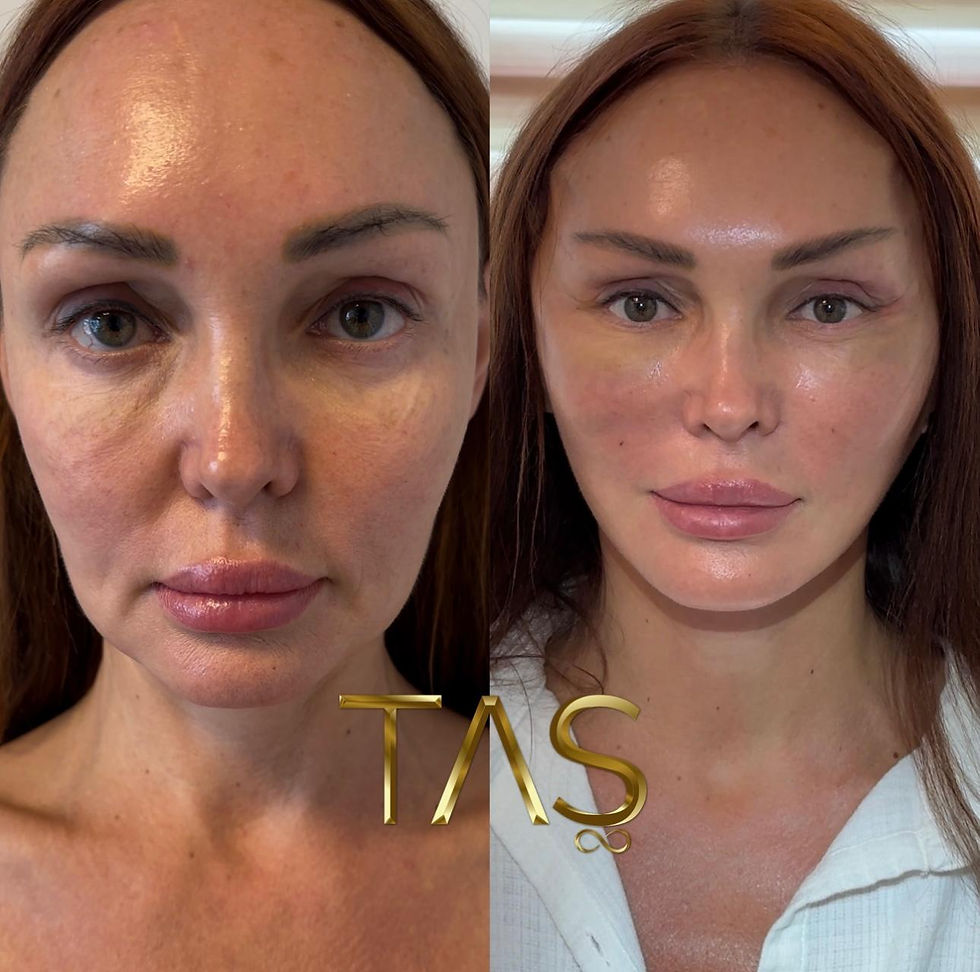
Before you decide anything, spend a few minutes with the real cases and the real voices. Every photograph above belongs to a patient of Prof. Dr. Suleyman Tas, published with consent, and every review is signed by the person who wrote it.
400 verified patient reviews, with photographs and video testimonials — read what patients say in their own words.
Deep plane facelift and neck lift before and after gallery — the face and neck lift results that made the practice known, case by case.
Happy patient, happy doctor — photographs taken with patients on the day they went home.
Would You Like the Same Result?
If you are considering facial surgery yourself, the next step is a personal assessment. Prof. Dr. Suleyman Tas reviews your photographs, explains which technique suits your anatomy, and tells you honestly whether surgery is the right answer for you at this stage.
Create your consultation with Prof. Dr. Suleyman Tas — Prof. Dr. Suleyman Tas Clinic, Terrace Fulya, Sisli, Istanbul.


Comments