_edited.png)

Facelift Surgery Guide 2026: What to Know Before You Book
Updated: 6 hours ago
A facelift (rhytidectomy) addresses one of the most visible signs of facial aging: sagging skin and soft tissue, most noticeable around the jawline, mid-face, and neck. Unlike non-surgical treatments that manage the appearance of aging skin, a facelift repositions the underlying tissue itself — which is why it remains the most effective way to achieve a genuinely lifted, rather than simply smoothed, result.
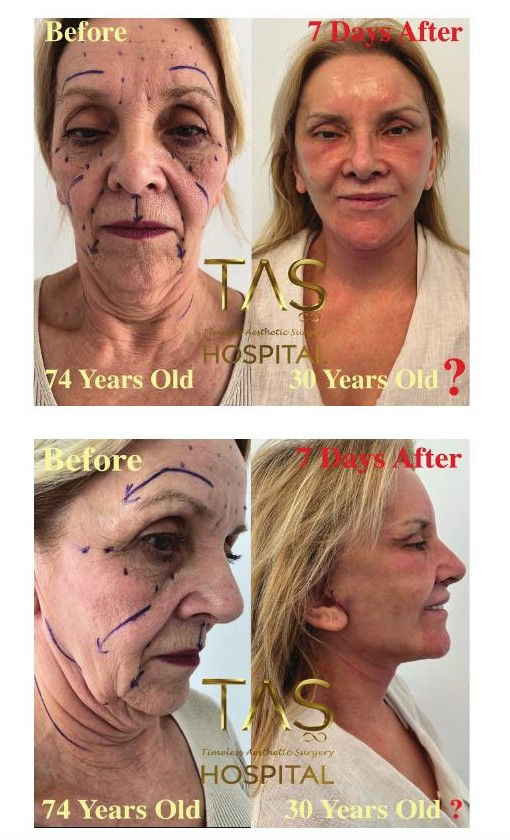
A combined face and neck lift result, 7 days after surgery. This patient also had upper eyelid surgery, brow lift, temporal lift, lip lift, under-eye filler, nano-fat injection, lower eyelid surgery, and laser skin treatment performed together.
What a Facelift Actually Changes
As we age, two things happen simultaneously: skin loses elasticity, and the deeper supportive tissue (the SMAS layer — the muscular layer beneath the skin) loosens and descends. Non-surgical treatments like fillers and skin tightening devices can improve surface quality and volume, but they can't reposition tissue that has genuinely descended. A facelift addresses this at the structural level — lifting and re-securing the SMAS layer, removing excess skin, and redraping the remaining skin over a more youthful underlying structure.
Who Is a Good Candidate?
Facial sagging tends to concentrate most visibly around the mid-face — often directly affecting the area around the nose and jawline — which is why patients over roughly 45 considering rhinoplasty are frequently also good candidates for a complementary facelift: addressing both areas together can make nasal reshaping easier to achieve and deliver a more harmonious, unified result than treating the nose in isolation. That said, facelift surgery is commonly performed as a standalone procedure at any point once visible jowling, jawline blurring, or neck laxity becomes a concern — for many patients, this begins anywhere from the mid-40s onward, though the right timing is individual.
Scarless (Minimal-Scar) Facelift Techniques
Traditional facelift incisions run from the temple, around the ear, and into the hairline — effective, but a common hesitation for prospective patients is visible scarring. Modern minimal-incision approaches aim to hide incisions carefully within natural creases and the hairline, minimizing visible scarring while still achieving genuine structural repositioning, not just skin tightening. Ask your surgeon specifically about their incision placement and scar-minimization approach — this varies meaningfully between surgeons and techniques.
Neck Lift: Almost Always Part of the Conversation
Because the same tissue laxity that affects the lower face typically affects the neck as well — and because the incisions required for a neck lift closely overlap with those used for a facelift — the two procedures are very frequently performed together. If you're focused on jawline definition specifically, ask your surgeon whether a standalone neck lift or a combined face-and-neck approach will give you a more complete, natural-looking result.
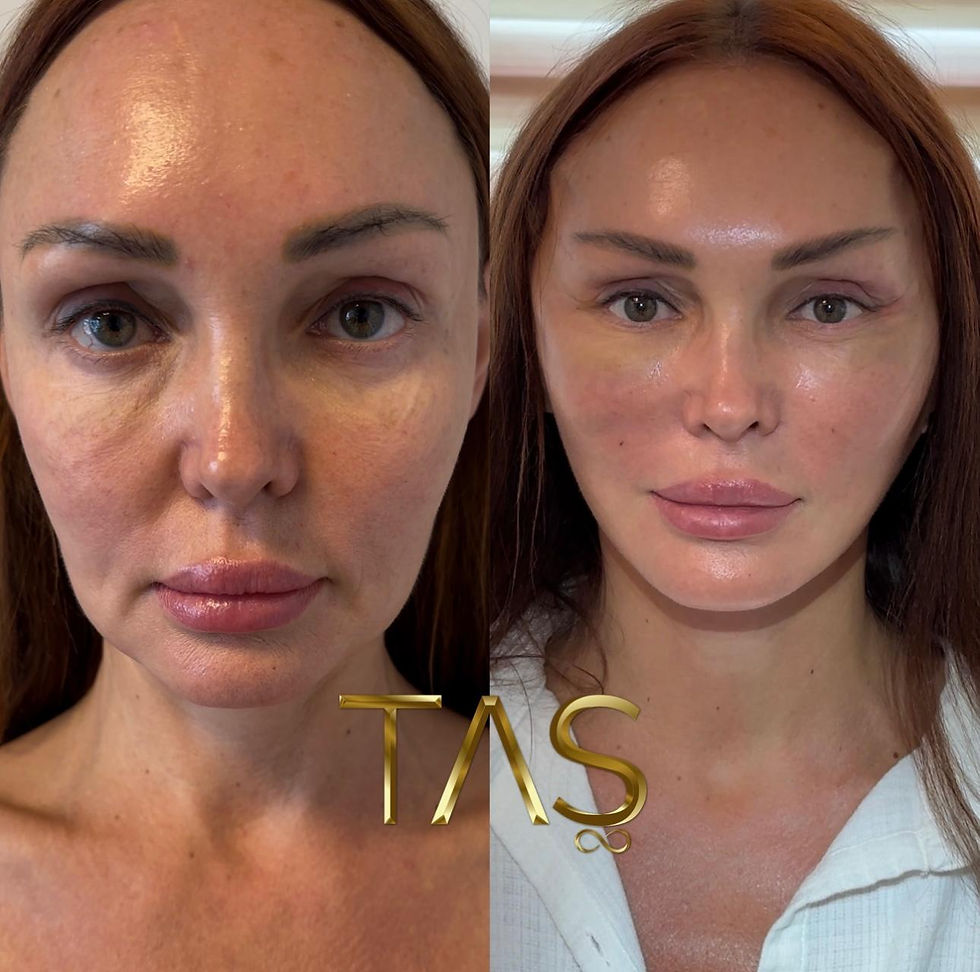
A combined facelift and neck lift case — the two procedures are frequently performed together since they address overlapping tissue laxity through overlapping incisions.
What's Commonly Combined with a Facelift
A facelift addresses tissue laxity and repositioning, but it doesn't address every sign of facial aging on its own. Procedures frequently combined with facelift surgery include:
Fat injection (autologous fat grafting): restoring lost volume in the cheeks, temples, and under-eye area — areas a facelift lifts but doesn't necessarily fill. Fat is typically harvested from areas with excess (abdomen, thighs), purified, and reinjected.
Upper eyelid surgery (blepharoplasty): removing excess upper eyelid skin, relatively straightforward and commonly combined with facelift or fat injection.
Lower eyelid surgery: more technically demanding than upper eyelid surgery, particularly when significant lower lid repositioning is needed; often planned as a separate procedure in more complex cases.
Brow lift and temporal lift: addressing a lowered or heavy brow, which can otherwise make a facelift result look incomplete around the eyes.
Lip lift: shortening an elongated upper lip and improving lip show, a detail that becomes more noticeable with age.
Laser skin resurfacing and skin tightening: improving surface skin quality and texture in a way surgery alone doesn't address.
Rhinoplasty: as noted above, addressing the nose and the surrounding mid-face together often produces a more harmonious overall result than either procedure alone. (See our dedicated post: Combining Rhinoplasty, Facelift & Facial Contouring.)
An Important Caution: How Much Should Be Combined at Once?
More isn't always better in a single operation. Your body has a finite wound-healing capacity — the more surgical sites you're asking it to heal simultaneously, the slower and more taxed that healing process becomes at each individual site. A thoughtful surgeon will generally avoid stacking multiple major procedures (for example, a full facelift and a major body-contouring procedure) into a single operation, even when each one individually would be appropriate, because splitting the body's healing resources across too many major sites can slow recovery everywhere at once. Minor procedures (fat injection, filler, laser treatments) are a different story and are commonly and safely combined with a major procedure like a facelift.
Recovery: What to Expect
First week: swelling and bruising are most pronounced; most surgeons recommend staying home/at the hotel and prioritizing rest, since expending energy on activity rather than healing can slow tissue recovery.
7–10 days: sutures and any external supports are typically removed; most patients feel comfortable in low-key social settings again.
2–4 weeks: the majority of visible swelling and bruising resolves.
Several months: fine swelling continues to resolve, and the final, settled result gradually emerges.
How Long Do Facelift Results Last?
A facelift resets facial aging to an earlier point — it doesn't stop the aging process going forward. Most patients enjoy visible benefits for many years, though individual longevity depends on genetics, skin quality, sun exposure, and lifestyle factors like smoking.
FAQ
At what age should I consider a facelift?
There's no universal age — it depends on how much tissue laxity has developed, not a birthday. Many patients begin considering it in their mid-40s to 60s, but the right timing is individual.
Will a facelift leave visible scars?
Modern techniques place incisions within natural creases and the hairline specifically to minimize visibility, though some degree of fine scarring is a normal part of any surgical incision.
Can a facelift fix under-eye hollowing?
A facelift addresses lifting and repositioning; volume loss under the eyes is typically better addressed with fat grafting, often performed in the same operation.
Do I need a neck lift too?
If you have visible neck laxity, most surgeons recommend addressing it alongside a facelift, since the incisions and underlying tissue work substantially overlap.
How dramatic can results be at 7 days after surgery?
Even at 7 days — while swelling is still resolving — a well-executed facelift and combined procedure plan can show a striking visible transformation, though final, fully settled results take longer to emerge.
Next Step
If you're considering a facelift, neck lift, or a combined facial rejuvenation plan, book a consultation with Prof. Dr. Suleyman Tas for a personalized assessment.
Continue reading: How to Choose the Best Facelift Surgeon · Combining Rhinoplasty, Facelift & Facial Contouring · Meet Prof. Dr. Suleyman Tas
A complete facelift guide: techniques, ideal candidates, what's combined with a facelift, recovery, and how long results last. Written by a plastic surgeon.
Related reading
About the author
Prof. Dr. Suleyman Tas is a European Board-certified plastic, reconstructive and aesthetic surgeon based in Istanbul with over 20 years of experience, author of Rhinoplasty in Practice (CRC Press) and founder of the Closed Atraumatic Rhinoplasty Course. Read verified patient reviews or book a consultation.
This article is for general information and does not replace an individual medical consultation.


Comments