_edited.png)

Facelift Combined With Eyelid Surgery, Brow Lift or Fat Transfer: What Makes Sense
Quick answer. A facelift treats the lower face and neck, so it does not correct droopy upper eyelids, a low brow or lost volume in the temples and under the eyes. Surgeons often combine it with eyelid surgery, a brow lift, a neck lift or fat transfer to treat the whole face in one recovery. The right combination depends on which areas have changed, and longer operations add risk, so some patients are better served in two stages.
Key takeaways
A facelift lifts the cheeks, jowls and neck; the eyes and brow are a separate problem needing separate procedures.
A neck lift is the most common addition and is often part of the facelift itself.
Eyelid surgery, a brow lift and fat transfer are commonly added when they address visible changes.
Combining procedures means one recovery but a longer operation, and the total time under anaesthesia is a safety factor.
A surgeon should be able to explain what each part adds, and which parts you can leave out.
Why a facelift alone does not treat the whole face
The face ages in zones. The lower face and neck descend, the mid face loses volume and support, the upper eyelids gather excess skin, and the brow may sink. A facelift lifts the cheeks, jowls and neck, and so it changes the lower two thirds of the face. It does not lift a sagging upper eyelid, raise a heavy brow or restore fat that has been lost in the temples. When a patient looks in the mirror after a lower facelift and sees a rested lower face next to tired eyes, the result can look unbalanced. That is the reason combined procedures exist.
The common combinations and what each adds
Neck lift
The most common addition, and often part of the facelift plan from the beginning. It tightens the platysma and the skin under the chin, and treats fat below the jaw. Without it, a lifted jawline can end abruptly above an unchanged neck. See our article on facelift vs neck lift for the difference.
Upper and lower eyelid surgery (blepharoplasty)
Upper eyelid surgery removes excess skin and, if needed, fat from the upper lid, and can improve a hooded look. Lower eyelid surgery addresses bags and skin laxity. These operations are done through incisions hidden in the eyelid crease or just below the lashes, and they are frequently combined with a facelift because they are small in scope and add little to the operating time. See the service page on blepharoplasty in Turkey and our article on eyelid surgery cost in Turkey.
Brow lift
A low or descended brow can make the upper eyelid look heavier than it is. If the brow is low, removing eyelid skin alone may worsen the problem. A brow lift repositions the brow through incisions in the hairline or endoscopically, and is usually combined with a facelift only when the brow position is the issue. Our guide to brow lift surgery explains how it is decided.
Fat transfer
As the face ages it loses volume as well as position. Fat harvested from another part of the body, processed and injected into the temples, cheeks or around the eyes restores volume. A portion of the transferred fat does not survive, and how much varies, so it is normally placed conservatively. Our article on facelift vs fillers explains when volume alone is not enough.
Skin resurfacing and skin quality treatments
A facelift repositions tissue but does not change the quality of the skin surface. Laser or peel treatments are sometimes planned for a later stage, because treating the skin at the same time as lifting can interfere with healing.


Combining with rhinoplasty
Some patients want to address the nose at the same time as the face, so that the changes are balanced. This is possible, but the two operations have different recovery needs and the decision to combine them depends on the patient and the extent of each procedure. Our article on combining rhinoplasty and facelift discusses when it makes sense and when it is better to stage them.
The trade-offs of combining
One recovery instead of two, which means one period off work and one trip for international patients.
A longer operation, and time under anaesthesia is a risk factor that a responsible surgeon limits.
More swelling and bruising in the first weeks, especially around the eyes and under the chin.
A higher total price than a single procedure, but often lower than having each operation separately, because you pay for one admission.
Greater dependence on planning, because decisions about what to combine must be made before surgery, and ideally with the surgeon who will operate.
When staging is safer
Staging means doing procedures in two or more operations, usually a few months apart. It may be advised if the total operating time would be very long, if you have health conditions that add risk, if you smoke or have just stopped, or if a procedure such as laser resurfacing needs time to heal on its own. A surgeon who suggests staging is not trying to sell you two operations, they are matching risk to your health.
The question I ask is not what else can we add. It is what would you notice in the mirror, in six months, if we did not treat it. If the answer is nothing, we leave it out.
How to decide what to include
Look at yourself in photographs, not only in the mirror. Ask which areas draw the eye and which you would not miss.
Ask your surgeon to explain what each proposed procedure adds, and what would happen if it were left out.
Ask how the total operating time will be managed, and who will be in theatre for the whole operation.
Ask what the recovery will look like with and without the additional procedures.
Ask for the price of each component in writing, and compare them with what you have been quoted elsewhere. Our article on facelift cost in Turkey vs the UK and the US explains what should be itemised.
What recovery looks like when procedures are combined
The general course is the same as after a facelift, described in our facelift recovery timeline, but with more swelling around the eyes and the neck in the first week. Plan the longer end of the recovery window, ten to fourteen days off work and a stay of ten to fourteen days near the surgeon for international patients, and possibly a few days more.
Frequently asked questions
Can you have eyelid surgery and a facelift at the same time?
Yes. It is one of the most common combinations, because the eyelid procedure adds little operating time and treats an area that a facelift does not reach.
Do I need a brow lift with a facelift?
Only if the brow has descended and is contributing to a heavy upper eyelid. It is not automatic, and the decision is made by examining your brow position at rest and in movement.
Is a neck lift part of a facelift?
Often yes. Many facelift plans include the neck by default, because a lifted jawline looks unfinished above an untreated neck, but it should be listed explicitly in your quote.
Is fat transfer safe to combine with a facelift?
Yes, when done conservatively. A portion of the injected fat does not survive, so surgeons place it carefully. It restores volume that the facelift itself does not.
Is it safer to do procedures in stages?
It can be, especially when the total operating time would be long, or you have health conditions that add risk. A single combined operation is reasonable for a healthy patient when the total time is manageable.
Does combining procedures make the recovery longer?
Somewhat. There is more swelling and bruising in the first weeks, particularly around the eyes and under the chin, but you go through one recovery rather than two.
Planning treatment with Prof. Dr. Suleyman Tas
Prof. Dr. Suleyman Tas looks at the whole face, explains which areas deserve treatment and which do not, and will tell you honestly if a procedure is not worth adding. To discuss your face, use the online consultation form or read about facelift and face aesthetics in Istanbul.
Continue reading in this facelift series
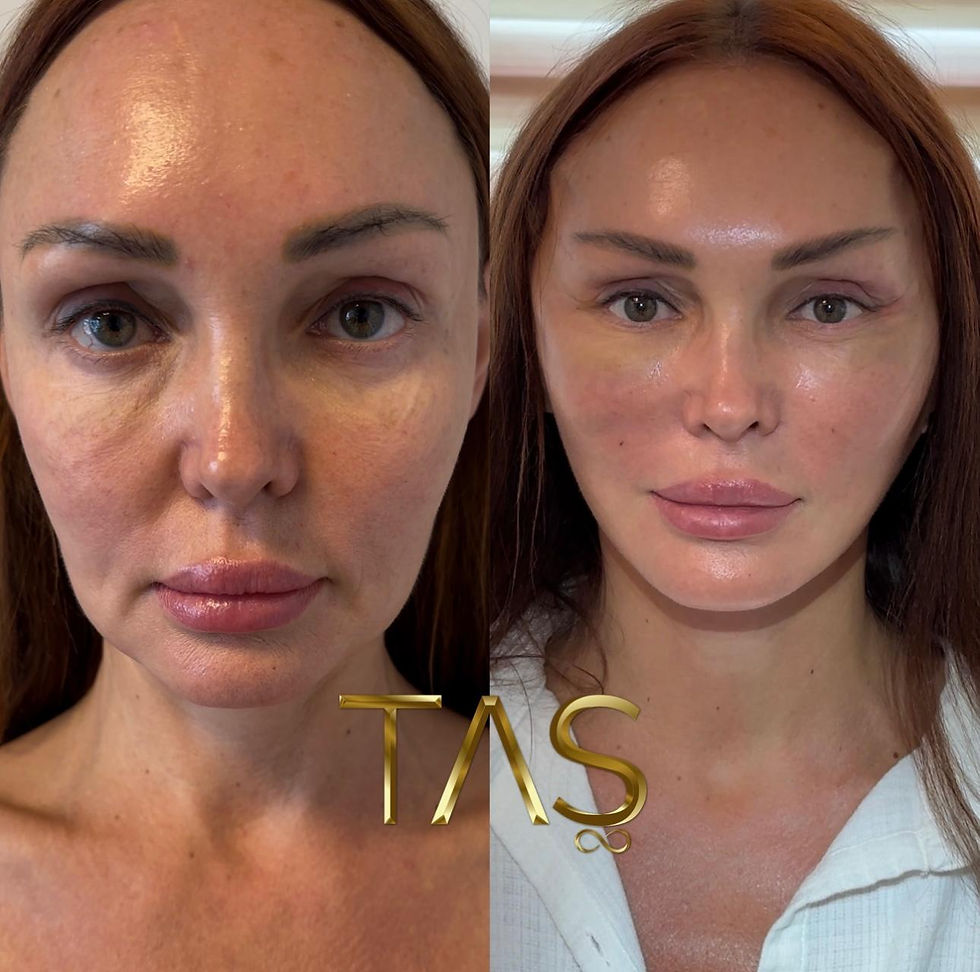
See Prof. Dr. Suleyman Tas's Viral Before and After Results
Before you decide anything, spend a few minutes with the real cases and the real voices. Every photograph above belongs to a patient of Prof. Dr. Suleyman Tas, published with consent, and every review is signed by the person who wrote it.
400 verified patient reviews, with photographs and video testimonials — read what patients say in their own words.
Deep plane facelift and neck lift before and after gallery — the face and neck lift results that made the practice known, case by case.
Happy patient, happy doctor — photographs taken with patients on the day they went home.
Would You Like the Same Result?
If you are considering facial surgery yourself, the next step is a personal assessment. Prof. Dr. Suleyman Tas reviews your photographs, explains which technique suits your anatomy, and tells you honestly whether surgery is the right answer for you at this stage.
Create your consultation with Prof. Dr. Suleyman Tas — Prof. Dr. Suleyman Tas Clinic, Terrace Fulya, Sisli, Istanbul.


Comments