_edited.png)

Brow Lift Options: Botox, Fillers, HIFU, Thread Lift, Temporal Lift and Endoscopic Brow Lift Compared
Key takeaways
The brows frame the eyes and shape expression; with age they drop, making the face look tired, sad or angry.
Non-surgical options: Botox (1–2 mm lift, 6–8 months), fillers under the brow (1–2 mm, 8–12 months), HIFU (collagen-based tightening), and thread lifts (6 months to 2 years).
Surgical options: temporal lift and endoscopic brow lift, which uses small incisions within the hairline and a camera for a longer-lasting, natural lift.
The endoscopic brow lift is often the best solution for true brow ptosis, with a quick return to social life in 2–3 days.

Why do brows drop?
With age, the forehead skin loosens, the brow fat pad descends and the muscles that pull the brow down gain the upper hand. Genetics, sun exposure and repeated facial expressions accelerate the process. A low brow can also crowd the upper eyelid, making eyelids look heavy even when eyelid skin is normal, which is why brow position is evaluated before blepharoplasty.

Non-surgical brow lift
Botox brow lift
Botulinum toxin injected at the tail of the brow relaxes the muscle that pulls it down, lifting the brow by about 1–2 mm. It takes 5–10 minutes, causes no significant pain, swelling or bruising, and you can return to normal life immediately. Results last about 6–8 months and can be repeated as needed. See Botox (botulinum toxin).
Brow filler
Hyaluronic acid filler placed beneath the brow supports and lifts it by about 1–2 mm. It takes 5–10 minutes with minimal discomfort and lasts 8–12 months; strong facial expressions can make it break down sooner. Repeat treatments are possible.
HIFU
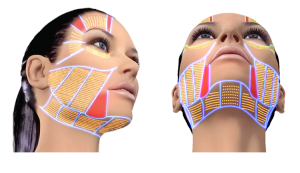
High-intensity focused ultrasound tightens the tissues of the forehead and brow area by stimulating collagen. It is applied after mild numbing cream and allows immediate return to daily life, with longer-lasting results than Botox for suitable patients. See HIFU treatment guide.
Thread brow lift
Through a small incision in the hairline, threads suspend the tail of the brow upward. The more expressive the face, the faster the brow may drop again; results last 6 months to 2 years depending on the individual.
Surgical brow lift
Temporal lift and open techniques
Traditional techniques that remove a strip of scalp can lift the brow but may create long scars and hairless areas, leading to a risk of visible, bald-looking lines, and they involve more swelling, bruising and recovery time. For these reasons they are less preferred by both surgeons and patients today. Limited temporal lifts through small incisions remain useful in selected cases.
Endoscopic brow lift
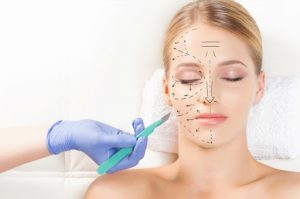
Through a few small incisions hidden within the hairline, a camera and fine instruments release the brow tissues, which are lifted and fixed in a higher, natural position.
Advantages:
No visible scars or hairless areas
Natural, long-lasting elevation
Often combined with facelift or eyelid surgery for comprehensive rejuvenation
Rapid recovery: return to social life in about 2–3 days; usually no overnight hospital stay
It is generally considered the best method for true brow drooping. See the facelift page.
Which option is right for you?
Mild asymmetry or a slight lift desired → Botox or filler
Early laxity and preference to avoid surgery → HIFU or threads
True brow ptosis, heavy upper face → endoscopic brow lift
Frequently asked questions
Does a brow lift change my expression?
A well-done lift restores a rested expression; over-elevation creates a surprised look and is avoided.
Can brow lift and eyelid surgery be combined?
Yes, often with excellent results.
How long does an endoscopic brow lift last?
Many years, although natural ageing continues.
Next step
Contact Prof. Dr. Suleyman Tas Clinic to find the right brow lift option with Prof. Dr. Suleyman Tas.
About the author
Prof. Dr. Suleyman Tas is a European Board-certified plastic, reconstructive and aesthetic surgeon based in Istanbul with over 20 years of experience, author of Rhinoplasty in Practice (CRC Press) and founder of the Closed Atraumatic Rhinoplasty Course. Read verified patient reviews or book a consultation.
This article is for general information and does not replace an individual medical consultation.



Comments